
Brown trout are the chess match of trout fishing. They’re bigger than most rainbows, wiser than all of them, and almost impossible to fool once they’ve been around a few seasons. The biggest brown in any river probably hasn’t been caught in years. Catching a real one — say, over 20 inches — on your own fly or lure is one of the genuine achievements in freshwater fishing.
Most of my brown trout experience came from the North Fork of the Poudre during college in Fort Collins. Those fish taught me more about actual trout fishing than any other species. The consistent lesson: if a brown is the dominant fish in a pool, everything else is secondary. Browns take the best lies and push smaller rainbows and brookies out. If you find good holding water with no rainbows visible, it’s probably because a brown owns it.
Brown Trout Behavior
Browns change their behavior dramatically as they grow. Small browns (under 12 inches) act like rainbows — feed on insects, rise to dry flies, hold in current seams. Fish between 12 and 16 inches start shifting — they still eat insects but increasingly target larger food. Fish over 16 inches become predators. They eat other fish, crawfish, frogs, and sometimes even small mammals.
The biggest behavioral shift is timing. Large browns in heavily pressured water become almost entirely nocturnal. They feed from sunset to sunrise and spend the daylight hours tucked under undercut banks, logs, or in deep pools where they can’t be reached by conventional presentations. This is why streamer fishing at dawn and dusk produces more trophy browns than any daylight technique, and why some of the biggest browns in the country are caught after full dark by anglers fishing mouse patterns under a headlamp.
Best Techniques for Brown Trout
Streamers at Dawn and Dusk
Large streamer flies fished aggressively at low light are the most consistent method for big browns. A 4–5 inch streamer stripped fast through deep runs and undercut banks triggers the predatory instinct of fish that won’t look at a nymph. The retrieve matters — short, sharp strips that make the fly dart and pause imitate a wounded baitfish. A slow steady retrieve rarely produces.
Woolly Bugger in black, olive, or brown (sizes 4–8) — the workhorse brown trout streamer. Simple, deadly, works everywhere.
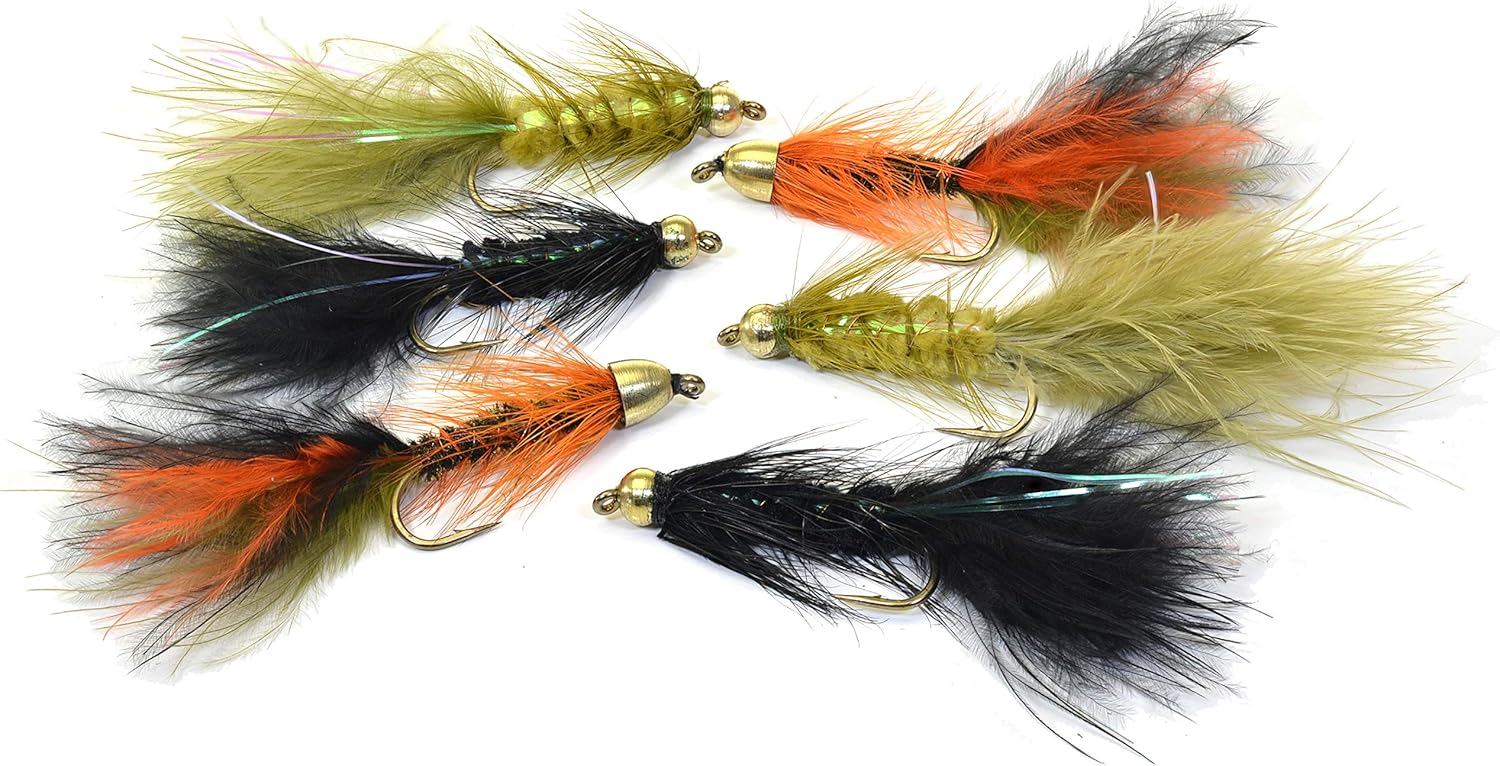
➜ Woolly Bugger Streamer Assortment — Buy on Amazon
Articulated streamers — two-hook patterns with more movement. Better for the biggest fish that want a real mouthful. The articulated joint lets the fly swim and pulse in ways a single-hook streamer can’t.
➜ Articulated Streamer Assortment — Buy on Amazon
Large Dry Flies — Hopper Fishing
Grasshopper patterns slapped near undercut banks in late summer produce explosive strikes from fish that won’t eat anything else. Hopper season runs roughly July through September on most western rivers. The fish are keyed in on terrestrials and will come up from depth for a well-placed pattern.
The presentation matters — you want to land the hopper within a few inches of the bank, as if a real grasshopper just got blown into the water. A good slap on the surface helps trigger the take.
➜ Ventures Fly Co. Hopper Assortment — Buy on Amazon
Spinning Lures
Large spinners and spoons (1/4–1/2 oz) work well on brown trout in low-light conditions. Browns eat baitfish — a well-retrieved spinner looks like prey they recognize. Heavier spinners sink deeper and cast farther, both of which matter when you’re trying to reach water that holds big browns.
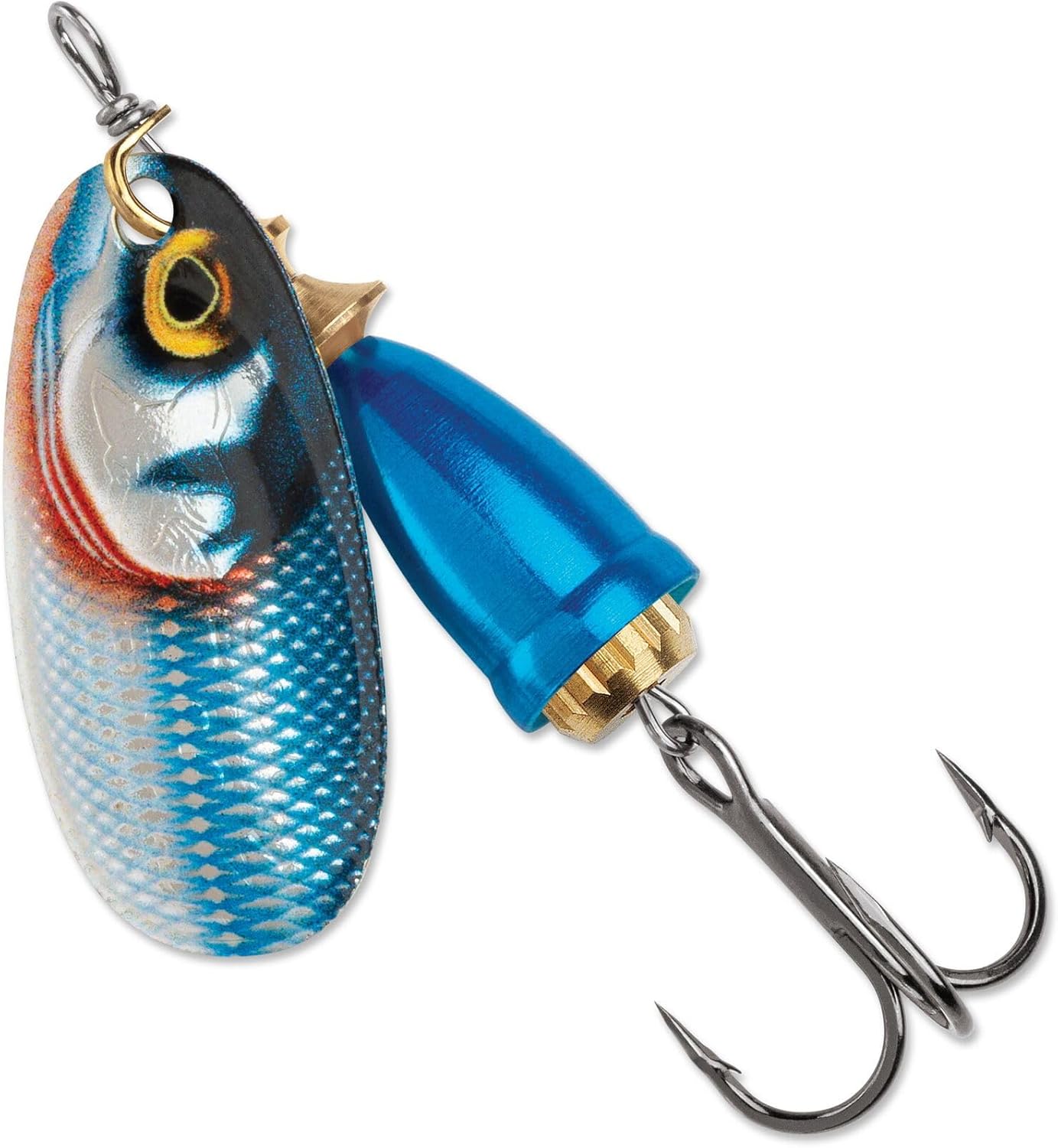
➜ Blue Fox Vibrax Spinner 1/4oz — Buy on Amazon
Reading Water for Browns
Browns hold in different water than rainbows. Where rainbows take the feeding lanes — the seams with consistent drift — browns take the ambush points. Look for:
- Undercut banks with deep water underneath
- Log jams and root wads in deeper pools
- Bridge pilings and bridge shadows
- Deep holes below riffles, especially where the water goes dark
- Any structure that gives them overhead cover
The biggest brown in a river isn’t in the prettiest-looking water. It’s in the spot that gives it the best combination of food access and safety. Usually that means deeper, darker, and uglier than the obvious spots.
Best Brown Trout Rivers
- Bighorn River, Montana — consistently the largest average-size browns in the US
- Madison River, Montana — world-famous hatches and trophy fish
- Green River, Utah — tailwater below Flaming Gorge Dam, huge fish
- Delaware River, New York/Pennsylvania — wild browns in a major eastern river
- White River, Arkansas — southern tailwater with enormous browns (Arkansas produces some of the biggest browns in the country)
- San Juan River, New Mexico — technical tailwater fishing for heavily-pressured but large browns
Brown Trout in Smaller Water
Don’t overlook the small streams. The North Poudre is a good example — not a famous river, but it holds beautiful wild browns up to 18 inches in water that looks too small to support them. The same is true across the country. Some of the best brown trout fishing in the Midwest is on the Driftless Area spring creeks in Wisconsin, Minnesota, and Iowa — tiny water, excellent fish. In Pennsylvania, the limestone creeks (Spring Creek, Penns Creek, Letort) produce trophy browns in water you can step across in places.
Book a Guided Trip
➜ Search and Browse Guided Trout Fishing Trips — Viator
Frequently Asked Questions
What time of year are brown trout most active?
Fall spawning (October–November) makes brown trout aggressive and more visible than any other time. Pre-spawn fish feed heavily and become less wary than usual. Note: actual spawning fish on redds should not be targeted, but pre- and post-spawn periods are prime.
Why are big browns so hard to catch?
They’ve survived to be big by being cautious. Every feeding decision is a risk assessment — is the food worth the energy and risk? Large browns eat less frequently than small ones because they don’t have to eat as often. A 20-inch brown might eat a few fish a week and ignore thousands of insects in between.
What’s the best streamer color for brown trout?
Dark colors (black, olive, brown) in clear water. Bright colors (white, yellow, chartreuse) in dirty water. Water clarity drives the decision more than light level.
Are brown trout good to eat?
Excellent. Firm, flaky, delicate flavor — especially smaller fish. Larger browns can have a stronger flavor from their piscivorous diet. Stocked browns are often harvested; wild browns in most fisheries should be released.
Do brown trout feed at night?
Yes — more actively than any other common trout species. Summer night fishing for browns with mouse patterns or big streamers is a legitimate specialized technique, especially on tailwaters. The biggest browns in any river are often caught in the dark.
Related Guides
About the Author
By Kenny — SoCal angler who learned trout fishing during college years in Fort Collins, Colorado (Poudre, Horsetooth, Estes Park) and now fishes the Sierras and SoCal lakes with my daughter Scarlett. No steelhead or salmon yet, and no ice fishing — those are on the list.