
Ice fishing for trout rewards anglers willing to brave the cold with access to fish that are rarely caught any other way. Lake trout, brook trout, and splake suspend in predictable depth ranges under ice — find them with electronics, drill a hole, and present a jigging spoon or live bait. The technique is straightforward but the payoff is exceptional fish quality and access to water that’s inaccessible in summer.
Full honesty: I’ve never ice fished. SoCal doesn’t exactly provide the conditions. This article is built from research, conversations with ice anglers, and techniques that produce consistently across the northern US and Canada. If you’re reading this as an experienced ice fisherman and I’ve gotten something wrong or missed a key detail, I’d genuinely like to hear from you so I can sharpen the guide. Bylines elsewhere on the site will tell you when I’m writing from personal experience versus research like this one.
Safety First
Ice fishing starts with not falling through the ice. Ice thickness guidelines:
- 4 inches: Walking and ice fishing (single angler)
- 5–6 inches: Snowmobile or ATV
- 8–12 inches: Small car or light truck
- 12–15 inches: Medium truck
Those are minimums, not recommendations. Always carry ice picks so you can self-rescue if you break through, check thickness multiple times when crossing new ice, and never fish alone on uncertain ice. Clear blue ice is stronger than white or cloudy ice — half the thickness of slush ice equals the strength of clear ice.
Spring ice is the most dangerous. Ice that held a truck in January can be rotten and unsafe in March even if it looks thick. When in doubt, don’t go.
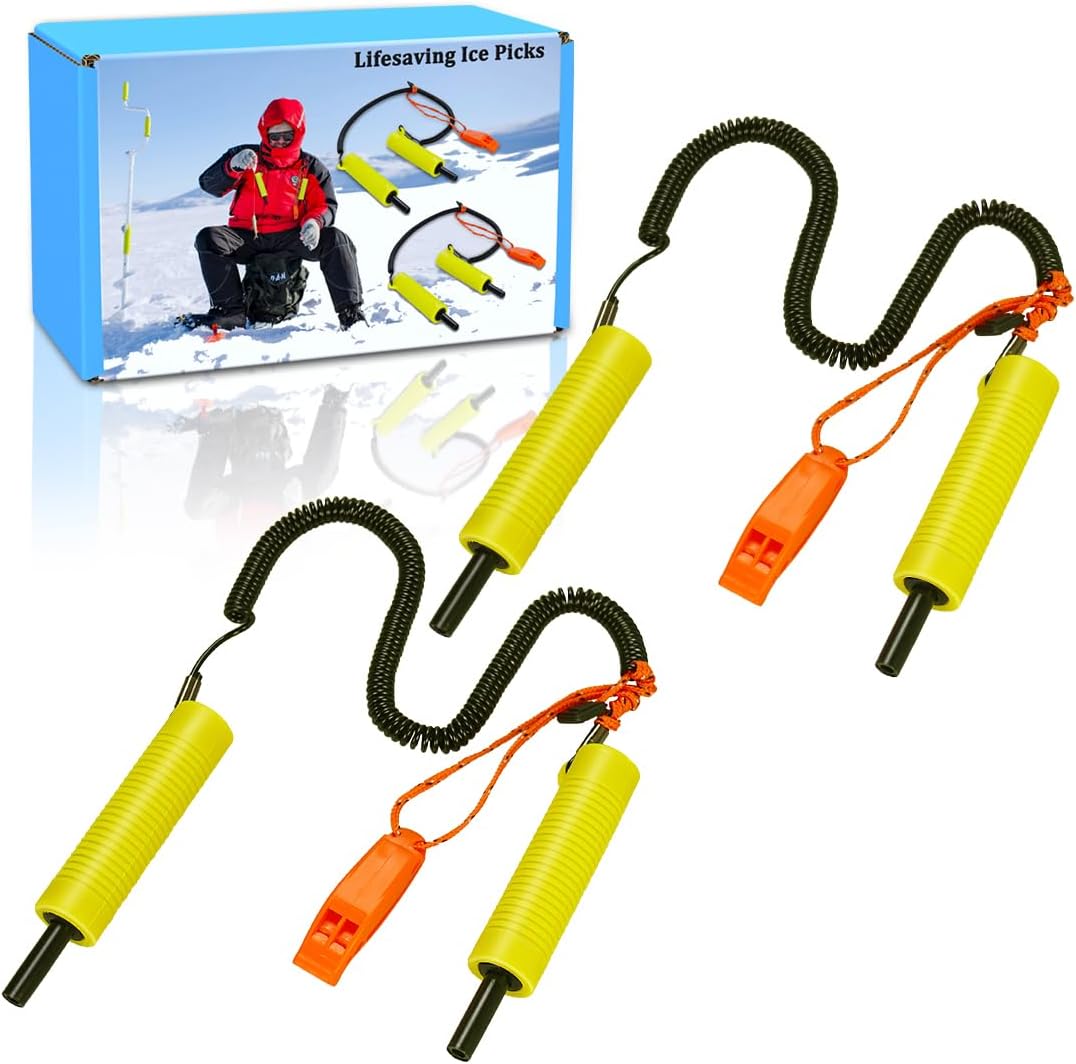
➜ Ice Safety Picks — Buy on Amazon
Essential Ice Fishing Gear
Ice auger — you need a hole through the ice. Hand augers for a few holes; power augers for drilling many holes efficiently. A 6-inch auger is the standard for most trout fishing; 8-inch for larger lake trout.
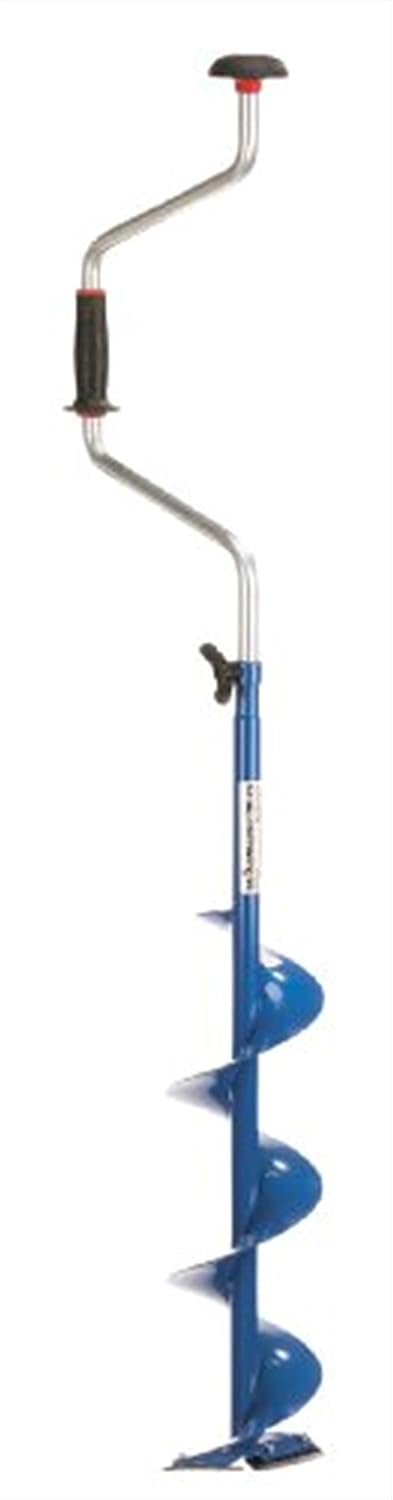
➜ Strikemaster Hand Ice Auger 6-inch — Buy on Amazon
Ice rod — short (24–36 inch) rod with sensitive tip for detecting light strikes through a small hole. The short rod stays inside an ice shanty; the sensitive tip shows strikes you’d miss on a longer rod.
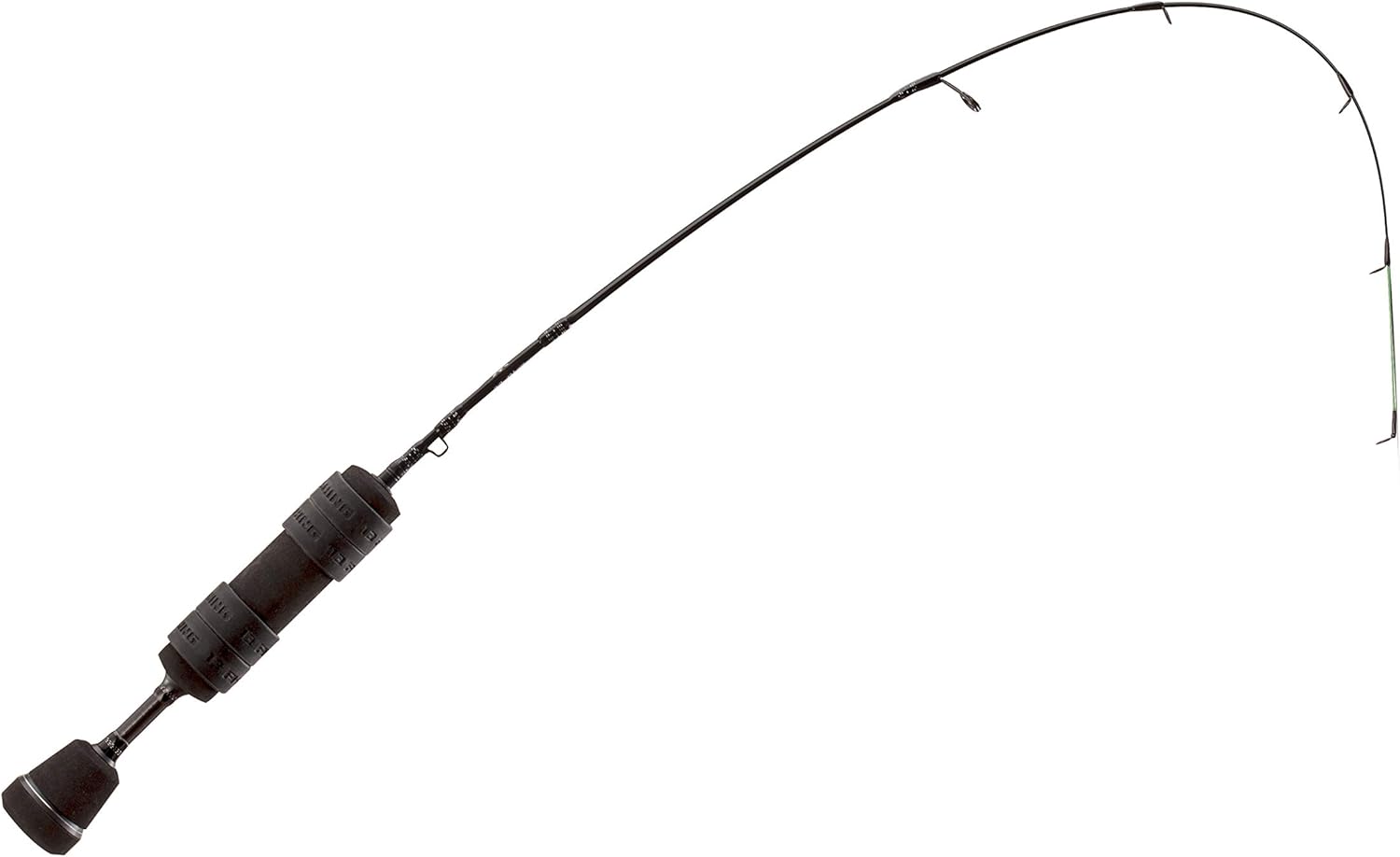
➜ 13 Fishing Widow Maker Ice Rod — Buy on Amazon
Flasher/fish finder — shows fish depth and lure position in real time. You see your jig dropping down, fish rising to look at it, and the merge when a fish takes. Flashers transform ice fishing from blind fishing into visual fishing.
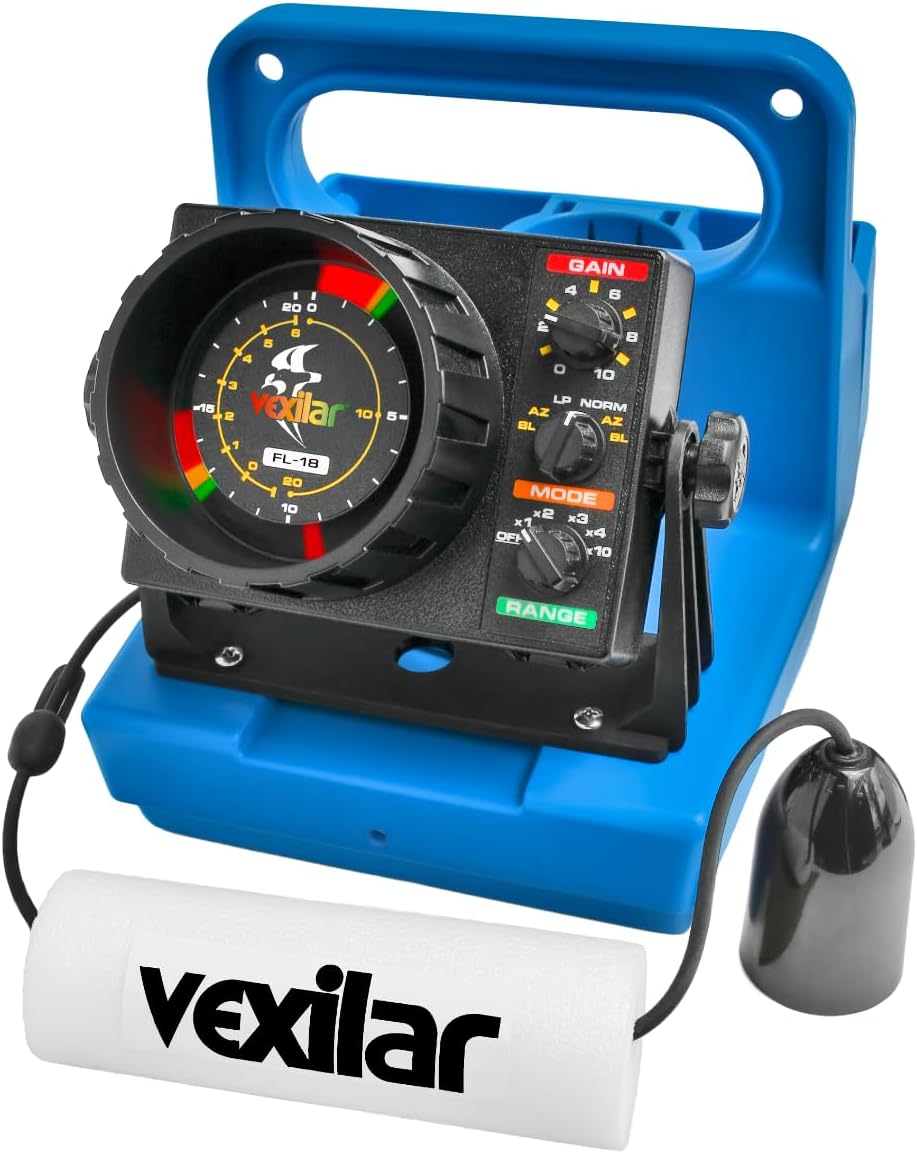
➜ Vexilar FL-18 Ultra Pack Flasher — Buy on Amazon
Tip-ups — mechanical devices that suspend bait at depth and signal when a fish takes. A spring-loaded flag pops up when line starts moving. Let you fish multiple holes at once — check local regulations for how many tip-ups are legal.
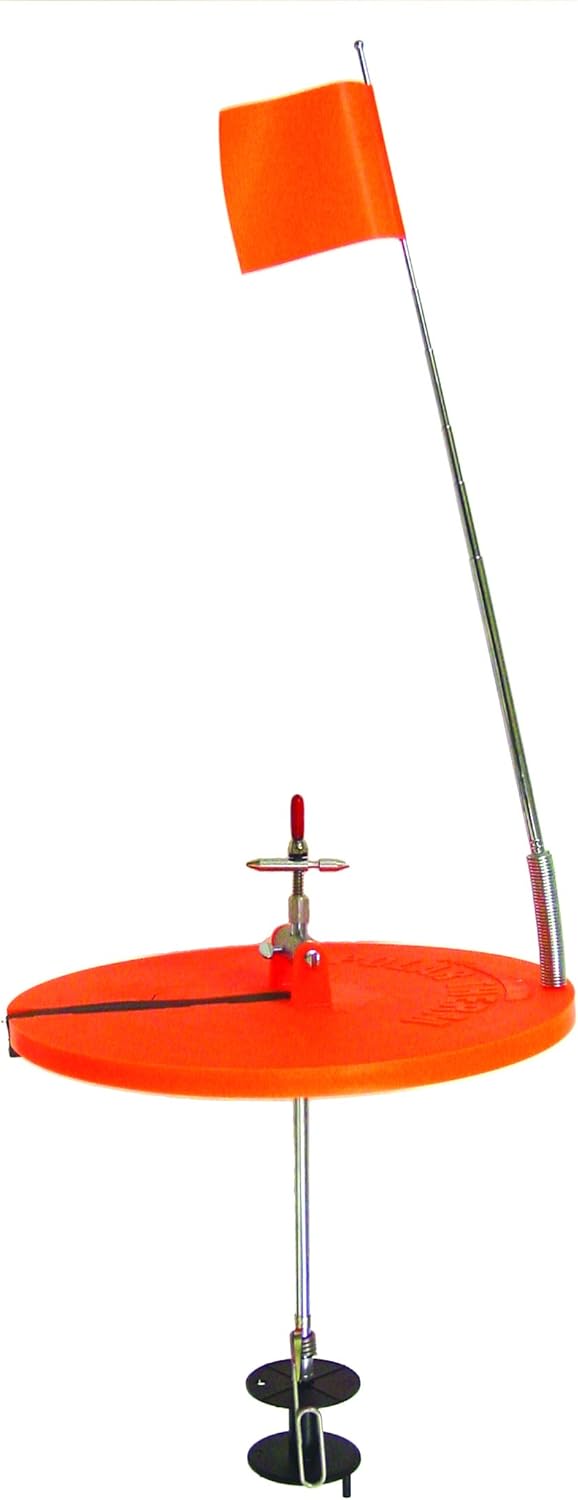
➜ HT Polar Therm Tip-Up — Buy on Amazon
Jigging Techniques
The basic presentation: lower the lure to the bottom, crank up 6–12 inches, then work the lure with a lift-drop cadence. Watch your flasher — when a fish mark moves toward your lure mark, slow down or stop. When the two marks merge, set the hook immediately.
Cadence variations by species:
- Lake trout: Aggressive lift-drop with long pauses. Lake trout often commit on the pause.
- Brook trout: Smaller, quicker movements. Finesse presentations.
- Rainbow trout: Between the two — steady lift-drop with occasional pauses.
Swedish Pimple — classic lake trout ice jig. Been catching lakers through the ice for decades.
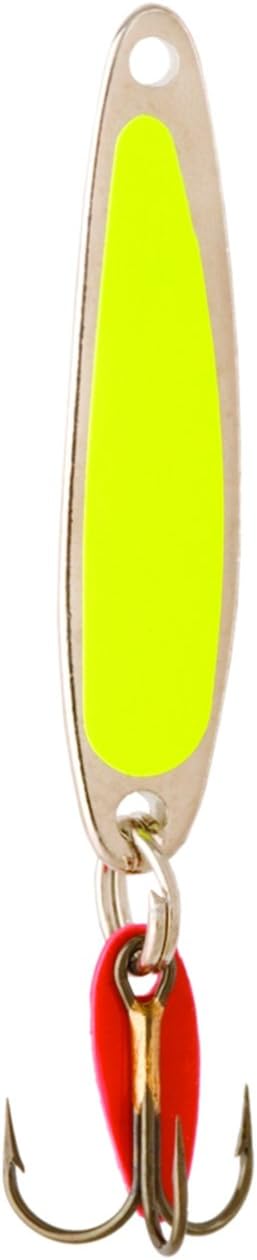
➜ Bay De Noc Swedish Pimple — Buy on Amazon
Kastmaster 1/2–1 oz — most versatile ice jigging spoon for lake trout. The same spoon that works in open water works through ice.
➜ Kastmaster 1/2oz Ice Jig — Buy on Amazon
Tungsten jigs (size 6–8) tipped with waxworm — for brook trout and splake. Tungsten is denser than lead for a given size, so you get a smaller profile for the same sink rate.
➜ Tungsten Ice Jig Assortment — Buy on Amazon
Cold Weather Clothing
Ice fishing requires serious layering — base layer (wicking), mid layer (insulating fleece or down), outer layer (waterproof insulated bibs and jacket). Cotton kills in cold conditions because it absorbs sweat and stays wet. Wool and synthetics only.
Hand warmers are essential. Ice fishing boots need heavy insulation (Thinsulate or similar) and waterproof construction. A balaclava or face mask protects exposed skin in wind. On the coldest days, eye protection prevents wind damage.
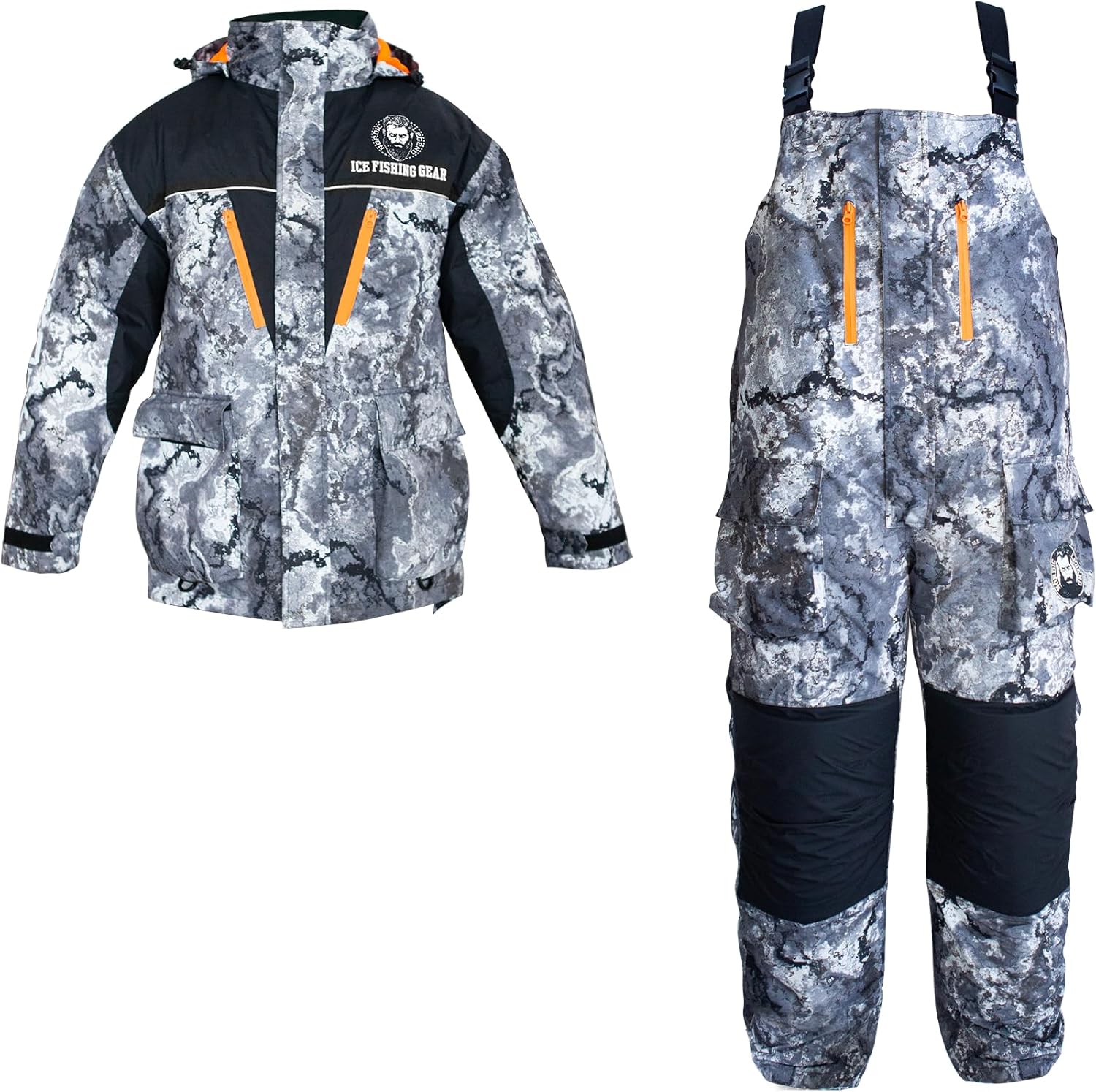
➜ Nordic Legend Ice Fishing Suit — Buy on Amazon
➜ Little Hotties Hand Warmers Pack — Buy on Amazon
Best Lakes for Ice Fishing Trout
- Lake Superior — lake trout near Michigan and Wisconsin shores; massive water with world-class fish
- Quabbin Reservoir, Massachusetts — excellent lake trout in a managed fishery
- Moosehead Lake, Maine — lake trout, brook trout, and landlocked salmon
- Lake Champlain, Vermont/New York — accessible lake trout fishing for East Coast anglers
- Upper Peninsula lakes, Michigan — splake and lake trout in numerous lakes
- Lake Nipigon, Ontario — trophy brook trout and lake trout; legendary ice fishery
- Great Slave Lake, NWT — ultimate trophy lake trout, remote but extraordinary
Finding Trout Under Ice
Fish locations change under the ice. Some patterns that hold consistently:
- Early ice: Fish are shallow (15–30 feet on most lakes) and active. Structure and drop-offs produce.
- Mid-winter: Fish move deeper (30–60+ feet) as shallow water becomes oxygen-depleted. Basin fishing dominates.
- Late ice (pre-spawn): Fish move shallow again, often extremely aggressive before the ice leaves.
Mobility is key. Good ice anglers drill many holes and move to find active fish rather than staking out one spot. A flasher makes this practical — drop the transducer down a new hole, look for fish, and move on if nothing shows.
Frequently Asked Questions
How thick does ice need to be to fish safely?
4 inches of clear blue ice is the widely accepted minimum for walking and fishing. Check multiple spots; ice thickness varies across a lake. Avoid areas with current, springs, or aerators.
What’s the best ice fishing lure for trout?
For lake trout, a Swedish Pimple or Kastmaster spoon in 1/2 to 1 oz. For brook trout and splake, tungsten jigs in size 6–8 tipped with waxworms. Species and size of target fish drive the lure choice.
Do I need an ice shanty?
Not required but strongly recommended for extended fishing in harsh weather. A portable pop-up shanty blocks wind and retains heat from a small propane heater, turning a miserable -10°F day into tolerable fishing. You can fish without one, but most experienced ice anglers consider a shanty essential gear.
Can you catch rainbow trout through the ice?
Yes, but they’re less common targets than lake trout or brook trout. Rainbows tend to be less active under ice than lake trout, which are cold-water specialists. Some stocked rainbow lakes offer ice fishing opportunities; results vary.
What’s the best time of year for ice fishing trout?
Early ice (usually December/January depending on latitude) and late ice (late February/March) are the most productive periods. Mid-winter can be slower as fish become lethargic in cold, oxygen-depleted water.
Related Guides
About the Author
By Kenny — SoCal angler who learned trout fishing during college years in Fort Collins, Colorado (Poudre, Horsetooth, Estes Park) and now fishes the Sierras and SoCal lakes with my daughter Scarlett. No steelhead or salmon yet, and no ice fishing — those are on the list.