
Trolling is the most efficient way to catch trout in lakes and reservoirs. Where casting is limited by how far you can throw and how much water you can cover from a stationary position, trolling lets you work entire depth ranges, temperature breaks, and fish-holding structure across large bodies of water. If you’ve ever stared at a big reservoir wondering how to fish it, trolling is the answer.
My trolling experience comes from summers on Lake Isabella in the Sierras and from trolling Horsetooth Reservoir back in college. Different water, same fundamentals — find the depth where fish are holding, get your lure to that depth, and cover water at the right speed. Solve that three-part puzzle and you catch fish consistently.
Finding Trout Depth
Trout follow the thermocline — the boundary between warm surface water and cold deep water. In summer, surface water can exceed 70°F while trout hold at 50–60 feet in 55°F water. The thermocline isn’t a mystery; a fish finder shows it clearly as a distinct layer on the display.
What to look for on electronics:
- Fish arcs at consistent depth — that’s your target depth for trolling
- Baitfish schools — big schools attract predators; trout won’t be far
- Bottom structure — drop-offs, points, humps concentrate fish
- The thermocline — shows as a distinct horizontal band on many fish finders; fish almost always hold at or just above it
Without electronics you’re guessing. With them, you’re fishing with real information. A decent fish finder is arguably the most important piece of trolling gear after the boat itself.
Depth Control Methods
Finding the depth is half the battle. Getting your lure to that depth and keeping it there is the other half. Three main approaches:
Downriggers — the most precise method. A cannonball (typically 6–10 lb) is lowered to a specific depth on cable; your fishing line clips to the cannonball and releases when a fish strikes. You fight the fish on a slack line, the cannonball stays on the cable. Downriggers let you repeat the exact depth over and over, which matters when you find the productive depth.
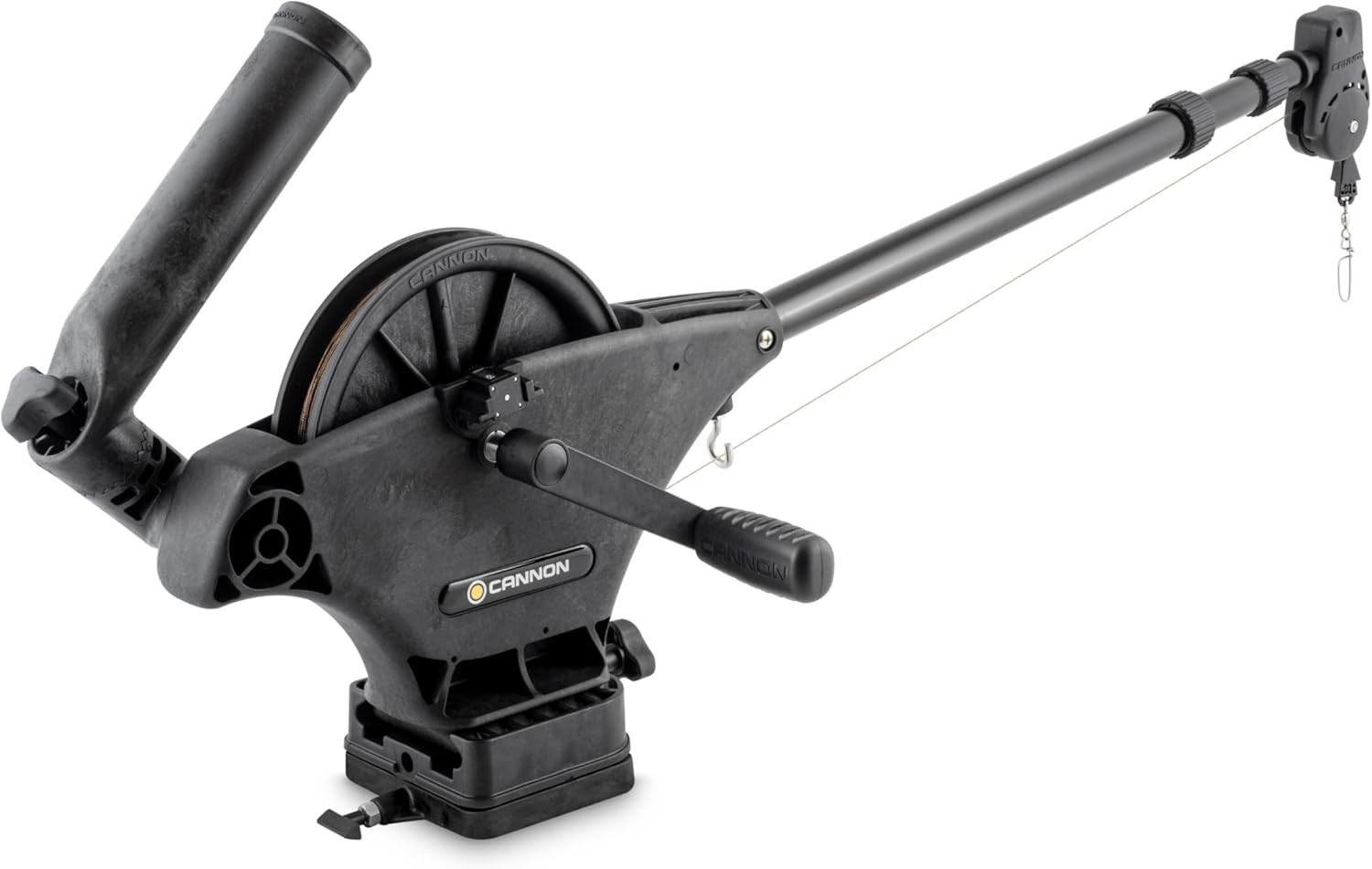
➜ Cannon Uni-Troll Manual Downrigger — Buy on Amazon
Lead core line — a sinking line built into your mainline that sinks at a predictable rate. Roughly 5 feet per 10-yard color segment, depending on trolling speed. Less precise than downriggers but much cheaper and works well for fish holding at moderate depths (20–40 feet).
➜ Sufix Lead Core Trolling Line — Buy on Amazon
Snap weights — small weights clipped to the line at set intervals for simple depth control. Clip one on, troll for a while, clip another on to go deeper. Budget-friendly and works reasonably well for shallow trolling (15–25 feet).
➜ Off Shore Tackle Snap Weights — Buy on Amazon
Best Trolling Lures
Spoons — the most universally effective trout trolling lure. The side-to-side wobble imitates a wounded baitfish. A hungry trout has a hard time passing up a spoon at the right speed and depth. Classic patterns work: silver with blue, silver with black, gold with orange.
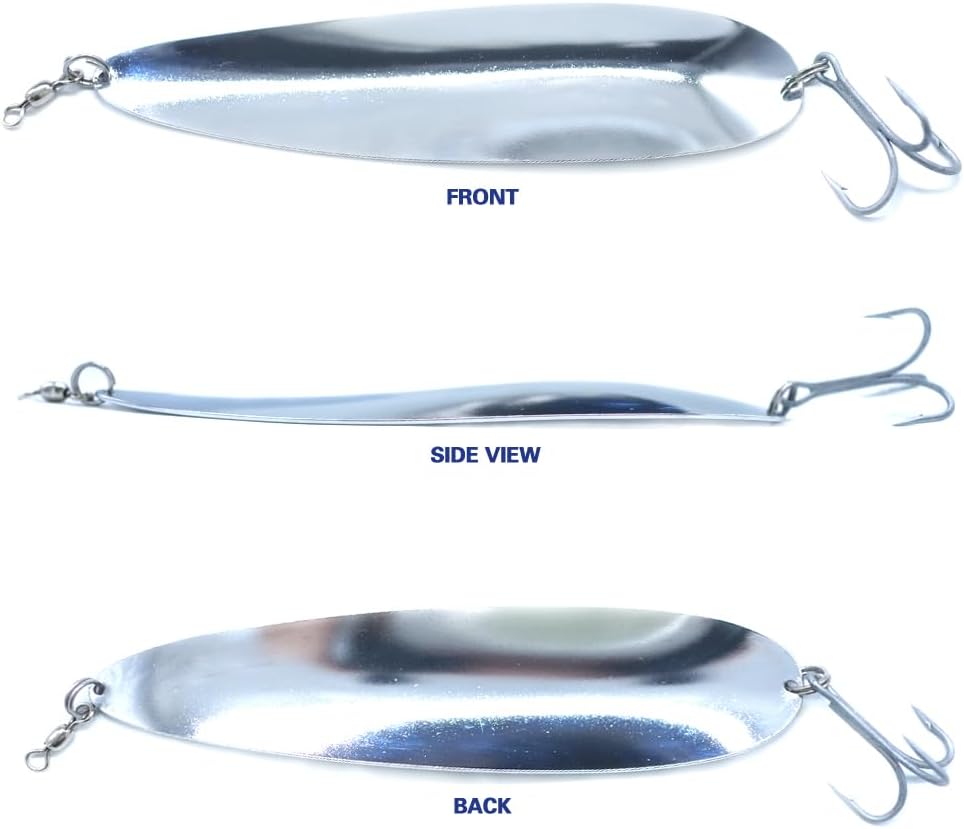
➜ SEASKY Silver Spoon — Buy on Amazon
Rapala Jointed — an effective trolling plug for rainbow and brown trout. The jointed body produces more action at slower speeds than straight-body plugs, which matters because trolling speed for most trout is slow.
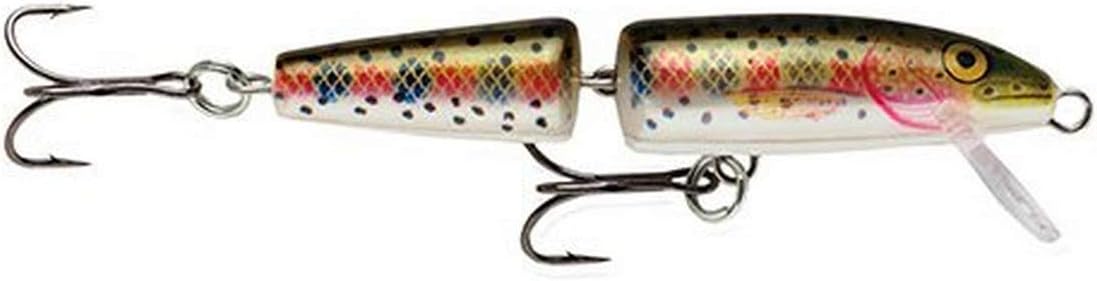
➜ Rapala Jointed — Buy on Amazon
Dodger/flasher rigs — a dodger or flasher acts as an attractor pulled ahead of a small trailing lure (typically a fly, worm harness, or small spoon). The flashing attractor draws fish in from a distance; the trailing lure is what they bite. Deadly on reservoir rainbows, especially in stocked lakes.
➜ Dodger Assortment — Buy on Amazon
Trolling Speed
Most trout trolling happens between 1.5 and 3 mph. Within that range, species preferences vary:
- Lake trout: 1.5–2 mph — slower is better
- Rainbow trout: 2–2.5 mph — moderate speeds
- Brown trout: 2–3 mph — faster presentations often trigger predatory strikes
- Kokanee: 1–1.5 mph — very slow
A GPS or speedometer is essential. Estimating speed by feel is wildly inaccurate — what feels like 2 mph is often 1.2 or 2.8. On windy days with current pushing the boat, measured speed is the only way to know what your lure is actually doing.
When in doubt, vary your speed. Trout often hit during speed changes — lures that have been moving at a steady 2 mph suddenly speeding up to 2.5 or slowing to 1.5 trigger strikes from fish that had been following.
Trolling Gear
Rod: 7–8.5 foot medium or medium-heavy trolling rod with moderate action. Longer rods spread out a multi-rod trolling spread without tangles; moderate action loads on the strike and hooks fish better at trolling speeds.
➜ Ugly Stik Tiger Lite Trolling Rod — Buy on Amazon
Reel: Level wind or line counter reel. Line counters are legitimately useful for trolling — once you find the productive depth, a line counter reel lets you repeat it exactly every time. Find the bite, count the line out, and every subsequent pass puts your lure right where you need it.
➜ Penn Level Wind Reel — Buy on Amazon
Finding Productive Trolling Water
Big reservoirs and lakes can feel overwhelming. A few patterns that consistently produce:
- Main-lake points — underwater points extending from shore concentrate baitfish and predators
- Creek channels — old submerged creek beds run through reservoirs; fish use them as highways
- Drop-offs — where shallow water suddenly drops to deep water; both species mix at the edge
- Inflowing creeks — in summer, cold tributaries dumping into warm reservoirs create localized cold pockets where trout congregate
- Dam faces — deep water near dams often holds fish
On Lake Isabella I’d consistently work the creek channels and the deep water near the dam in summer. On Horsetooth, the main-lake points and deeper coves. The specific productive spots vary by lake, but the types of structure don’t.
Summer vs. Spring and Fall Trolling
Different seasons require different approaches.
Spring and fall — water temperatures are cool throughout the column. Trout hold shallower (10–30 feet) and feed aggressively. Trolling near the surface or with minimal depth control produces. Classic “top-lining” with no downrigger or lead core works.
Summer — surface water warms and trout drop deep. Downriggers or lead core become essential to get lures to the 40–70 foot depths where fish are holding. Slow your trolling speed; fish at depth are more lethargic.
Winter (where ice doesn’t form) — similar to summer in that fish are deep, but they’re also less active. Very slow trolling with small lures or live bait rigs produces better than fast presentations.
Frequently Asked Questions
How deep should I troll for rainbow trout in summer?
In most lakes during summer, rainbow trout hold at 30–60 feet following the thermocline. Use a fish finder to locate fish and troll your lures at or just above that depth.
Do I need a downrigger for trout trolling?
Not for every situation, but for serious summer trolling on deep reservoirs, yes. Spring and fall fishing in shallower water can be done without one. If you’re planning to seriously pursue summer lake trout or deep-suspended rainbows, a downrigger pays for itself quickly.
What’s the best lure for trolling stocked rainbows?
A small dodger with a trailing fly or worm is the classic producer on stocked rainbow lakes. Rainbow pattern spoons in 1/8 to 1/4 oz also work consistently.
Can you troll for trout in rivers?
In very large rivers with slow current you can troll, but it’s uncommon. Trolling is mostly a lake and reservoir technique. In rivers, drift fishing or casting is usually more effective.
How fast should I troll?
1.5–3 mph covers most trout trolling. Lake trout prefer the slow end (1.5–2 mph); browns and rainbows often prefer the faster end (2–3 mph). When in doubt, vary your speed until you find what’s working.
Related Guides
About the Author
By Kenny — SoCal angler who learned trout fishing during college years in Fort Collins, Colorado (Poudre, Horsetooth, Estes Park) and now fishes the Sierras and SoCal lakes with my daughter Scarlett. No steelhead or salmon yet, and no ice fishing — those are on the list.
Affiliate Disclosure: As an Amazon Associate, troutfishing-hq.com earns from qualifying purchases. Links to Amazon on this page are affiliate links — if you click and buy, we may earn a small commission at no extra cost to you.