
Spin fishing is the most versatile and accessible way to catch trout. A 6-foot ultralight rod, a few spinners, and some line will catch fish in rivers, streams, lakes, and reservoirs — essentially anywhere trout live. The gear is cheap compared to fly fishing, the learning curve is short, and the results come fast.
I started with spin fishing as a kid on SoCal lakes and still reach for a spinning rod when conditions call for it. The Kern River in low water, Lake Isabella when fish are suspended, Big Bear during a spring bite — all spinning situations. Spin fishing isn’t a beginner’s training wheels on the way to fly fishing. It’s a legitimate primary technique that catches more fish than fly fishing in many conditions.
Spinning Gear
Rod: 6–7 foot ultralight or light spinning rod rated for 2–6 lb line. Ultralight gives you better casting distance and accuracy with small lures, better fight from average-size trout, and enough backbone for the occasional trophy fish.
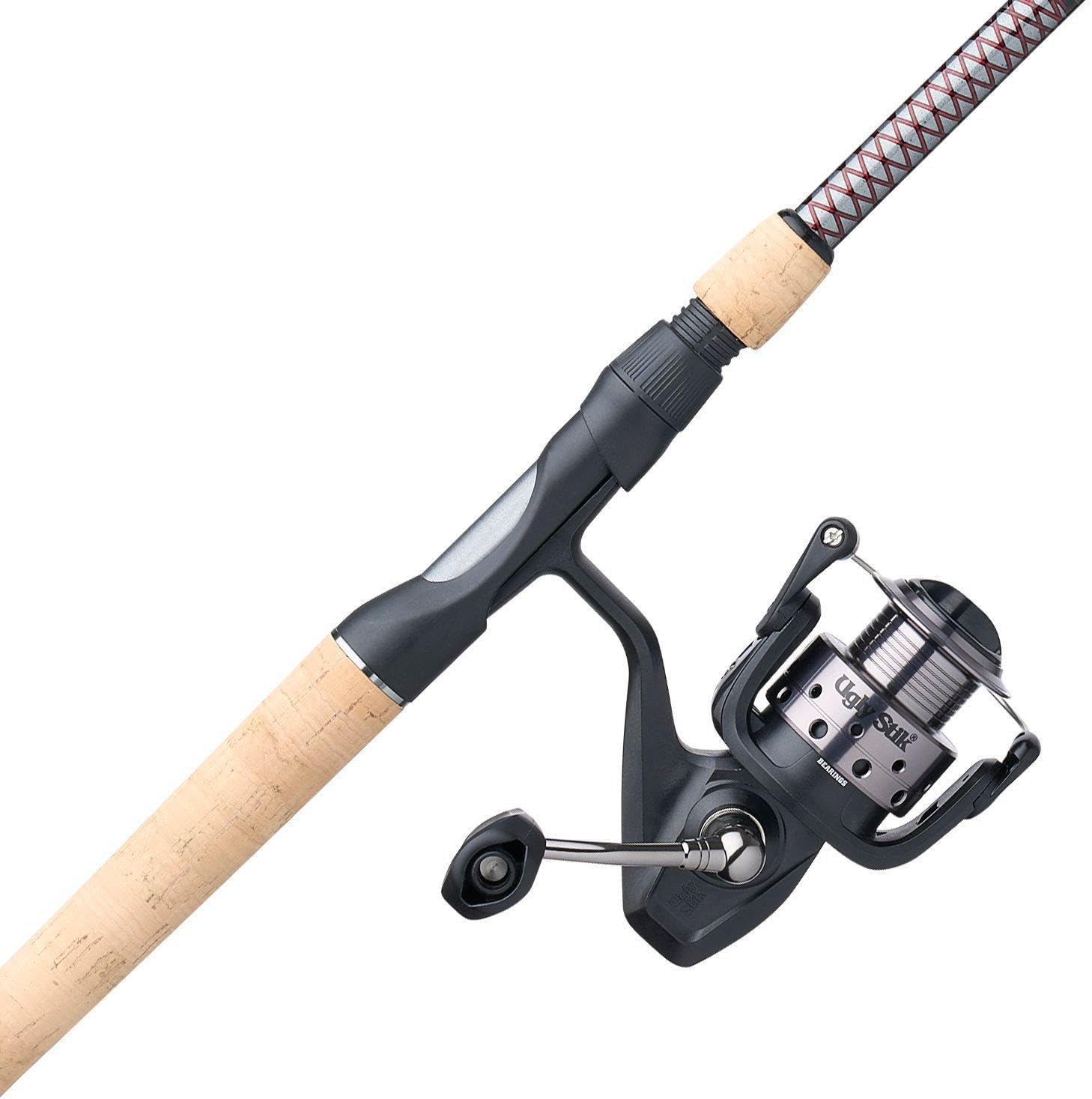
➜ Ugly Stik Elite 6ft Ultralight — Buy on Amazon
Reel: 1000–2500 size spinning reel with smooth drag. For most trout fishing you don’t need premium gear — a reliable mid-range reel will last years of regular use.
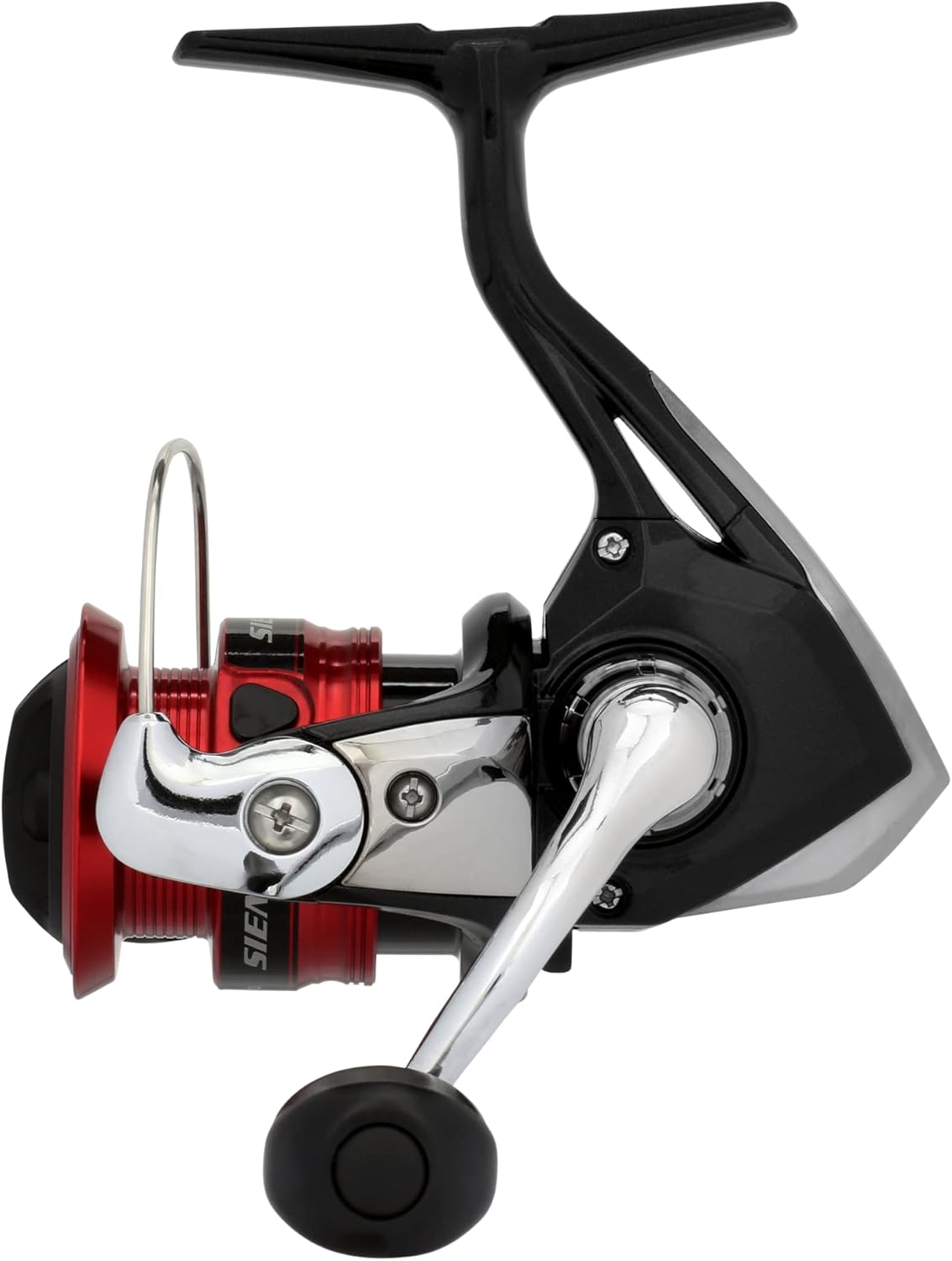
➜ Shimano Sienna 1000 — Buy on Amazon
Line: 4–6 lb monofilament or 10 lb braid with a 4–6 lb fluorocarbon leader. Clear or low-visibility line in trout-friendly colors (green, clear) outperforms high-vis options in the clear water trout prefer. Braid with a fluoro leader gives you better sensitivity and longer casts at the cost of added complexity at the tippet.
➜ Berkley Trilene XL 4lb — Buy on Amazon
Best Spinning Lures for Trout
Inline Spinners — The #1 Trout Lure
Inline spinners are the most consistently effective trout lure ever invented. The spinning blade creates flash and vibration that triggers strikes even from fish that aren’t actively feeding. If I had to fish with one lure type for the rest of my life, it’d be a Panther Martin.
The presentation that works: cast upstream at a 45-degree angle, retrieve just fast enough to keep the blade spinning. You’ll feel the vibration pulsing through the rod — that’s the blade working. Vary your speed until you find what’s working; a slow retrieve with occasional pauses often triggers following fish to commit.
Panther Martin in sizes 1/32–1/4 oz — yellow/black and silver/red are the go-to colors. My personal favorite for any new stream.
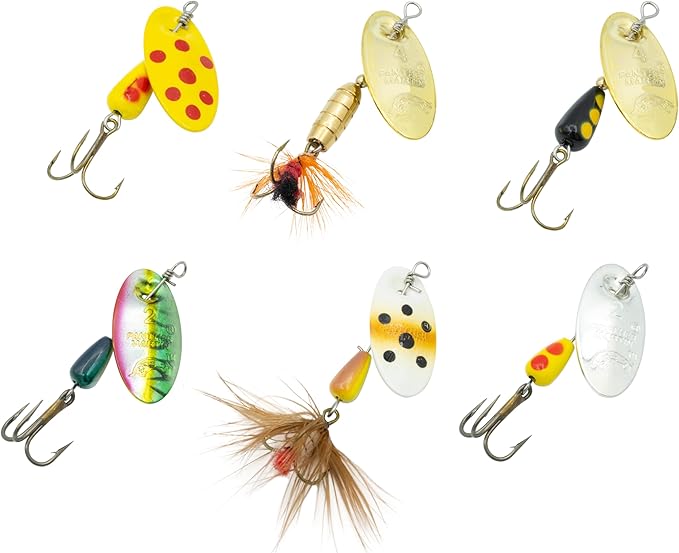
➜ Panther Martin Spinner Assortment — Buy on Amazon
Mepps Aglia in sizes 0–2 — gold blade in murky water; silver in clear. Been catching trout for over 80 years and still the #1 trout lure worldwide by many measures.
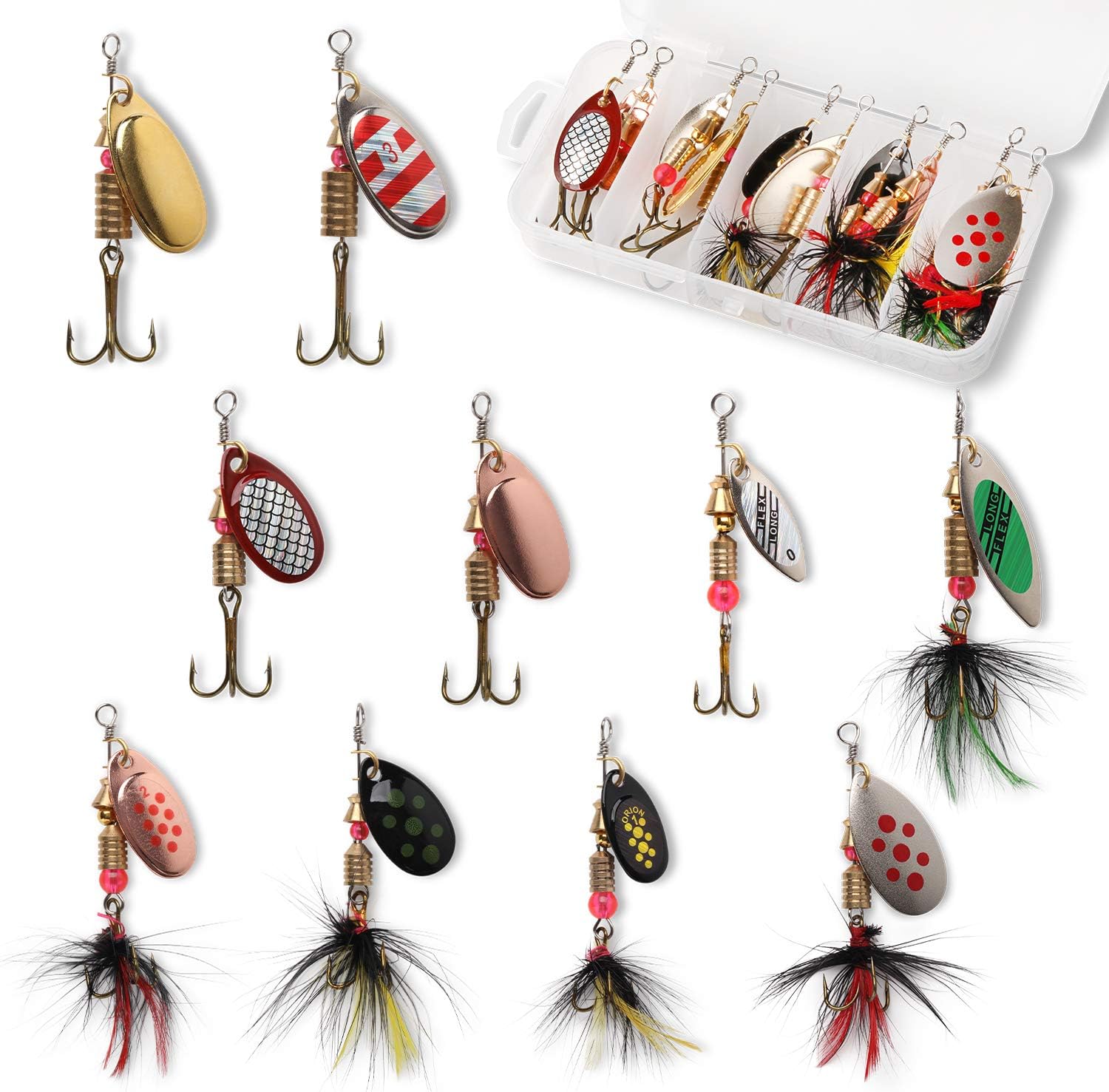
➜ Mepps Aglia #1 — Buy on Amazon
Floating Minnow Plugs
Floating plugs imitate wounded baitfish — trout eat baitfish, so the imitation works. Cast upstream, let it drift, then twitch and retrieve. In slow water or lakes, a steady retrieve with subtle twitches is the standard presentation. In rivers, the current does a lot of the work for you.
The Rapala Original Floating Minnow has been catching trout since 1936 and nothing has displaced it. The F05 (2-inch) is the standard trout size.
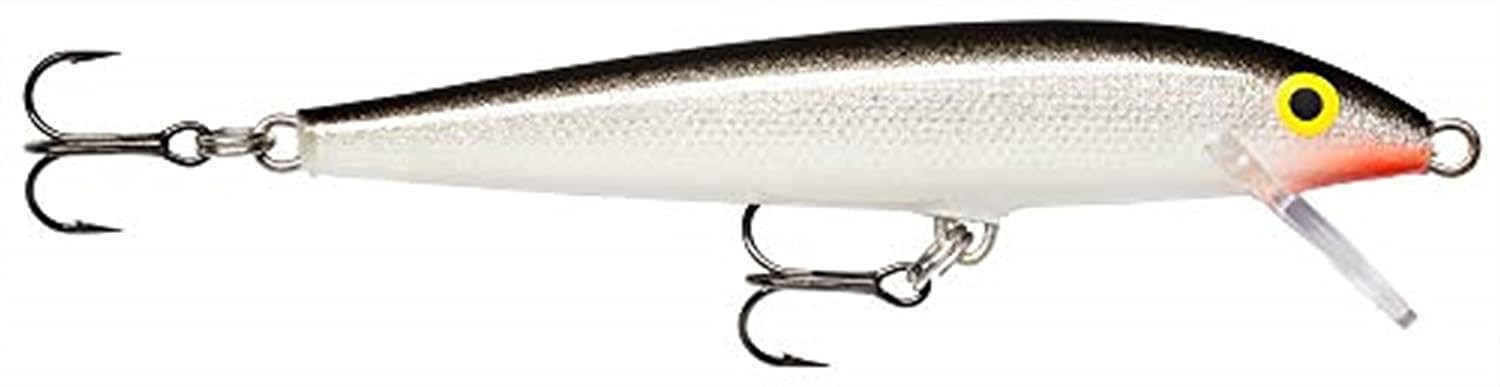
➜ Rapala Original F05 — Buy on Amazon
Spoons
Spoons excel at covering water and reaching fish you can’t reach with lighter lures. Kastmaster spoons in 1/8–1/4 oz cast a mile and produce well in both rivers and lakes. The heavier mass lets you cast into wind and reach distant holding water that spinners can’t.
On lakes like Isabella, a Kastmaster cast to the far edge of a deep cove and retrieved slowly often produces fish that wouldn’t touch anything else. In rivers, spoons work well in the deeper slots where fish are holding below the fast water.
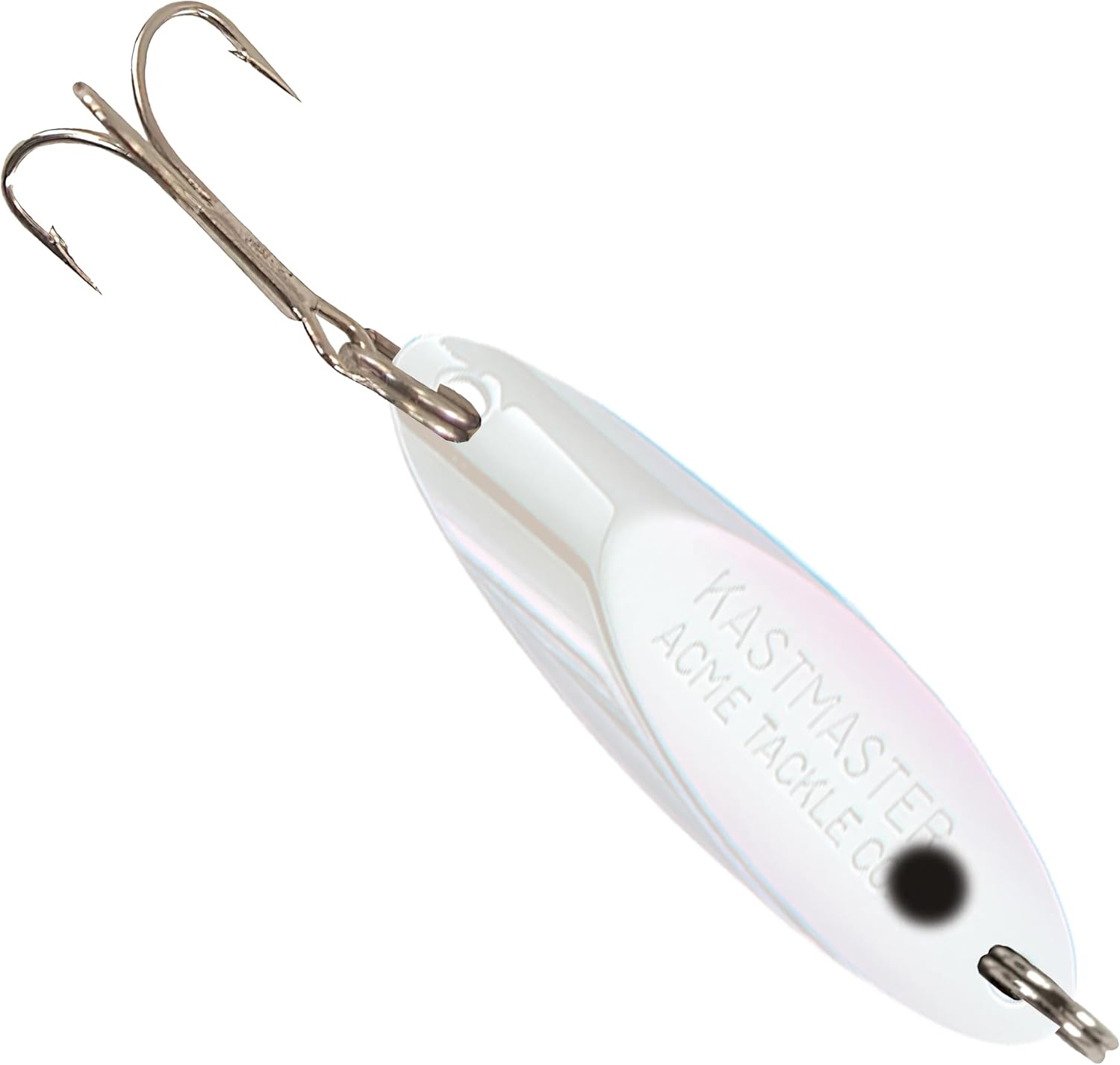
➜ Acme Kastmaster 1/8oz — Buy on Amazon
Small Jigs
Berkley Gulp Trout Worm on a 1/32–1/16 oz jig head is effective in cold water when fish are less responsive to fast-moving lures. Fish it slowly, with small hops along the bottom. This is a go-to presentation in early spring or late fall when trout metabolism is slow.
➜ Berkley Gulp Trout Worm — Buy on Amazon
Spin Fishing in Rivers vs. Lakes
The same gear works in both, but the techniques differ significantly.
Rivers and streams: Cast upstream and retrieve downstream at a controlled pace. Work seams, pool tails, and behind obvious structure. Move systematically — cast, retrieve, take two steps, repeat. Cover water to find active fish.
Lakes and reservoirs: Cast long, retrieve slow, and cover different depths. Without current to help the lure swim, you do all the work. Count down before retrieving to let the lure sink to different depths until you find fish. Reservoir fish often suspend at specific depths — once you find the depth, every cast needs to hit it.
When to Use Spin Fishing vs. Fly Fishing
Honestly, spin fishing catches more fish in more conditions than fly fishing does. Where fly fishing shines: visual dry fly situations when fish are rising, small streams with tight casting conditions, and technical presentations for heavily-pressured fish. Where spin fishing shines: everything else.
Specific scenarios where spinning is the better tool:
- Covering large reservoirs with suspended fish
- Fishing in wind (fly casting becomes nearly impossible in hard wind)
- Cold-weather fishing when fish are deep and inactive
- Off-color water where visibility is low and flash matters
- Introducing a kid or beginner to fishing (the learning curve is vastly shorter)
I still fly fish when the conditions favor it. But the spinning rod comes out of the garage more often than the fly rod does, and I’ve come to terms with that.
Frequently Asked Questions
How fast should I retrieve a spinner for trout?
Just fast enough to keep the blade spinning — you can feel the vibration through the rod. Vary your speed until you find what’s working. A slow retrieve with occasional pauses often triggers following fish to commit.
What color spinner is best for trout?
Silver or gold blade in clear water; brighter colors (chartreuse, orange) in stained water. For Panther Martins, yellow/black and silver/red are the two most consistent producers across most conditions.
Can you catch trout on plastic worms?
Yes — especially cold-water or finicky fish. A small plastic worm or tube on a jig head, fished slowly on the bottom, catches trout that won’t chase a moving lure.
What’s the best lure for stocked trout?
For lake-stocked trout, PowerBait on a small hook is more effective than any lure. If you want to use a lure, a small Kastmaster or Panther Martin worked slowly near the bottom is the most reliable option.
Do I need ultralight gear for trout?
Not required, but it’s more fun. A light spinning rod rated for 2–6 lb gives you better fight from average trout and casts small lures better than heavier gear. You can catch trout on a medium bass-fishing rod if that’s what you have, but it’ll feel like cranking fish in rather than fighting them.
Related Guides
- Complete Gear Guide
- Reading Water
- Trout Fishing for Beginners
- PowerBait Fishing
- Fly Fishing for Trout
About the Author
By Kenny — SoCal angler who learned trout fishing during college years in Fort Collins, Colorado (Poudre, Horsetooth, Estes Park) and now fishes the Sierras and SoCal lakes with my daughter Scarlett. No steelhead or salmon yet, and no ice fishing — those are on the list.