
Brook trout are America’s native jewel. They’re not technically trout (they’re char, same genus as lake trout and bull trout), but everyone calls them trout and that’s not going to change. What matters is that they’re brilliantly colored, they live in some of the most remote and beautiful water in North America, and fishing for them is as much about the journey as the catching.
I caught plenty of brook trout in small streams around Estes Park during college. Two things stand out from that experience. First, no photograph does justice to the colors — the vermiculation pattern on the back, the red spots with blue halos, and the white-and-black leading edges of the lower fins are more striking in person than any picture. Second, you consistently pull them out of water that looks like it couldn’t hold a fish that size. A thin ribbon of creek running through a meadow turns out to have 10-inch brookies stacked in every pool. Small-stream brookie fishing is one of the most quietly satisfying kinds of fishing I know.
Brook Trout Habitat
Brook trout require water consistently below 65°F, ideally 55–60°F. They’re the most cold-sensitive of the common trout species — the first species to disappear when water quality degrades, temperature rises, or introduced browns and rainbows take over a fishery. Look for them in:
- Headwater streams above natural barriers (waterfalls, gradient breaks)
- Spring-fed streams with consistent cold temperatures year-round
- High-altitude lakes, especially in the Appalachians and Rockies
- Beaver ponds and bog-fed creeks in boreal regions
- Coastal Maine and Canadian Maritimes saltwater (sea-run “salters”)
The remote, hard-to-reach water that holds wild brookies is a big part of their appeal. You usually have to work to get to good brook trout water, which means fewer anglers and more willing fish.
Best Techniques for Brook Trout
Small Stream Fly Fishing
Brook trout in small mountain streams are generally the least selective trout you’ll encounter. They’ll hit almost any fly presented naturally near their holding water. A 7–8 foot, 3-weight rod is ideal for tight casting conditions — shorter rods make less contact with overhanging branches, lighter weights present small flies softly on small water.
Stimulator dry fly (sizes 12–16) — high-floating attractor visible in broken water. The go-to brookie dry fly for pocket water and riffles.
➜ Stimulator Dry Fly Assortment — Buy on Amazon
Royal Wulff (sizes 12–16) — classic attractor dry that brookies can’t resist. The red body and white wings make it easy to see even in low light or fast water, and brookies commit hard to it.
➜ Royal Wulff Dry Fly Assortment — Buy on Amazon
Small Spinners
Tiny spinners are devastatingly effective on brook trout in small streams. Size 0 or 1 Mepps or a 1/32 oz Panther Martin cast upstream and retrieved just fast enough to keep the blade spinning will produce hookups consistently. Spinners work particularly well when the water is a little stained after rain.
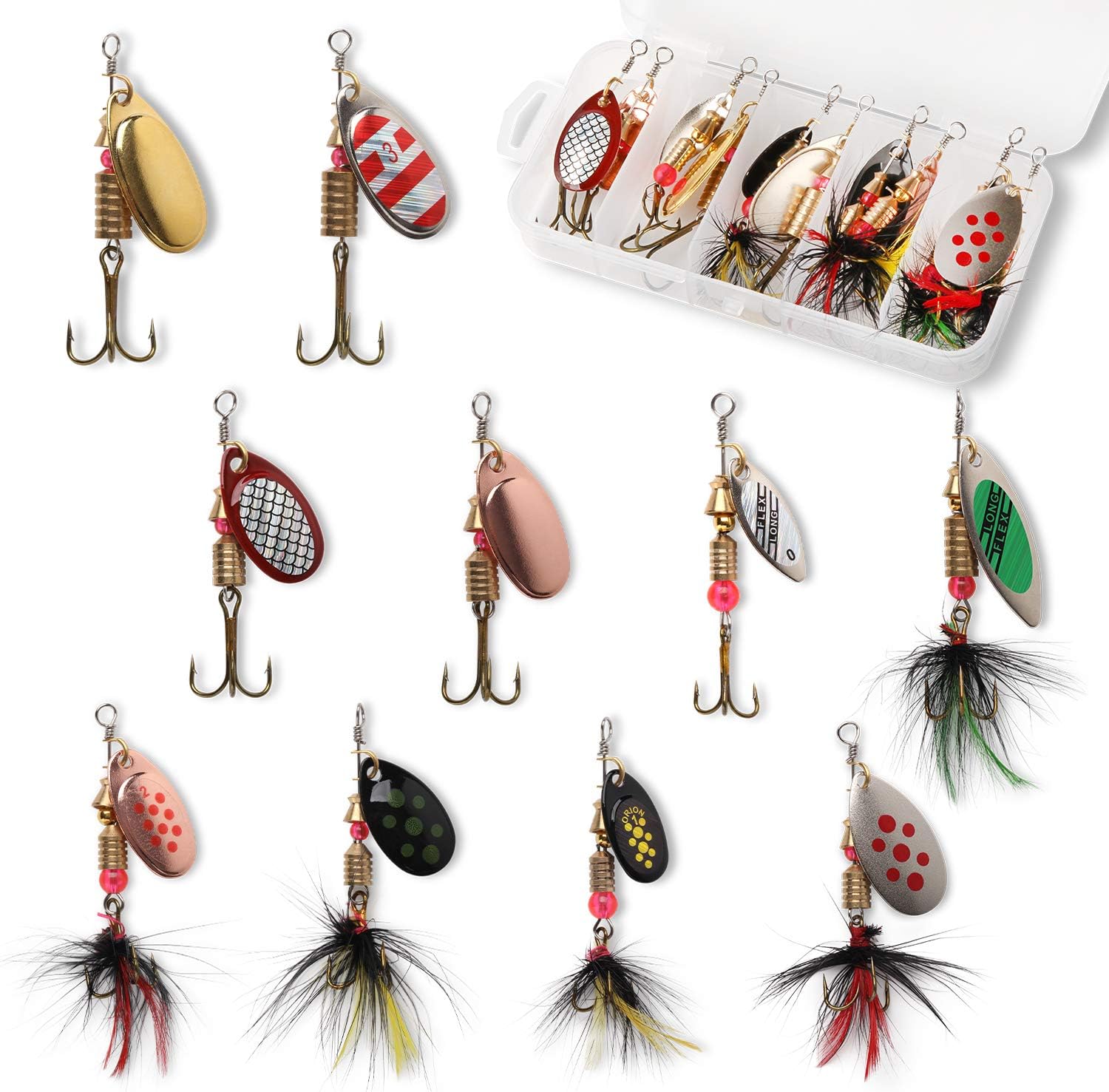
➜ Mepps Aglia Size 0 — Buy on Amazon
Worms and Natural Bait
A garden worm on a small hook, drifted through a pool, catches more wild brook trout than anything else. In states where bait is legal, this is how generations of Appalachian kids have learned to fish. It’s simple and it works.
Reading Small Brook Trout Water
Every pool in a small stream has a structure. The fastest water at the head carries food in. The deep part in the middle holds fish. The tail slows down and delivers drift to fish in the next pool down. On a small creek, you can usually see where the brook trout are without fishing — just watch for a minute and note where the food would pile up.
Key spots on brook trout water:
- Head of pools where fast water enters
- Behind rocks that create current breaks
- Undercut banks, especially under overhanging vegetation
- Deep pools below small waterfalls or ledges
- Anywhere the current slows behind or beside a log jam
Wade carefully — brook trout in small clear water are easily spooked. Approach from downstream when possible. Cast short. Make your first cast your best cast because you might only get one before the fish you’re working is spooked off.
Gear for Brook Trout
The key with brook trout gear is “light.” Light rod, light line, small flies and lures. Match the scale of the fish and the water.
Ultralight spinning rod: 5–6 foot for small streams. Matches the small lures and the small fish.
➜ Ugly Stik Elite 5ft Ultralight — Buy on Amazon
Light fly rod: 7–8 foot, 3-weight. Perfect for small-stream brookie water where a 5-weight would feel like overkill.
➜ Redington Crosswater 8ft 4wt — Buy on Amazon
Best Brook Trout Destinations
- Great Smoky Mountains National Park — the best native brook trout in the Southeast
- Adirondack Mountains, New York — brook trout in hundreds of ponds and streams
- Vermont — Green Mountain National Forest — small-stream brookie fishing
- Baxter State Park, Maine — remote trophy brookies
- Shenandoah National Park, Virginia — native brook trout streams
- Rocky Mountain National Park, Colorado — high-altitude brook trout (non-native here but well-established)
- Boundary Waters, Minnesota — canoe-in brookie fishing
- Nipigon River, Ontario — world-class trophy brook trout
Conservation
Native brook trout populations are declining across much of their historic range. Habitat degradation, stream warming, and competition from introduced browns and rainbows have reduced native brookies to remote headwater refuges in most of the East. Where you find native brookies, practice strict catch-and-release. Wet your hands before handling, keep the fish in the water as much as possible, and don’t target spawning fish in the fall.
Stocked brook trout (common in many Eastern states and high-country lakes in the West) are a different ethical situation — they’re not self-sustaining populations and harvest is often encouraged. Know which you’re fishing.
Frequently Asked Questions
How big do brook trout get?
Most wild stream brookies are 6–10 inches. A 12-inch brookie is a good fish in most water. 15+ inches is exceptional. The biggest brook trout come from large lakes in northern Canada, where fish over 5 pounds are caught every year, and from the famous Lac Albanel region of Quebec where trophies over 10 pounds exist.
Are brook trout easier to catch than rainbows?
Generally yes, especially in remote water. Brookies are less pressured, less selective, and more willing to hit a wide variety of presentations. That’s not universal — heavily pressured brook trout in popular parks can become just as spooky as any other trout.
What’s the best fly for brook trout?
Any bushy attractor dry fly — Stimulator, Royal Wulff, Elk Hair Caddis — in sizes 12–16. Brookies aren’t picky. A fly you can see is often more important than a “correct” fly.
Are brook trout a native fish?
Native to eastern North America — from Labrador to northern Georgia, and west to the upper Midwest. Introduced (and now established) in western states, where they’re generally considered invasive because they compete with native cutthroat.
Can you eat brook trout?
Yes, they’re excellent eating — considered among the finest of trout. Firm flesh with delicate flavor. That said, in most native waters they should be released to support struggling populations. Harvest is appropriate from stocked ponds and high-mountain lakes where populations are robust.
Related Guides
- All Trout Species
- Great Smoky Mountains Fishing
- Catch and Release
- Reading Water
- Fly Fishing for Trout
About the Author
By Kenny — SoCal angler who learned trout fishing during college years in Fort Collins, Colorado (Poudre, Horsetooth, Estes Park) and now fishes the Sierras and SoCal lakes with my daughter Scarlett. No steelhead or salmon yet, and no ice fishing — those are on the list.