Author: kenny

  • Colorado Trout Fishing Guide: Gold Medal Rivers & Alpine Lakes

    Colorado Trout Fishing Guide: Gold Medal Rivers & Alpine Lakes

    Colorado has more designated Gold Medal trout water than any other state in the Rocky Mountain region — a designation reserved for waters with exceptional trophy trout potential. The combination of quality tailwaters, high-altitude alpine lakes, and wild freestone rivers gives Colorado trout fishing a diversity few states can match.

    Colorado is where I actually learned to trout fish. I lived in Fort Collins during college, and the Front Range became my home water — the Cache la Poudre running down out of Rocky Mountain National Park, Horsetooth Reservoir on the edge of town, and the small creeks up around Estes Park. Those years taught me most of what I know about reading water, fishing hatches, and the particular rhythms of Rocky Mountain trout. This guide leans on that time heavily for the Front Range and North Colorado sections, and is more research-based for the Gold Medal tailwaters further south and west that I didn’t fish as often.

    North Colorado — Fort Collins and the Front Range

    This is the section I can speak to personally. If you’re traveling to Colorado and want to fish water that’s excellent but not as famous as the Gold Medal stretches further south, the Fort Collins area is worth serious consideration.

    Cache la Poudre River (the Poudre)

    The Poudre runs out of Rocky Mountain National Park, through Poudre Canyon, and down through Fort Collins to the plains. The upper canyon is classic pocket water — wild brown trout and stocked rainbows in cold, fast water flowing through granite. Highway 14 follows the river for most of the canyon, giving you dozens of pullout access points. You can pull over, walk 50 yards, and be on productive water.

    What works on the Poudre: small dry flies and nymphs in summer, streamers in fall for browns, and getting on the water early before the canyon warms. The upper reaches above Rustic fish cold year-round because of the altitude.

    The North Fork of the Poudre is slower and holds bigger browns. If you’re chasing a trophy brown in northern Colorado, the North Fork and the stretches near Livermore are where they live. These fish are wary and nocturnal as they grow — daylight fishing produces smaller fish; dawn and dusk produce the real ones.

    One practical note from my own experience: early-season wading on the Poudre is brutal. The water comes off the snowpack, and 45°F water feels like an ice bath on bare legs. Don’t skip waders until June or you’ll quit before lunch.

    Horsetooth Reservoir

    Fort Collins’s big reservoir, right on the edge of town. Horsetooth is warmer than a pure trout fishery — smallmouth bass, walleye, and pike share the water — but it does hold rainbow and lake trout, and the trout grow to respectable sizes. Good trolling water in summer when fish go deep following the thermocline. Shore fishing with PowerBait works in the cooler months. Easy public access around most of the reservoir.

    Estes Park Area Streams

    The small creeks up around Estes Park are where I learned small-stream fishing. Water you can step across in places, holding brook trout and cutthroat that show up from pools you can’t believe could hold a real fish. Some of the most memorable trout fishing I’ve had came from tiny meadow streams in and around Rocky Mountain National Park — never big fish, but beautiful fish in beautiful country.

    A few things about fishing up there: the park requires a separate fishing permit in addition to a state license. Most of the streams are small enough that a 3-weight fly rod is ideal; anything bigger feels like overkill and makes casting in tight country miserable. Brook trout in the national park waters should be released — populations are protected as native fish in many drainages.

    Gold Medal Waters (Central and Southern Colorado)

    These are Colorado’s most famous trout rivers. I haven’t fished most of them personally — the hours from Fort Collins to the San Juan basin are enough that I never made it a regular trip. What’s below is based on research, conversations with Colorado anglers I trust, and consistent reputation across sources.

    • South Platte River — Deckers, Cheesman Canyon, and Spinney Mountain sections
    • Frying Pan River — tailwater below Ruedi Reservoir near Basalt
    • Arkansas River — Salida to Cañon City section
    • Blue River — below Dillon Reservoir near Silverthorne
    • Gunnison River — the Black Canyon section
    • Taylor River — Taylor Park tailwater

    South Platte River

    The most technically demanding and by reputation the most rewarding trout fishing in Colorado. The Cheesman Canyon section — foot access only, no vehicle access — holds some of the largest and most selective brown trout in the state. Tiny midges (sizes 18–24) and precise presentations are required. Best fished October through May when flows stabilize and crowds thin.

    Frying Pan River

    A 14-mile tailwater below Ruedi Reservoir producing exceptional rainbow and brown trout year-round. Consistent cold releases maintain stable temperatures that keep fish active even in winter. Widely considered one of the best large-dry-fly rivers in Colorado during summer PMD hatches.

    Arkansas River

    The Brown’s Canyon section is prime freestone fishing with wild brown and rainbow trout. Less technical than the South Platte and more forgiving for wading anglers — better for intermediate anglers who want wild-trout Colorado without the finesse fishing demands of a Cheesman Canyon. Best October through April.

    Blue River, Gunnison, Taylor

    Three more Gold Medal waters worth the trip if you’re planning a Colorado week. Each has its own character — the Blue is a tailwater with big fish, the Gunnison runs through the spectacular Black Canyon, and the Taylor tailwater fishes year-round. A good local guide on any of these is worth the money for a first visit.

    Alpine Lake Fishing

    Colorado’s high country above 10,000 feet contains hundreds of alpine lakes holding Colorado River cutthroat, greenback cutthroat (federally threatened — release immediately), and stocked rainbows. Accessible by hiking or horseback.

    A few of the drainages worth exploring:

    • Rocky Mountain National Park (hundreds of lakes; permit required)
    • Weminuche Wilderness (San Juan Mountains)
    • Flat Tops Wilderness
    • Maroon Bells-Snowmass Wilderness
    • Indian Peaks Wilderness (accessible from Front Range)

    Alpine lake fishing is best July through September. Before July, the lakes are often still frozen or ice-covered. After September, snow can hit any day. Pack layers, plan for afternoon thunderstorms, and carry more water than you think you need — dehydration at altitude is no joke.

    When to Fish Colorado

    April–May: Pre-runoff window on tailwaters — often the best fishing of the year on the South Platte and Frying Pan. Freestones are still high and cold; tailwaters shine.

    June–July: Alpine lakes open up after ice-out. The Poudre and other North Colorado freestones start fishing after peak runoff, usually around mid-to-late June. Excellent dry fly fishing as hatches begin.

    August–September: Late summer low water. Best hopper fishing on the meadow streams. Alpine lakes at peak. September specifically is the month I’d pick for a Colorado trout trip — crowds drop, the landscape starts turning, and fish feed aggressively before winter.

    October–November: Brown trout spawning — most aggressive fish of the year. The Poudre and other freestones fish excellently for browns through mid-fall. Tailwaters fish well through winter; freestones slow down as snow starts.

    December–March: Tailwater season. The South Platte, Frying Pan, and Blue all fish through winter for anglers willing to deal with the cold. Freestone rivers like the Poudre are largely dead until spring.

    Colorado Fishing License

    A Colorado fishing license is required for anglers 16 and older. Resident annual license runs around $35; non-resident annual around $98; 1-day and 5-day non-resident licenses are available for travelers. Available online at cpw.state.co.us or at sporting goods stores.

    A Habitat Stamp is also required for most anglers — check current requirements when purchasing your license.

    Book a Guided Trip

    For the Gold Medal waters I haven’t fished myself, a guide on your first visit is worth every dollar. These are technical waters where knowing the current hatch, the productive lies, and the right depths on the right day makes the difference between catching and not catching.

    ➜ Browse Colorado Fly Fishing Guide Trips — Viator

    Frequently Asked Questions

    What’s the best trout river in Colorado?

    By reputation, the South Platte River (Cheesman Canyon specifically) produces the most trophy trout per mile — but it’s also the most technically demanding. For accessible trophy fishing, the Frying Pan and Blue River are more forgiving. For variety and classic western trout fishing, the Arkansas in Brown’s Canyon.

    When’s the best time of year for trout fishing in Colorado?

    September. Runoff is long past, fish are active with cooling water, crowds drop after Labor Day, and the landscape is beautiful. August is busier but still excellent. Winter tailwater fishing is underrated if you can deal with cold.

    Can you catch trout in Colorado year-round?

    On tailwaters, yes — excellent fishing year-round. On freestone rivers, winter fishing is slow. Alpine lakes are ice-locked from about October to July at high elevations.

    What flies work in Colorado?

    Small midges (sizes 18–24) for tailwaters in winter. Standard western dry flies (Parachute Adams, Elk Hair Caddis, Stimulators) in summer. Hoppers for August meadows. Streamers for fall browns. Pheasant Tail Nymphs work everywhere, year-round.

    Do I need a guide for Colorado trout fishing?

    Not required. A lot of Colorado trout water is fished effectively by walk-in anglers without guides. But for the Gold Medal tailwaters on a first trip — specifically the South Platte and Frying Pan — a half-day guide is genuinely worth it. The water is demanding and a local knowledge shortcut saves a frustrating first trip.


    Related Guides


    About the Author

    By Kenny — SoCal angler who learned trout fishing during college years in Fort Collins, Colorado (Poudre, Horsetooth, Estes Park) and now fishes the Sierras and SoCal lakes with my daughter Scarlett. No steelhead or salmon yet, and no ice fishing — those are on the list.

  • Yellowstone Fishing Guide: Cutthroat, Permits & Best Rivers

    Yellowstone Fishing Guide: Cutthroat, Permits & Best Rivers

    Yellowstone National Park is the spiritual home of American fly fishing — native cutthroat trout rising to dry flies in rivers surrounded by geysers, bison, and some of the most dramatic wilderness scenery in North America. A trip to Yellowstone to fish is a legitimate bucket-list destination for every serious trout angler.

    Full disclosure up front: I haven’t fished Yellowstone yet. It’s high on my list — living in Fort Collins during college, I was close enough to make the trip and somehow never did, and that’s one of my actual regrets from those years. This guide is built from park materials, research from anglers who fish the park regularly, and consistent regulations and conditions that apply across the park’s waters. When I eventually do fish Yellowstone, I’ll update this with first-hand detail. For now, everything here is verified information but not personal experience.

    Fishing Permits and Regulations

    Yellowstone has its own fishing permit system, separate from state licenses. Key rules:

    • Age 16+ requires a park fishing permit — not a state license
    • All cutthroat trout are catch-and-release throughout the park
    • Lake trout in Yellowstone Lake must be killed — they’re an invasive species threatening native cutthroat
    • Artificial lures and flies only on most park waters
    • Barbless hooks required on many waters
    • Permits available at visitor centers and ranger stations ($40 for a season, $18 for 3 days as of recent rates — verify current pricing)

    The park updates regulations periodically. Always pick up the current year’s fishing regulation booklet at a visitor center before fishing. Rules and dates change based on fish conservation needs.

    Best Fishing Waters in Yellowstone

    Yellowstone River — Hayden Valley

    One of the most iconic fly fishing reaches in the world. Large Yellowstone cutthroat rise to dry flies in a wide meadow river with near-guaranteed bison sightings and a constant (real) possibility of bears. The Fishing Bridge to Le Hardy Rapids section is exceptional. Best June through September, with prime conditions typically July and August after runoff subsides.

    Slough Creek

    A backpacking-access destination for serious fly anglers. The first, second, and third meadows — accessed by trail from the Slough Creek campground — hold some of the largest cutthroat in the park. First meadow is a full-day hike in and out. The second and third meadows require overnight camping or very long days. Worth every step for the fishing and the setting.

    Firehole River

    Fed by geothermal runoff — water temperatures run slightly warmer than other park rivers, creating different hatches and timing. The Firehole holds rainbow and brown trout alongside the cutthroat (in addition to being the unique warm-water trout stream in the park). The Fountain Flats area is excellent dry fly water. Regulations typically close the Firehole in mid-September for protection of spawning fish.

    Madison River (park section)

    Excellent rainbow and brown trout water from Madison Junction to the West Entrance. The park section is the headwaters of what becomes one of Montana’s most famous rivers below the park boundary. Fishes well throughout the park season and offers more accessible road fishing than the backcountry meadows.

    Lamar River and Tributaries

    The Lamar Valley in the northern part of the park is often called America’s Serengeti because of the wildlife — wolves, bears, bison, elk, pronghorn all visible from the road. The river itself holds cutthroat and is fished with long casts in open meadow water. The Lamar tributaries (Soda Butte Creek, Cache Creek, others) are classic small-stream cutthroat fishing.

    When to Fish Yellowstone

    Late June–July: Runoff subsides and rivers clear. The famous salmonfly hatch on certain park waters is one of the legendary events in fly fishing. Best dry fly fishing of the year on many rivers.

    August: Peak season. All waters fishing well. This is also peak tourist season — visit backcountry waters like Slough Creek to escape the crowds.

    September: The best month for serious anglers. Crowds drop dramatically after Labor Day, fish feed aggressively preparing for winter, and the landscape turns golden with fall colors. Experienced Yellowstone anglers consistently recommend September over August.

    October: Late season — some waters close for spawning protection; others fish well through early October until weather closes the high country.

    Lake Fishing in Yellowstone

    Yellowstone Lake deserves its own mention. Historically one of the great cutthroat trout fisheries in the world, the lake’s native Yellowstone cutthroat population was decimated by introduced (likely illegal) lake trout in the 1990s. The park has invested enormous effort in lake trout removal programs, and cutthroat populations are slowly recovering. Fishing regulations reflect this — cutthroat release-only, lake trout must be killed.

    Other notable park lakes: Trout Lake (small, brook trout), Grebe Lake and Wolf Lake (Arctic grayling — one of the few places in the lower 48 you can catch them), and various high-country lakes accessed by trail.

    Bear and Wildlife Safety

    Worth a direct mention. Yellowstone is bear country, and you’ll be fishing in remote areas that intersect with grizzly habitat. Carry bear spray, know how to use it, don’t fish alone in high-probability bear areas, make noise on approach to creek corridors where you can’t see ahead. The park has free bear safety materials at every visitor center — review them before going into the backcountry.

    Bison pose similar risk in many river corridors. They look placid and are dangerously fast. Give them 25 yards minimum — more when you can. The Hayden Valley and Lamar Valley are particular hotspots.

    Book a Guided Trip

    A guide is genuinely worth it in Yellowstone, especially for a first trip. Park regulations are specific, productive water isn’t always obvious, and hatches change fast at elevation. A local guide who fishes the park 100+ days per year knows which water is fishing best today in a way no outside angler can replicate.

    ➜ Browse Yellowstone Fly Fishing Guide Trips — Viator

    Frequently Asked Questions

    Do I need a Wyoming fishing license to fish in Yellowstone?

    No — you need a Yellowstone Park fishing permit, which is separate from state licenses and available at park visitor centers. Montana, Wyoming, and Idaho state licenses are not valid inside the park. A state license IS required for waters just outside the park boundaries.

    When does Yellowstone open for fishing?

    The park fishing season typically runs from the Saturday of Memorial Day weekend through the first Sunday of November. Specific waters may open later or close earlier based on fish protection. Check current regulations before your trip.

    Can I keep trout in Yellowstone?

    Native cutthroat must be released. Non-native rainbow and brown trout can be kept in some waters (in a conservation effort to reduce non-native populations). Lake trout in Yellowstone Lake MUST be killed — do not release them. Check the current regulations for each water.

    What flies should I bring to Yellowstone?

    Standard western trout box: Parachute Adams (14–18), Elk Hair Caddis (14–18), Pheasant Tail Nymphs (14–18), large hopper patterns (8–12), Woolly Buggers (6–10), and salmonfly patterns for the late June hatch. Local fly shops in West Yellowstone, Gardiner, and Cooke City carry the best current patterns.

    Is Yellowstone good for beginners?

    Yes, especially with a guide. The willing cutthroat, the open meadow waters, and the dry fly opportunities all favor beginners. A half-day guided trip on the Yellowstone River or a tributary creek is a great introduction to western trout fishing.


    Related Guides


    About the Author

    By Kenny — SoCal angler who learned trout fishing during college years in Fort Collins, Colorado (Poudre, Horsetooth, Estes Park) and now fishes the Sierras and SoCal lakes with my daughter Scarlett. No steelhead or salmon yet, and no ice fishing — those are on the list.
  • Catch and Release Trout: Best Practices for Fish Survival

    Catch and Release Trout: Best Practices for Fish Survival

    Catch and release is standard practice on most quality trout fisheries. It’s required by regulation on many premium waters and it’s the ethical choice on all wild trout fisheries. Done correctly, catch-and-release mortality rates are below 5% — the fish you release swims away, grows bigger, spawns, and someone else catches it later. Done incorrectly — keeping fish out of water too long, squeezing them, handling with dry hands — survival drops dramatically.

    A lot of what makes catch-and-release effective is just doing less. Less handling, less air time, less tissue damage. The fish doesn’t need you to do anything heroic; it just needs you to get out of its way quickly.

    The One Rule That Trumps Everything

    Keep the fish in the water as much as possible. A trout out of water is suffocating. Every second counts. If you need to photograph the fish, have your camera out and ready before landing, not after. Limit air time to under 10 seconds when possible, never more than 20.

    If someone needs to go get the camera out of a backpack, the fish is already dying in your hand. Better to release without a photo than kill the fish getting one.

    Gear for Better Catch and Release

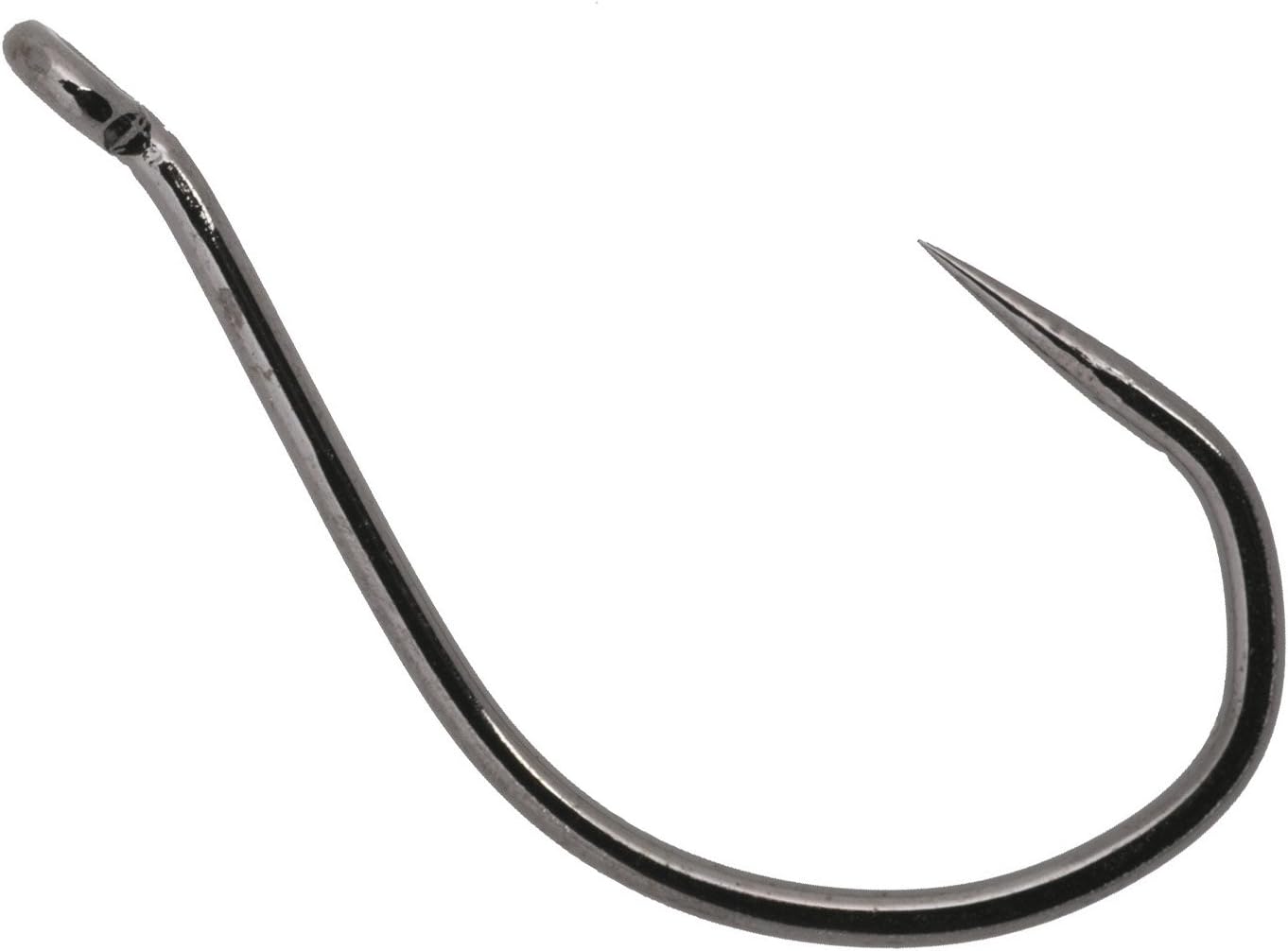
    Barbless hooks: The most effective tool for reducing handling time. You can crimp the barb with pliers in three seconds — takes the barb down without changing hook-holding ability for most fish. Many premium trout waters require barbless hooks, and even where they don’t, using barbless dramatically reduces handling time and hook damage.

    Owner barbless trout hooks

    ➜ Owner Barbless Trout Hooks — Buy on Amazon

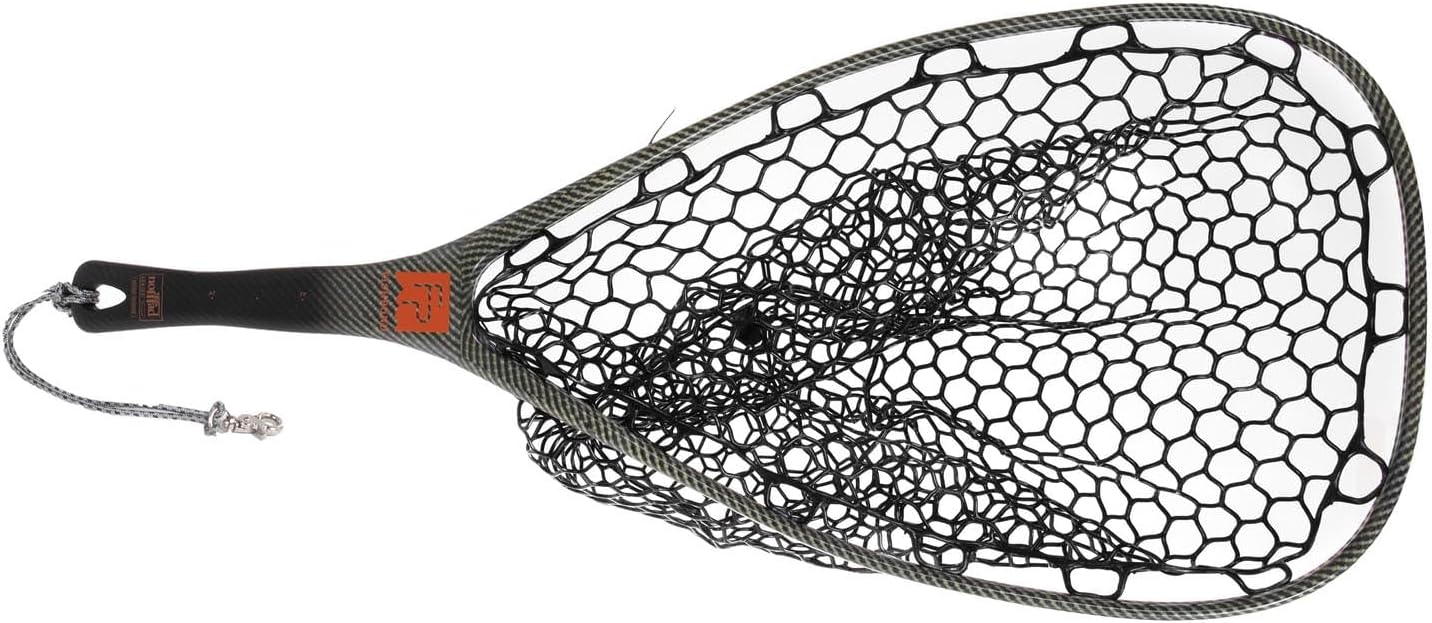
    Rubber mesh net: Knotted nylon nets (the old-style) remove the slime coat that protects fish from disease and fungal infection. Rubber mesh nets allow safe landing without damaging the slime coat. If you’re fishing for fun and releasing most fish, a rubber mesh net is non-negotiable gear.

    Fishpond rubber mesh net

    ➜ Fishpond Nomad Rubber Net — Buy on Amazon

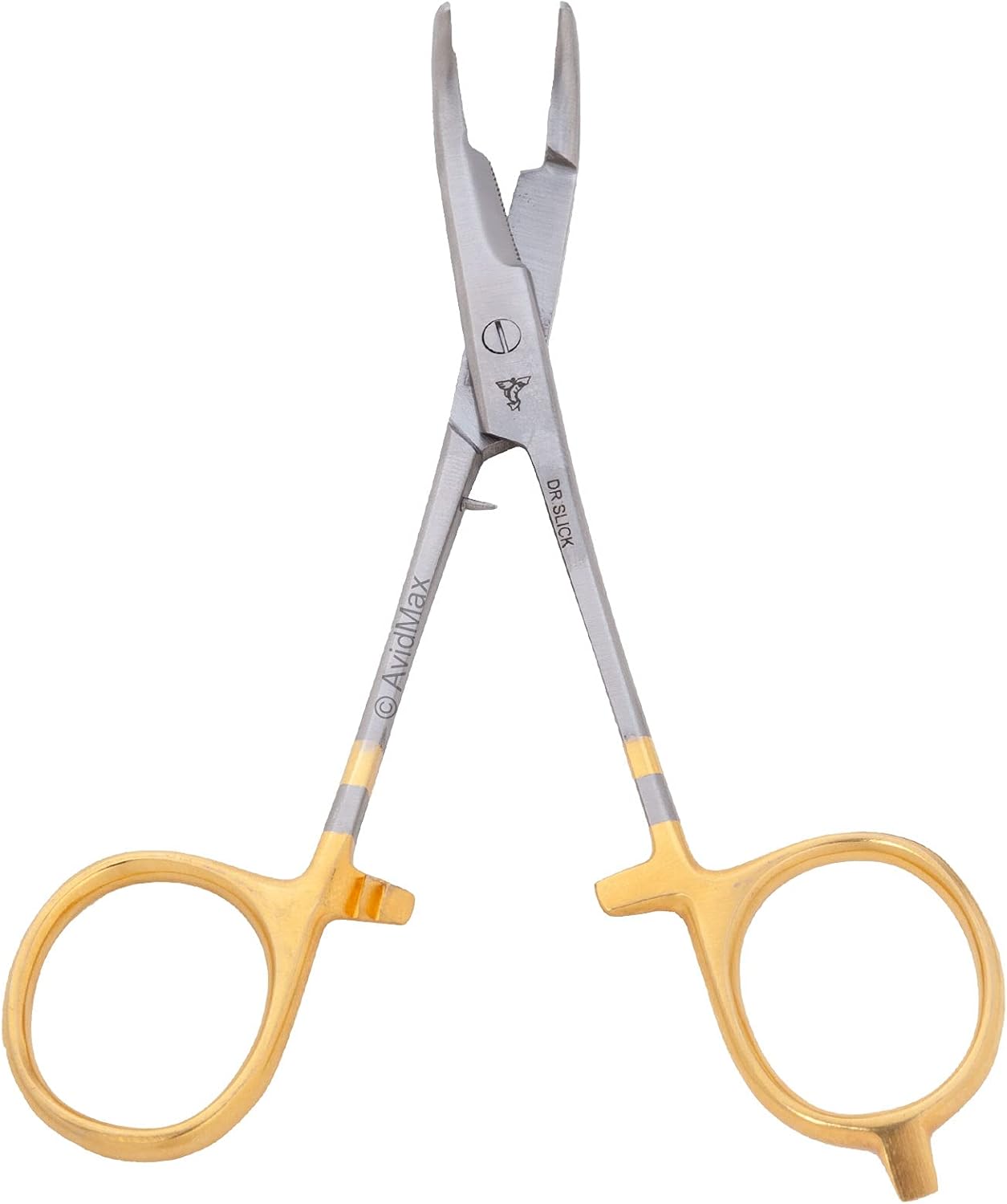
    Forceps/hemostats: For quick hook removal without prolonged handling. A good pair of forceps reaches deep hooks you can’t reach with fingers and provides leverage to back hooks out cleanly.

    Dr. Slick forceps

    ➜ Dr. Slick Curved Forceps — Buy on Amazon

    Landing Trout for Release

    Fight the fish as quickly as you reasonably can. A long, exhausting fight is one of the biggest contributors to post-release mortality — a spent fish might swim away and then die from lactic acid buildup hours later. Fight firmly with appropriate tackle; don’t play fish to complete exhaustion.

    When the fish is ready to land:

    • Use the net — don’t beach the fish or drag it over rocks
    • Keep the fish in the water in the net while you remove the hook
    • Never squeeze the fish or hold it vertically by the lower jaw
    • Wet your hands before touching the fish — dry hands remove the slime coat
    • Support the fish horizontally — one hand under the belly, one near the tail
    • If you must lift it for a photo, keep the fish low over water so a drop is short

    Hook Removal

    With barbless hooks, most trout can be released without touching them at all. Invert the net so the hook falls out, or use forceps to back the hook out while the fish stays in the net.

    With barbed hooks, use forceps to back the hook out along the path it entered. Don’t tear — if it’s deeply set, work it out gently rather than forcing it.

    If a hook is swallowed deeply: cut the leader as close to the hook as possible and release the fish. The hook will rust out faster than you think — typically in a couple of weeks — and the fish has a much better chance of survival than if you try to extract a deeply-hooked fly or lure. Trying to remove a swallowed hook often kills the fish even when you get the hook out.

    Reviving and Releasing

    Hold the fish gently upright in the current, facing upstream so water flows through its gills. Support loosely — don’t grip or squeeze. The fish is ready to release when it actively tries to swim away from your hand. Don’t release until that point, even if it takes several minutes.

    One note worth making: the old technique of moving the fish back and forth to “pump water through the gills” is actually counterproductive. Holding still and letting the fish breathe naturally works better. Fish gills are designed for forward-moving water; swishing back and forth is just stressful.

    If the fish keeps tipping sideways or goes belly-up, it’s not ready. Keep supporting it until it rights itself and swims off on its own.

    Water Temperature Matters

    Trout catch-and-release survival drops sharply as water temperature rises. Above 68°F, stress increases significantly. Above 72°F, mortality climbs even when you do everything right. When water is warm, consider stopping fishing entirely rather than catching-and-releasing fish that won’t survive.

    A stream thermometer is cheap insurance. Check the water temperature before you start. If it’s borderline, fish only in the coolest morning hours and stop when it warms up.

    Stream thermometer

    ➜ Stream Thermometer — Buy on Amazon

    Photos Worth Having

    A good release photo is possible without killing the fish. Key principles:

    • Have the camera or phone out and ready before you land the fish
    • Keep the fish low, over water
    • Wet hands always
    • One photo. Not ten. Not a reshoot.
    • Back in the water within 10 seconds

    The photo of a fish still in the net with just the head showing is often better than a “hero grip” photo anyway. Shows the fish in its element, demonstrates the release, and takes zero air time. Those are the best fishing photos I have.

    Frequently Asked Questions

    What percentage of released trout survive?

    Under normal conditions with proper handling, survival rates exceed 95%. Specific conditions (warm water, exhaustive fights, deep hooking, rough handling) can drop that significantly. The numbers in peer-reviewed studies consistently show that good handling keeps mortality very low.

    Should I use barbless hooks?

    Yes, on any water where you plan to release fish. They reduce handling time, reduce injury, and are required on many premium fisheries. Crimping barbs on regular hooks takes three seconds with pliers.

    Does it hurt trout to be caught?

    Fish feel stress and tissue trauma, though their pain perception is different from mammals. The responsible thing is to minimize stress and handling regardless of the exact answer to that question — less handling, less trauma, higher survival.

    Can I keep a fish that swallowed the hook?

    If you’re legally allowed to keep it and plan to, yes. If you’re releasing it, cut the leader close to the hook and release — don’t try to extract a deeply-swallowed hook. The fish has a much better chance with the hook in place than it does with you digging around to get it out.

    What should I do if a released fish floats belly-up?

    Pick it up, hold it upright facing into the current, and continue supporting it until it recovers. If it doesn’t recover after several minutes of revival, the fish may not make it — warm water, long fight, or other stress may have been too much. Keep the fish if legal to avoid waste.


    Related Guides


    About the Author

    By Kenny — SoCal angler who learned trout fishing during college years in Fort Collins, Colorado (Poudre, Horsetooth, Estes Park) and now fishes the Sierras and SoCal lakes with my daughter Scarlett. No steelhead or salmon yet, and no ice fishing — those are on the list.
  • Reading Water: How to Find Trout in Any Stream or River

    Reading Water: How to Find Trout in Any Stream or River

    The single skill that separates consistent trout anglers from occasional ones is the ability to read water — to look at a river and know where trout are likely holding before you ever make a cast. Trout occupy specific lies that provide food, oxygen, and safety from predators. Once you understand what creates those lies, you can walk up to any new stream and focus on the 20% of the water that holds 80% of the fish.

    Most of what I know about reading water came from years on the North Poudre and the creeks around Estes Park. Every new piece of water taught something. The biggest lesson I learned: trust the features more than the water’s appearance. A shallow riffle that looks empty can be a food factory feeding a fish that’s holding just below it. A deep pool that looks perfect can be dead because it has no current seam to deliver food. Learn to see what the water is doing, not just how it looks.

    What Trout Need

    Every trout in a stream is balancing four requirements:

    • Current seam: The boundary between fast and slow water, where drifting food concentrates
    • Cover: Protection from predators above (birds) and from strong current
    • Depth: Enough water to feel secure
    • Oxygen: Well-aerated water, typically from upstream riffles

    A spot that offers all four is prime holding water. A spot that offers three is probable holding water. A spot that offers two or fewer is rarely worth fishing.

    River Features and Where Trout Hold

    Riffles

    Shallow, fast, broken water over rocks. Riffles oxygenate the water and are insect factories — aquatic invertebrates thrive in riffles. Trout rarely hold in the fastest part (too much energy expenditure), but the edges and the tailout where a riffle transitions to a pool are productive feeding stations. A hungry trout will sit just below a riffle and pick off everything the current delivers.

    Runs

    Moderate-depth, moderate-speed water between a riffle and a pool — often the most consistently fish-holding section in a river. Look for:

    • Seams along the edges where current speeds differ
    • Submerged rocks visible as surface “pillows” or boils
    • Any structure breaking the current — log jams, old stumps, root wads

    Runs are where I caught most of my browns on the Poudre. They hold fish consistently, they’re fishable with almost any technique, and they’re where I’d direct a new angler first.

    Pools

    Deep, slow water formed where current digs into the riverbed. Big fish live in pools, particularly at the deepest point. But pools are complicated — the deepest water often holds fish that aren’t actively feeding. The pool entry (where fast water enters), the pool edges, and the tailout are usually more productive than the center.

    A mistake I made early on: assuming the deepest, darkest water held the most fish. It holds the biggest fish sometimes, but they’re often lying up, not feeding. For active fish, fish the edges and tailouts of pools.

    Tailouts

    The shallow, slowing section at the downstream end of a pool before the next riffle starts. This is prime feeding water during hatches — fish can see insects clearly and intercept them with minimal current to fight. Wading through tailouts instead of fishing them is a common mistake. A lot of anglers walk right through trout.

    Pocket Water

    Fast, chaotic water over and around boulders creating small pockets of slower water behind each rock. Each pocket can hold a trout. Short-line nymphing and dry flies through pocket water is one of the most productive techniques in certain streams — especially steeper gradient freestones like the upper Poudre. A three-foot pocket behind a basketball-sized rock can hold a 14-inch fish.

    Undercut Banks

    Where the current cuts under a bank, creating a shaded, protected area. Large brown trout love undercut banks — especially during daylight hours when they’re not actively feeding. Presenting a streamer or hopper pattern tight to the bank and as far under the overhang as possible is how you raise fish that won’t come out for anything else.

    Seams

    The boundary between fast and slow current is the single most important feature in river trout fishing. Food concentrates along seams because slower water slows down the drift while faster water continues delivering. Trout position themselves in the slow side of the seam and reach across to take food from the faster side.

    Any visible seam in a river is worth fishing. If you had to pick one feature to fish in an unfamiliar river, fish seams.

    Surprising Small Water

    One lesson the Estes Park creeks taught me: don’t write off water that looks too small to hold fish. A 3-foot-wide brook cascading through a meadow can hold 10- and 12-inch brook trout in every small pool. A narrow run through willows can hide a legitimate wild brown. If the water is cold, clean, and has any kind of depth or cover, assume it holds fish until proven otherwise. Small-stream fishing is some of the most consistently rewarding trout water there is.

    Seasonal Location Shifts

    Spring high water: Runoff pushes trout to the margins. Fish slower water near banks, backwaters, and eddy pockets. The main current is too strong to hold in. In Colorado, peak runoff through May and early June blows out most freestone rivers — fish tailwaters or wait.

    Summer low water: Fish retreat to deep pools and undercut banks during midday when water warms. Best fishing at dawn and dusk when temperatures drop and fish become active again.

    Fall: Cooling water activates trout throughout the river. Pre-spawn brown trout are aggressive and territorial. Some of the best fishing of the year happens in September and October.

    Winter: Trout hold in the deepest, slowest pools where they can conserve energy. Slow nymphs fished deep produce when little else does. Many freestone rivers are dead; tailwaters fish well.

    How to Approach New Water

    When you walk up on a piece of water you’ve never fished, spend five minutes looking before you cast. Specifically:

    1. Identify the current — where is the water going, where is it fast, where is it slow?
    2. Find the seams — these are where fish are feeding
    3. Spot the cover — undercuts, log jams, submerged boulders, overhanging branches
    4. Plan your approach — work upstream when possible; trout face into the current
    5. Cast short first — don’t spook fish at your feet trying to reach water 40 feet away

    Most anglers walk up and immediately start casting to obvious spots. Better anglers stop and look first. The five minutes you spend reading the water will make you a better fisherman for the next hour.

    Frequently Asked Questions

    Where do trout hide during the day?

    In pressured rivers, large trout retreat to deep pools, undercut banks, and shaded lies during midday. In wilderness or low-pressure settings, trout feed throughout the day. Weather matters — overcast days produce midday action even on pressured fish.

    What side of a river should I fish?

    Fish the side that gives you the best approach without spooking fish. Generally, wade the shallow side and cast to the deeper side. On streams with overhanging cover on one bank, cover-side fishing requires fishing from the opposite bank.

    Why aren’t the fish where they should be?

    Usually one of three reasons: water temperature has moved them (too warm or too cold for the “prime” lies), recent pressure has pushed them to less obvious spots, or food availability has changed. When fish aren’t where they should be, think about what’s different today and adjust.

    Is it better to fish upstream or downstream?

    Upstream when possible. Trout face into the current, so approaching from downstream means they don’t see you. Downstream fishing can work with the right technique (swinging flies, drifting lures) but is generally less productive on pressured fish.

    How do I find trout in lakes?

    Different rules. In lakes, fish follow temperature and oxygen. Inlet streams, drop-offs, submerged structure, and weed edges all concentrate fish. Without current to create seams, structure matters more.


    Related Guides


    About the Author

    By Kenny — SoCal angler who learned trout fishing during college years in Fort Collins, Colorado (Poudre, Horsetooth, Estes Park) and now fishes the Sierras and SoCal lakes with my daughter Scarlett. No steelhead or salmon yet, and no ice fishing — those are on the list.
  • PowerBait for Stocked Trout: Rigs, Colors & Techniques

    PowerBait for Stocked Trout: Rigs, Colors & Techniques

    PowerBait is the single most effective bait for hatchery-raised trout. That’s not marketing — it’s just the reality of how stocked fish were raised and what they recognize as food. Stocked rainbow trout spend their whole lives before release eating floating pellet food. PowerBait mimics that food in both buoyancy and scent. The floating rig puts the bait exactly where hatchery fish expect to find it: suspended just off the bottom.

    I’ve fished a lot of PowerBait over the years on SoCal lakes — Dixon, Big Bear, Irvine — and it works. My daughter Scarlett caught her first trout on a chartreuse PowerBait glob at Dixon. Is it exciting fishing? Not really. You cast, set the rod in a holder, and wait. On a cold morning it can be a test of patience. But it catches fish consistently and it’s the best technique for introducing kids or first-timers to trout fishing because the action happens fast enough to keep them engaged.

    Why PowerBait Works on Stocked Trout

    Hatchery trout are conditioned from hatching to eat floating pellets dropped into their raceway tanks. They look for food at mid-water depth, not on the bottom or at the surface. When stocked into a lake or pond, they continue looking for food at that same mid-water depth — which is exactly where a floating PowerBait rig presents it.

    Wild trout are a different story. Their diet is insects, crustaceans, and small baitfish, and they ignore PowerBait almost entirely. This is why PowerBait is devastating on Big Bear the day after a stocker truck visits, and completely useless on the Poudre River two hours east of Denver.

    The Basic PowerBait Rig

    This is a sliding sinker rig (sometimes called a Carolina rig). The sinker stays on the bottom; the bait floats up from it at leader length. Exactly where the fish are looking.

    1. Thread the main line through a small egg sinker (1/4–1/2 oz)
    2. Tie a small barrel swivel to stop the sinker from sliding to the bait
    3. Attach 12–18 inches of 4–6 lb fluorocarbon leader to the swivel
    4. Tie a size 12–14 bait hook to the leader
    5. Pinch a marble-sized ball of PowerBait around the hook — cover the hook completely
    6. Cast to open water and let it settle — sinker rests on bottom, PowerBait floats above it at leader length

    Open the bail and leave the line slack so fish can take without feeling resistance. When the line starts moving or the rod tip bends with clear pressure, close the bail and set the hook.

    PowerBait Colors

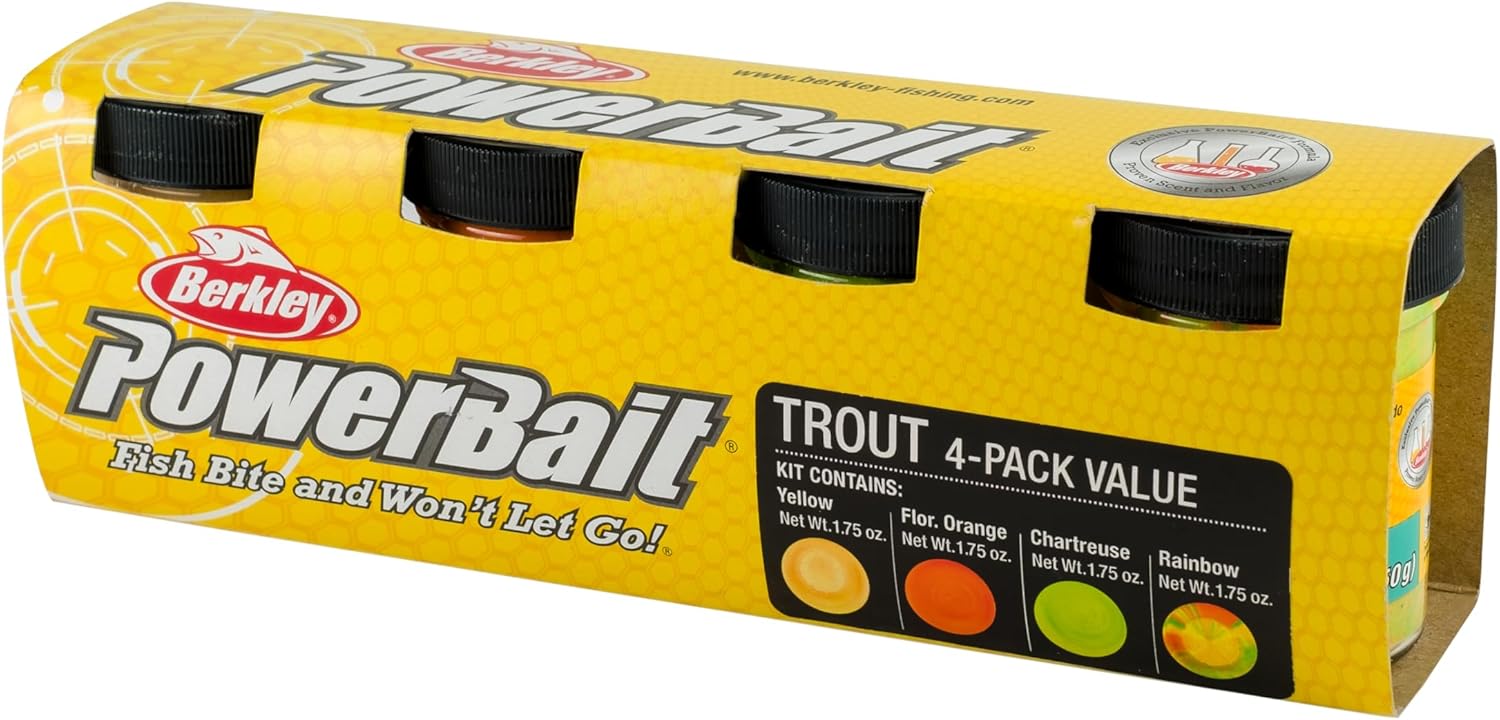
    Chartreuse and rainbow are the top-producing colors nationally. Chartreuse works especially well in stained water or low light. Rainbow (pink/orange/yellow blend) works well in clear water and on fresh stockers. Carry both.

    For finicky fish or after the easy bite has slowed down, try:

    • Orange — often triggers follow-up strikes after the initial chartreuse bite dies off
    • Yellow — good in clear water with bright sun
    • White/glitter — underrated color, especially in cold water

    Berkley PowerBait chartreuse and rainbow

    ➜ Berkley PowerBait 4 Pack — Buy on Amazon

    ➜ Berkley PowerBait Single Jars — Buy on Amazon

    Terminal Tackle

    Hooks: Size 10–14 bait hooks or egg hooks — completely hidden by the PowerBait. Smaller hooks hide better; larger hooks hold better. Size 12 is the best compromise for most conditions.

    ➜ Gamakatsu Baitholder Hooks Size 10 — Buy on Amazon

    Egg sinkers: Start with 1/4 oz for most situations. Use 1/2 oz if you need to cast farther or fish deeper water.

    ➜ Egg Sinker Assortment — Buy on Amazon

    Fluorocarbon leader: Less visible than mono in clear water. On stocked lakes where fish aren’t leader-shy, 4 lb mono is fine. On clearer water with pressured fish, fluorocarbon is worth the upgrade.

    ➜ Seaguar Gold Label 6lb Fluorocarbon — Buy on Amazon

    Where to Cast

    Stocked trout hold near the stocking point for days after release, gradually dispersing as they get comfortable. If you can find out where the stocking truck released fish — ask at the bait shop, check the lake’s visitor info, or look for anglers catching fish — that’s your starting point.

    Other productive spots:

    • Near inlet streams — cooler water where fresh oxygenated water enters the lake
    • Along gradual drop-offs — where shallow flats meet deeper water
    • Near shoreline structure — fallen trees, dock pilings, rock piles
    • Wind-blown shorelines — wind pushes surface food toward downwind shores; fish follow

    If one spot hasn’t produced in 30–45 minutes, move. Stocked trout cluster — where you find one, there are usually more. A slow spot rarely improves; a slow day often just means you haven’t found the cluster yet.

    Alternative Baits for Stocked Trout

    PowerBait is the default but not the only option. A few alternatives worth carrying:

    Salmon eggs: Work especially well for freshly-stocked fish that haven’t figured out PowerBait yet. Also excellent for wild trout in the right situations.

    ➜ Berkley Gulp Salmon Eggs — Buy on Amazon

    Nightcrawlers: Thread on a size 8–10 hook leaving the tails to wiggle. Works on both stocked and wild trout. A classic bait that’s been catching trout for generations.

    ➜ Berkley Gulp Nightcrawler — Buy on Amazon

    Fishing With Kids

    This is where PowerBait really shines. Kids need action to stay interested, and PowerBait on a stocked lake delivers more action than any other method for young anglers. A few tips from taking Scarlett fishing:

    • Rig the rod yourself — little hands struggle with knots and baiting hooks
    • Keep gear simple — one rod, one rig, one jar of PowerBait
    • Bring snacks and drinks — fishing is the backdrop; the outing is the event
    • Let them reel in every fish, even small ones — the reeling is half the fun
    • Watch your rod tips together — turns waiting into shared anticipation

    A kid who catches one trout on their first trip will want to come back. A kid who sits for four hours with no bites usually won’t. Choose a productive lake, fish in the morning, and start with what works.

    Frequently Asked Questions

    Does PowerBait work on wild trout?

    Rarely. Wild trout feed on insects and invertebrates, not pellet food. For wild trout in streams and rivers, flies, spinners, and natural bait are far more effective. PowerBait is specifically a stocked-trout tool.

    How long should my PowerBait leader be?

    12–24 inches. Longer leaders let the bait float higher off the bottom — useful when fish are suspended. Start with 18 inches and adjust based on what’s working. If you’re not getting bites, try shortening or lengthening before changing anything else.

    What’s the best time of day for PowerBait fishing?

    Early morning (first light to 9 AM) and late afternoon (4 PM to dusk) are most productive. Midday can be slow, especially in summer when water warms.

    Do I need to reel in every few minutes?

    No — let the rig sit. Stocked trout usually take the bait while it’s stationary. Reel in only to check the bait every 20–30 minutes or when you think it’s been bumped.

    Can I use PowerBait in rivers?

    It’s less effective in rivers because the current makes the floating rig behave unnaturally. Stick to lakes and ponds for PowerBait. In rivers, small spinners or natural bait drifts work better.


    Related Guides


    About the Author

    By Kenny — SoCal angler who learned trout fishing during college years in Fort Collins, Colorado (Poudre, Horsetooth, Estes Park) and now fishes the Sierras and SoCal lakes with my daughter Scarlett. No steelhead or salmon yet, and no ice fishing — those are on the list.

  • Ice Fishing for Trout: Gear, Jigging Techniques & Best Lakes

    Ice Fishing for Trout: Gear, Jigging Techniques & Best Lakes

    Ice fishing for trout rewards anglers willing to brave the cold with access to fish that are rarely caught any other way. Lake trout, brook trout, and splake suspend in predictable depth ranges under ice — find them with electronics, drill a hole, and present a jigging spoon or live bait. The technique is straightforward but the payoff is exceptional fish quality and access to water that’s inaccessible in summer.

    Full honesty: I’ve never ice fished. SoCal doesn’t exactly provide the conditions. This article is built from research, conversations with ice anglers, and techniques that produce consistently across the northern US and Canada. If you’re reading this as an experienced ice fisherman and I’ve gotten something wrong or missed a key detail, I’d genuinely like to hear from you so I can sharpen the guide. Bylines elsewhere on the site will tell you when I’m writing from personal experience versus research like this one.

    Safety First

    Ice fishing starts with not falling through the ice. Ice thickness guidelines:

    • 4 inches: Walking and ice fishing (single angler)
    • 5–6 inches: Snowmobile or ATV
    • 8–12 inches: Small car or light truck
    • 12–15 inches: Medium truck

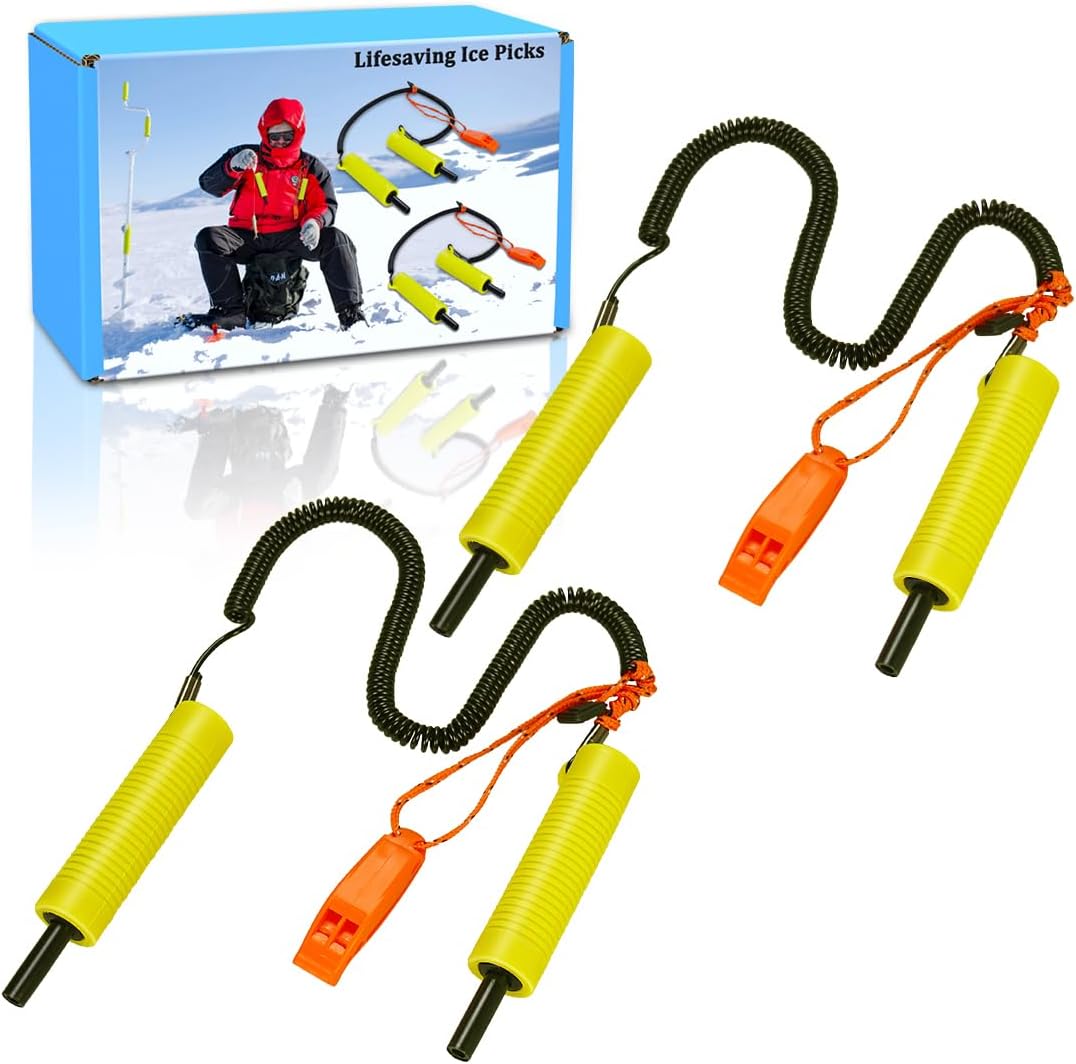
    Those are minimums, not recommendations. Always carry ice picks so you can self-rescue if you break through, check thickness multiple times when crossing new ice, and never fish alone on uncertain ice. Clear blue ice is stronger than white or cloudy ice — half the thickness of slush ice equals the strength of clear ice.

    Spring ice is the most dangerous. Ice that held a truck in January can be rotten and unsafe in March even if it looks thick. When in doubt, don’t go.

    Ice safety picks

    ➜ Ice Safety Picks — Buy on Amazon

    Essential Ice Fishing Gear

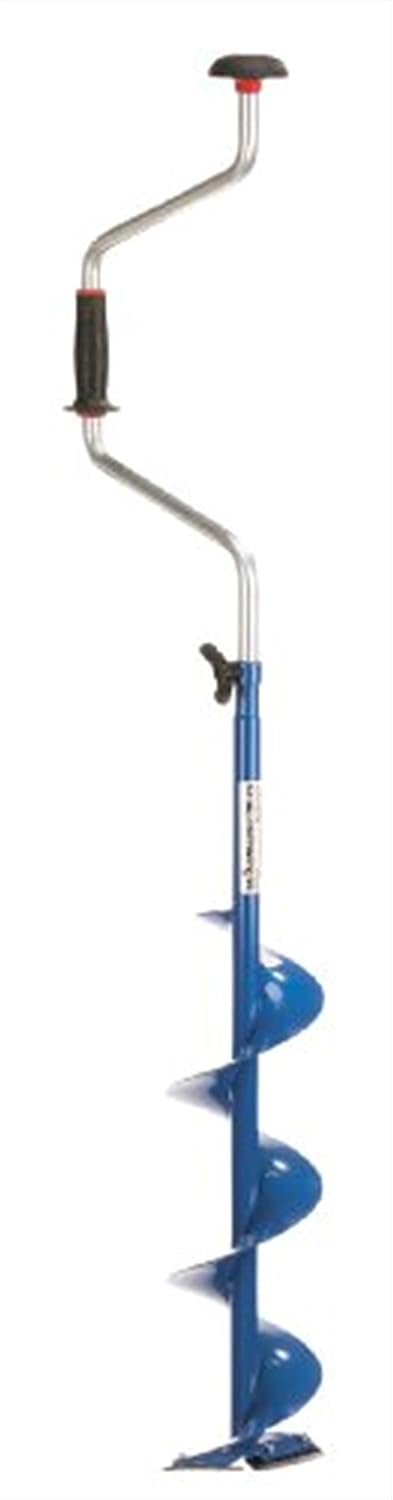
    Ice auger — you need a hole through the ice. Hand augers for a few holes; power augers for drilling many holes efficiently. A 6-inch auger is the standard for most trout fishing; 8-inch for larger lake trout.

    Strikemaster hand ice auger

    ➜ Strikemaster Hand Ice Auger 6-inch — Buy on Amazon

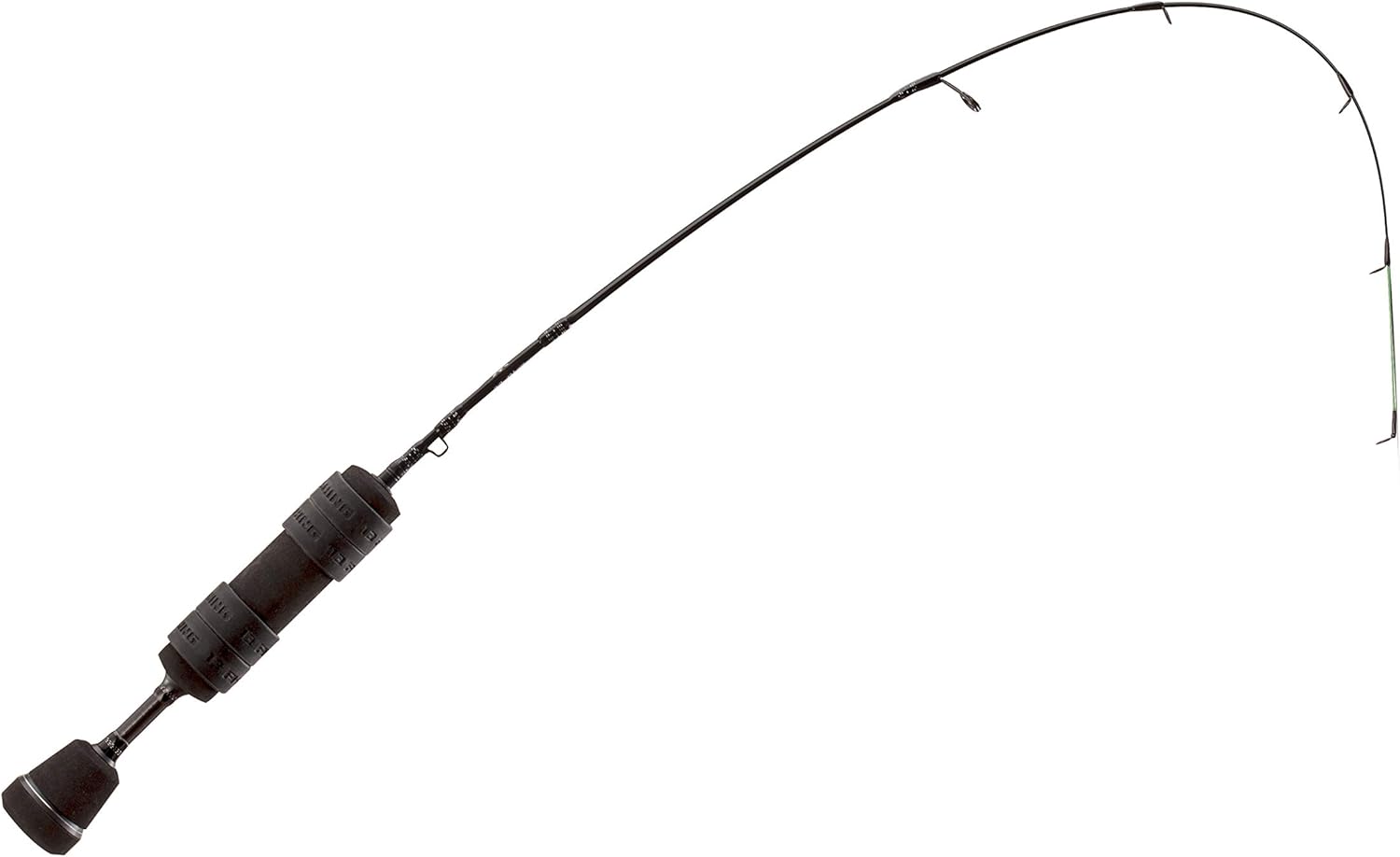
    Ice rod — short (24–36 inch) rod with sensitive tip for detecting light strikes through a small hole. The short rod stays inside an ice shanty; the sensitive tip shows strikes you’d miss on a longer rod.

    13 Fishing ice rod

    ➜ 13 Fishing Widow Maker Ice Rod — Buy on Amazon

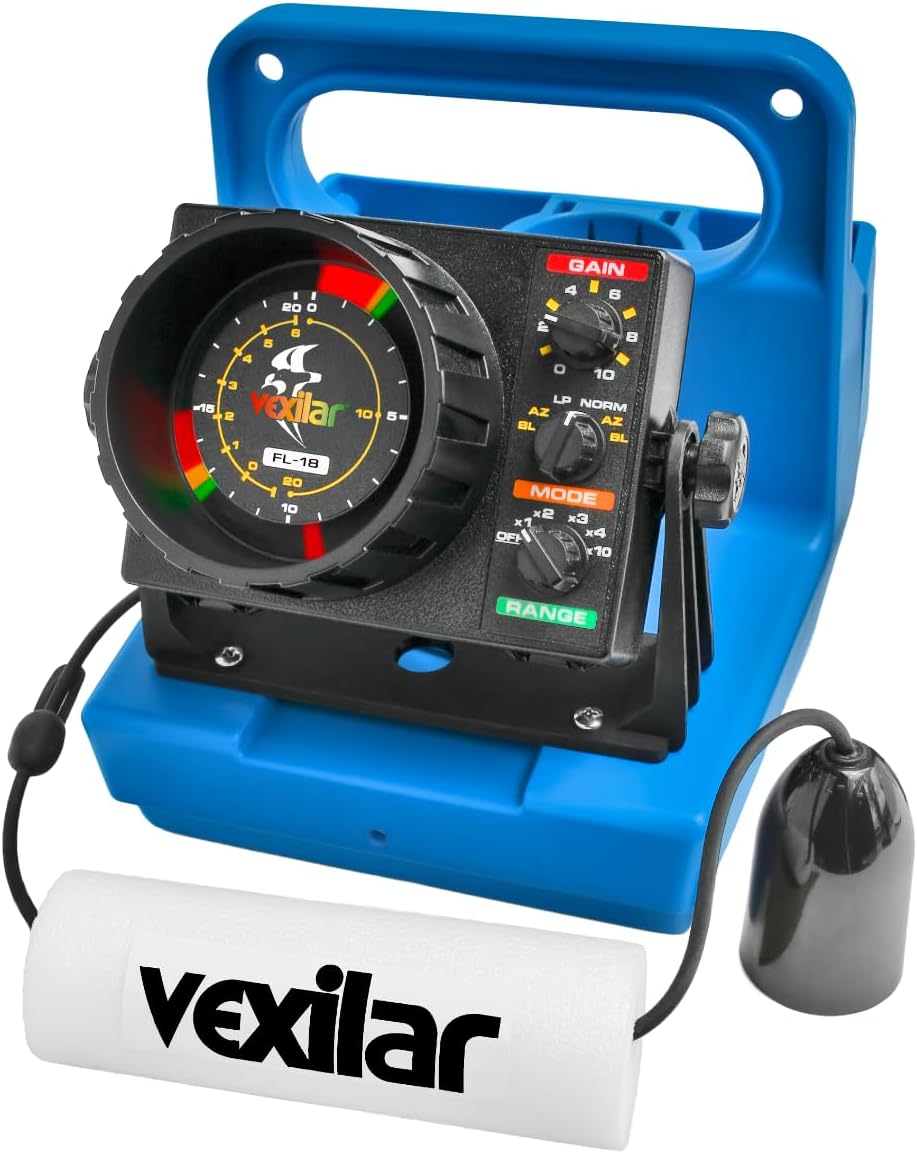
    Flasher/fish finder — shows fish depth and lure position in real time. You see your jig dropping down, fish rising to look at it, and the merge when a fish takes. Flashers transform ice fishing from blind fishing into visual fishing.

    Vexilar FL-18 flasher

    ➜ Vexilar FL-18 Ultra Pack Flasher — Buy on Amazon

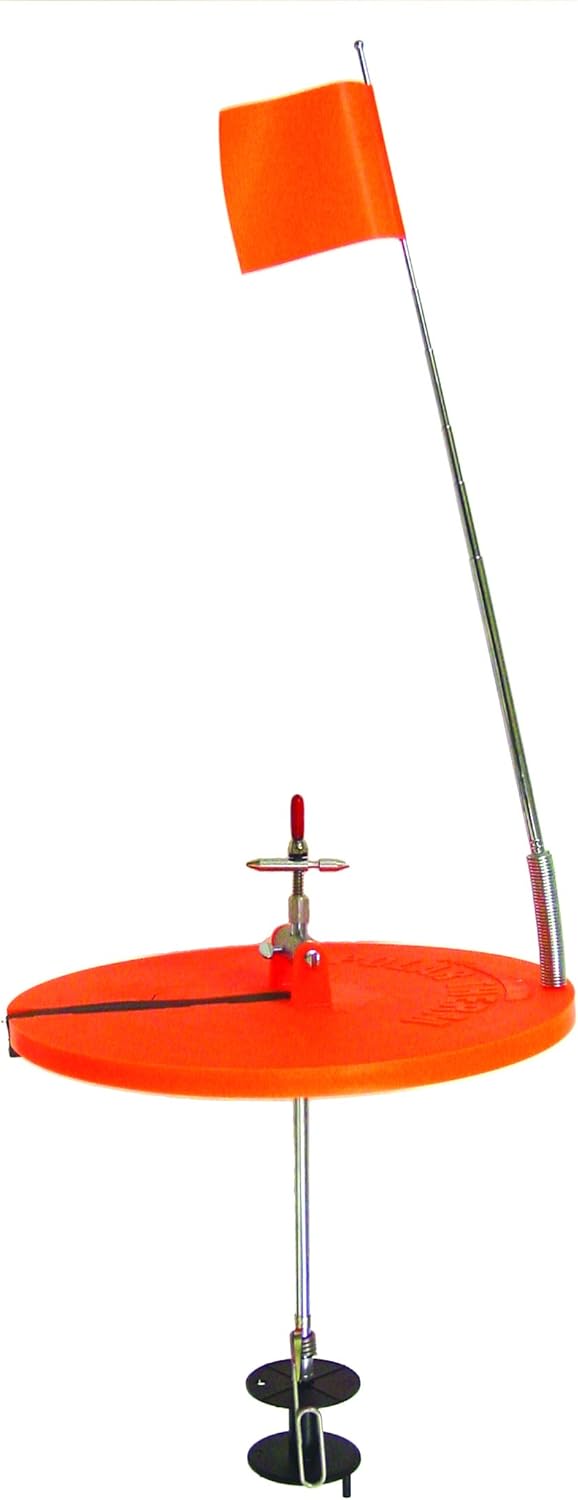
    Tip-ups — mechanical devices that suspend bait at depth and signal when a fish takes. A spring-loaded flag pops up when line starts moving. Let you fish multiple holes at once — check local regulations for how many tip-ups are legal.

    HT Polar tip-up

    ➜ HT Polar Therm Tip-Up — Buy on Amazon

    Jigging Techniques

    The basic presentation: lower the lure to the bottom, crank up 6–12 inches, then work the lure with a lift-drop cadence. Watch your flasher — when a fish mark moves toward your lure mark, slow down or stop. When the two marks merge, set the hook immediately.

    Cadence variations by species:

    • Lake trout: Aggressive lift-drop with long pauses. Lake trout often commit on the pause.
    • Brook trout: Smaller, quicker movements. Finesse presentations.
    • Rainbow trout: Between the two — steady lift-drop with occasional pauses.

    Swedish Pimple — classic lake trout ice jig. Been catching lakers through the ice for decades.

    Bay De Noc Swedish Pimple

    ➜ Bay De Noc Swedish Pimple — Buy on Amazon

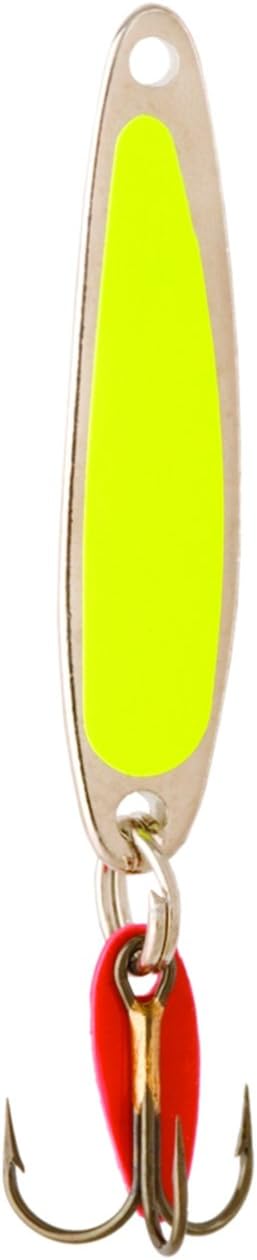
    Kastmaster 1/2–1 oz — most versatile ice jigging spoon for lake trout. The same spoon that works in open water works through ice.

    ➜ Kastmaster 1/2oz Ice Jig — Buy on Amazon

    Tungsten jigs (size 6–8) tipped with waxworm — for brook trout and splake. Tungsten is denser than lead for a given size, so you get a smaller profile for the same sink rate.

    ➜ Tungsten Ice Jig Assortment — Buy on Amazon

    Cold Weather Clothing

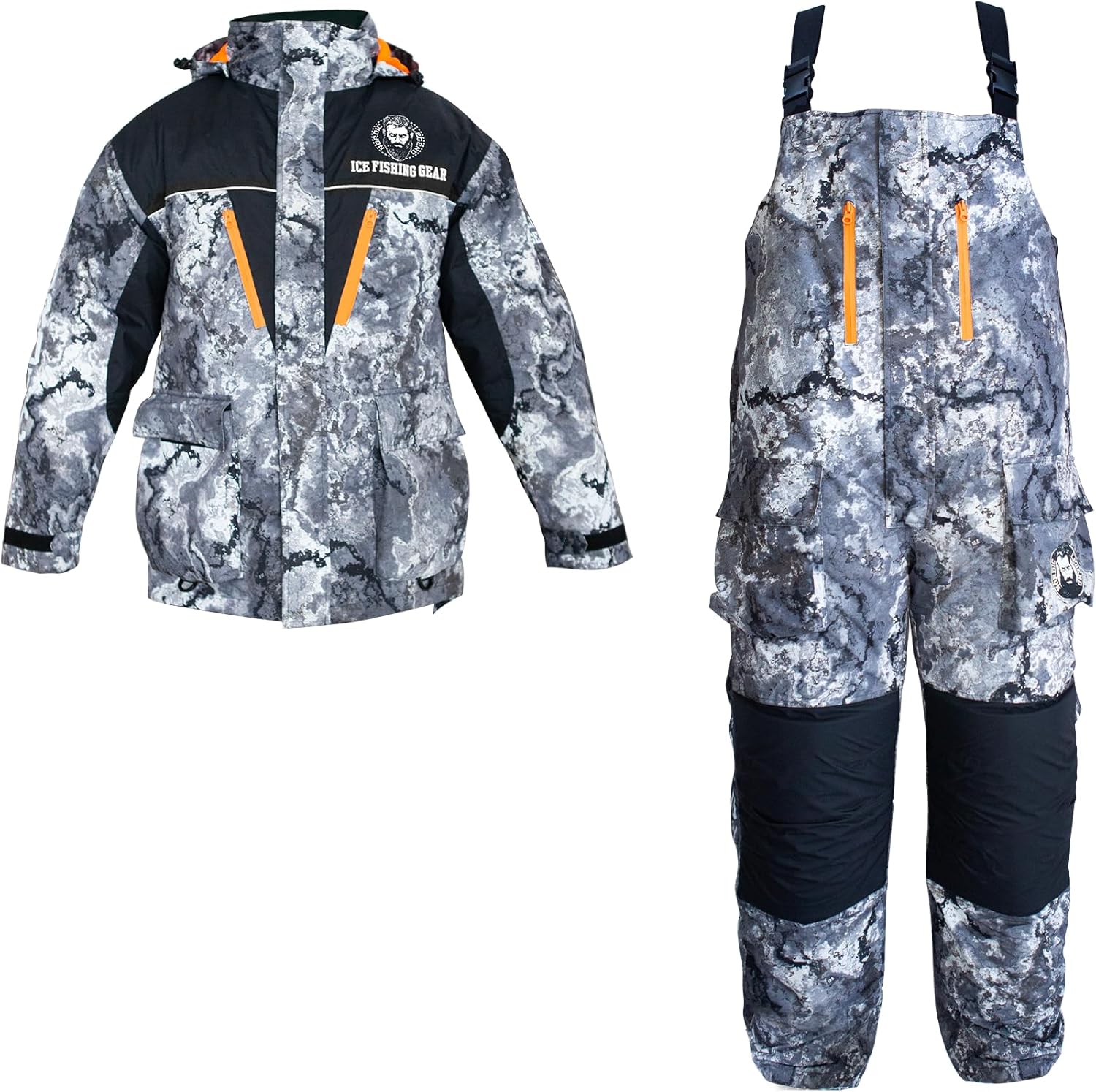
    Ice fishing requires serious layering — base layer (wicking), mid layer (insulating fleece or down), outer layer (waterproof insulated bibs and jacket). Cotton kills in cold conditions because it absorbs sweat and stays wet. Wool and synthetics only.

    Hand warmers are essential. Ice fishing boots need heavy insulation (Thinsulate or similar) and waterproof construction. A balaclava or face mask protects exposed skin in wind. On the coldest days, eye protection prevents wind damage.

    Frabill ice fishing suit

    ➜ Nordic Legend Ice Fishing Suit — Buy on Amazon

    ➜ Little Hotties Hand Warmers Pack — Buy on Amazon

    Best Lakes for Ice Fishing Trout

    • Lake Superior — lake trout near Michigan and Wisconsin shores; massive water with world-class fish
    • Quabbin Reservoir, Massachusetts — excellent lake trout in a managed fishery
    • Moosehead Lake, Maine — lake trout, brook trout, and landlocked salmon
    • Lake Champlain, Vermont/New York — accessible lake trout fishing for East Coast anglers
    • Upper Peninsula lakes, Michigan — splake and lake trout in numerous lakes
    • Lake Nipigon, Ontario — trophy brook trout and lake trout; legendary ice fishery
    • Great Slave Lake, NWT — ultimate trophy lake trout, remote but extraordinary

    Finding Trout Under Ice

    Fish locations change under the ice. Some patterns that hold consistently:

    • Early ice: Fish are shallow (15–30 feet on most lakes) and active. Structure and drop-offs produce.
    • Mid-winter: Fish move deeper (30–60+ feet) as shallow water becomes oxygen-depleted. Basin fishing dominates.
    • Late ice (pre-spawn): Fish move shallow again, often extremely aggressive before the ice leaves.

    Mobility is key. Good ice anglers drill many holes and move to find active fish rather than staking out one spot. A flasher makes this practical — drop the transducer down a new hole, look for fish, and move on if nothing shows.

    Frequently Asked Questions

    How thick does ice need to be to fish safely?

    4 inches of clear blue ice is the widely accepted minimum for walking and fishing. Check multiple spots; ice thickness varies across a lake. Avoid areas with current, springs, or aerators.

    What’s the best ice fishing lure for trout?

    For lake trout, a Swedish Pimple or Kastmaster spoon in 1/2 to 1 oz. For brook trout and splake, tungsten jigs in size 6–8 tipped with waxworms. Species and size of target fish drive the lure choice.

    Do I need an ice shanty?

    Not required but strongly recommended for extended fishing in harsh weather. A portable pop-up shanty blocks wind and retains heat from a small propane heater, turning a miserable -10°F day into tolerable fishing. You can fish without one, but most experienced ice anglers consider a shanty essential gear.

    Can you catch rainbow trout through the ice?

    Yes, but they’re less common targets than lake trout or brook trout. Rainbows tend to be less active under ice than lake trout, which are cold-water specialists. Some stocked rainbow lakes offer ice fishing opportunities; results vary.

    What’s the best time of year for ice fishing trout?

    Early ice (usually December/January depending on latitude) and late ice (late February/March) are the most productive periods. Mid-winter can be slower as fish become lethargic in cold, oxygen-depleted water.


    Related Guides


    About the Author

    By Kenny — SoCal angler who learned trout fishing during college years in Fort Collins, Colorado (Poudre, Horsetooth, Estes Park) and now fishes the Sierras and SoCal lakes with my daughter Scarlett. No steelhead or salmon yet, and no ice fishing — those are on the list.

  • Trout Trolling Techniques: Lake and Reservoir Fishing Guide

    Trout Trolling Techniques: Lake and Reservoir Fishing Guide

    Trolling is the most efficient way to catch trout in lakes and reservoirs. Where casting is limited by how far you can throw and how much water you can cover from a stationary position, trolling lets you work entire depth ranges, temperature breaks, and fish-holding structure across large bodies of water. If you’ve ever stared at a big reservoir wondering how to fish it, trolling is the answer.

    My trolling experience comes from summers on Lake Isabella in the Sierras and from trolling Horsetooth Reservoir back in college. Different water, same fundamentals — find the depth where fish are holding, get your lure to that depth, and cover water at the right speed. Solve that three-part puzzle and you catch fish consistently.

    Finding Trout Depth

    Trout follow the thermocline — the boundary between warm surface water and cold deep water. In summer, surface water can exceed 70°F while trout hold at 50–60 feet in 55°F water. The thermocline isn’t a mystery; a fish finder shows it clearly as a distinct layer on the display.

    What to look for on electronics:

    • Fish arcs at consistent depth — that’s your target depth for trolling
    • Baitfish schools — big schools attract predators; trout won’t be far
    • Bottom structure — drop-offs, points, humps concentrate fish
    • The thermocline — shows as a distinct horizontal band on many fish finders; fish almost always hold at or just above it

    Without electronics you’re guessing. With them, you’re fishing with real information. A decent fish finder is arguably the most important piece of trolling gear after the boat itself.

    Depth Control Methods

    Finding the depth is half the battle. Getting your lure to that depth and keeping it there is the other half. Three main approaches:

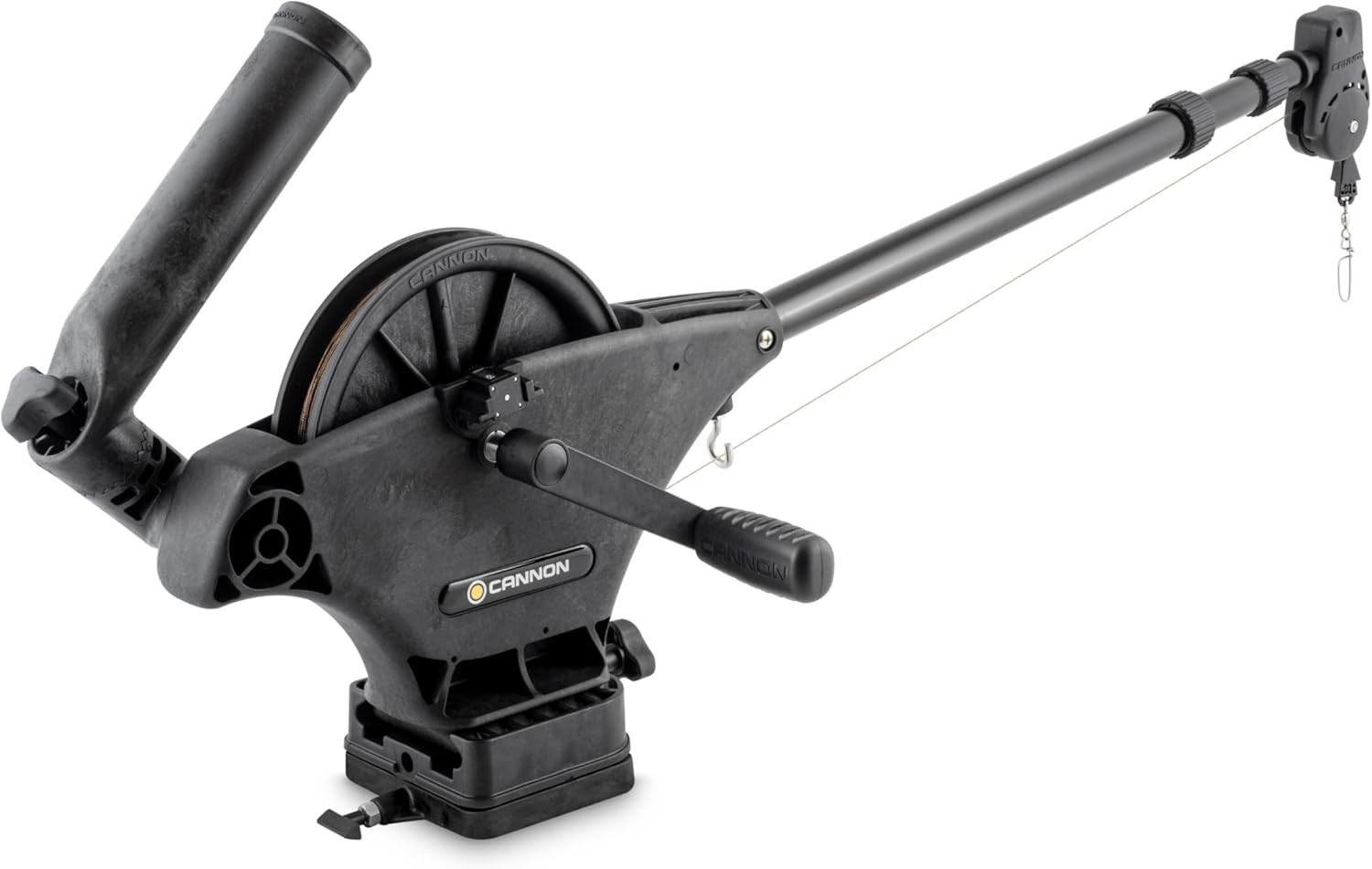
    Downriggers — the most precise method. A cannonball (typically 6–10 lb) is lowered to a specific depth on cable; your fishing line clips to the cannonball and releases when a fish strikes. You fight the fish on a slack line, the cannonball stays on the cable. Downriggers let you repeat the exact depth over and over, which matters when you find the productive depth.

    Cannon downrigger

    ➜ Cannon Uni-Troll Manual Downrigger — Buy on Amazon

    Lead core line — a sinking line built into your mainline that sinks at a predictable rate. Roughly 5 feet per 10-yard color segment, depending on trolling speed. Less precise than downriggers but much cheaper and works well for fish holding at moderate depths (20–40 feet).

    ➜ Sufix Lead Core Trolling Line — Buy on Amazon

    Snap weights — small weights clipped to the line at set intervals for simple depth control. Clip one on, troll for a while, clip another on to go deeper. Budget-friendly and works reasonably well for shallow trolling (15–25 feet).

    ➜ Off Shore Tackle Snap Weights — Buy on Amazon

    Best Trolling Lures

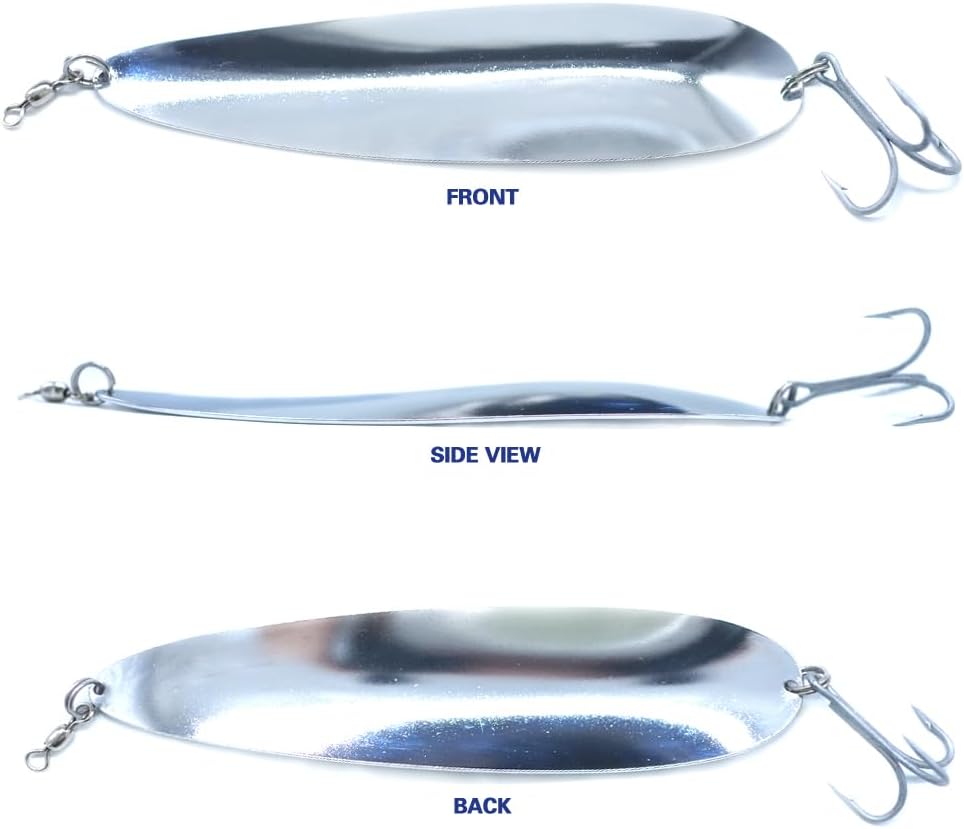
    Spoons — the most universally effective trout trolling lure. The side-to-side wobble imitates a wounded baitfish. A hungry trout has a hard time passing up a spoon at the right speed and depth. Classic patterns work: silver with blue, silver with black, gold with orange.

    SEASKY trolling spoon

    ➜ SEASKY Silver Spoon — Buy on Amazon

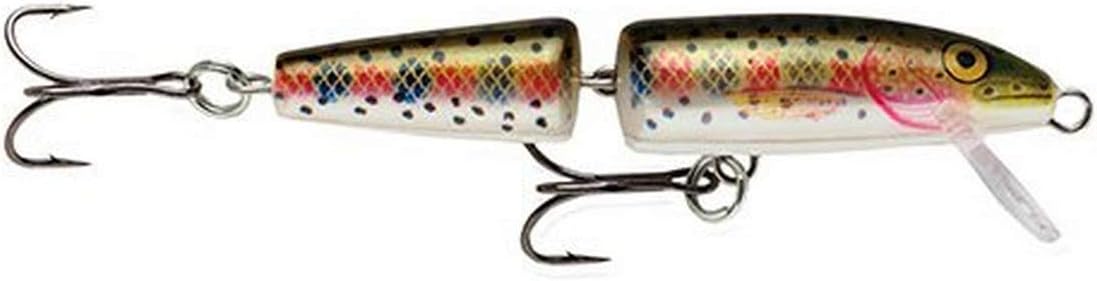
    Rapala Jointed — an effective trolling plug for rainbow and brown trout. The jointed body produces more action at slower speeds than straight-body plugs, which matters because trolling speed for most trout is slow.

    Rapala Jointed J11

    ➜ Rapala Jointed — Buy on Amazon

    Dodger/flasher rigs — a dodger or flasher acts as an attractor pulled ahead of a small trailing lure (typically a fly, worm harness, or small spoon). The flashing attractor draws fish in from a distance; the trailing lure is what they bite. Deadly on reservoir rainbows, especially in stocked lakes.

    ➜ Dodger Assortment — Buy on Amazon

    Trolling Speed

    Most trout trolling happens between 1.5 and 3 mph. Within that range, species preferences vary:

    • Lake trout: 1.5–2 mph — slower is better
    • Rainbow trout: 2–2.5 mph — moderate speeds
    • Brown trout: 2–3 mph — faster presentations often trigger predatory strikes
    • Kokanee: 1–1.5 mph — very slow

    A GPS or speedometer is essential. Estimating speed by feel is wildly inaccurate — what feels like 2 mph is often 1.2 or 2.8. On windy days with current pushing the boat, measured speed is the only way to know what your lure is actually doing.

    When in doubt, vary your speed. Trout often hit during speed changes — lures that have been moving at a steady 2 mph suddenly speeding up to 2.5 or slowing to 1.5 trigger strikes from fish that had been following.

    Trolling Gear

    Rod: 7–8.5 foot medium or medium-heavy trolling rod with moderate action. Longer rods spread out a multi-rod trolling spread without tangles; moderate action loads on the strike and hooks fish better at trolling speeds.

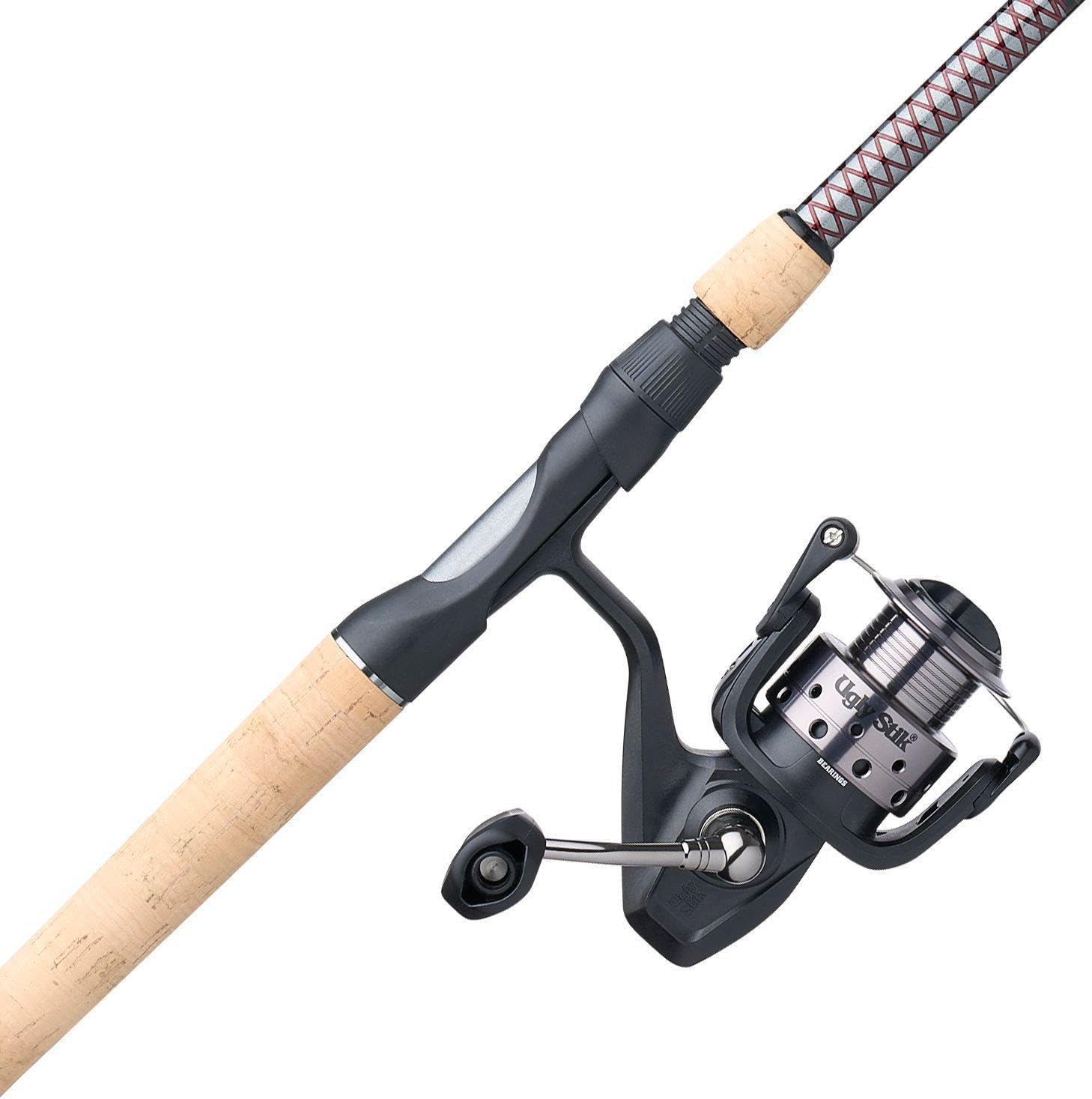
    ➜ Ugly Stik Tiger Lite Trolling Rod — Buy on Amazon

    Reel: Level wind or line counter reel. Line counters are legitimately useful for trolling — once you find the productive depth, a line counter reel lets you repeat it exactly every time. Find the bite, count the line out, and every subsequent pass puts your lure right where you need it.

    ➜ Penn Level Wind Reel — Buy on Amazon

    Finding Productive Trolling Water

    Big reservoirs and lakes can feel overwhelming. A few patterns that consistently produce:

    • Main-lake points — underwater points extending from shore concentrate baitfish and predators
    • Creek channels — old submerged creek beds run through reservoirs; fish use them as highways
    • Drop-offs — where shallow water suddenly drops to deep water; both species mix at the edge
    • Inflowing creeks — in summer, cold tributaries dumping into warm reservoirs create localized cold pockets where trout congregate
    • Dam faces — deep water near dams often holds fish

    On Lake Isabella I’d consistently work the creek channels and the deep water near the dam in summer. On Horsetooth, the main-lake points and deeper coves. The specific productive spots vary by lake, but the types of structure don’t.

    Summer vs. Spring and Fall Trolling

    Different seasons require different approaches.

    Spring and fall — water temperatures are cool throughout the column. Trout hold shallower (10–30 feet) and feed aggressively. Trolling near the surface or with minimal depth control produces. Classic “top-lining” with no downrigger or lead core works.

    Summer — surface water warms and trout drop deep. Downriggers or lead core become essential to get lures to the 40–70 foot depths where fish are holding. Slow your trolling speed; fish at depth are more lethargic.

    Winter (where ice doesn’t form) — similar to summer in that fish are deep, but they’re also less active. Very slow trolling with small lures or live bait rigs produces better than fast presentations.

    Frequently Asked Questions

    How deep should I troll for rainbow trout in summer?

    In most lakes during summer, rainbow trout hold at 30–60 feet following the thermocline. Use a fish finder to locate fish and troll your lures at or just above that depth.

    Do I need a downrigger for trout trolling?

    Not for every situation, but for serious summer trolling on deep reservoirs, yes. Spring and fall fishing in shallower water can be done without one. If you’re planning to seriously pursue summer lake trout or deep-suspended rainbows, a downrigger pays for itself quickly.

    What’s the best lure for trolling stocked rainbows?

    A small dodger with a trailing fly or worm is the classic producer on stocked rainbow lakes. Rainbow pattern spoons in 1/8 to 1/4 oz also work consistently.

    Can you troll for trout in rivers?

    In very large rivers with slow current you can troll, but it’s uncommon. Trolling is mostly a lake and reservoir technique. In rivers, drift fishing or casting is usually more effective.

    How fast should I troll?

    1.5–3 mph covers most trout trolling. Lake trout prefer the slow end (1.5–2 mph); browns and rainbows often prefer the faster end (2–3 mph). When in doubt, vary your speed until you find what’s working.


    Related Guides


    About the Author

    By Kenny — SoCal angler who learned trout fishing during college years in Fort Collins, Colorado (Poudre, Horsetooth, Estes Park) and now fishes the Sierras and SoCal lakes with my daughter Scarlett. No steelhead or salmon yet, and no ice fishing — those are on the list.

  • Spin Fishing for Trout: Best Lures, Rigs & Techniques

    Spin Fishing for Trout: Best Lures, Rigs & Techniques

    Spin fishing is the most versatile and accessible way to catch trout. A 6-foot ultralight rod, a few spinners, and some line will catch fish in rivers, streams, lakes, and reservoirs — essentially anywhere trout live. The gear is cheap compared to fly fishing, the learning curve is short, and the results come fast.

    I started with spin fishing as a kid on SoCal lakes and still reach for a spinning rod when conditions call for it. The Kern River in low water, Lake Isabella when fish are suspended, Big Bear during a spring bite — all spinning situations. Spin fishing isn’t a beginner’s training wheels on the way to fly fishing. It’s a legitimate primary technique that catches more fish than fly fishing in many conditions.

    Spinning Gear

    Rod: 6–7 foot ultralight or light spinning rod rated for 2–6 lb line. Ultralight gives you better casting distance and accuracy with small lures, better fight from average-size trout, and enough backbone for the occasional trophy fish.

    Ugly Stik Elite ultralight spinning rod

    ➜ Ugly Stik Elite 6ft Ultralight — Buy on Amazon

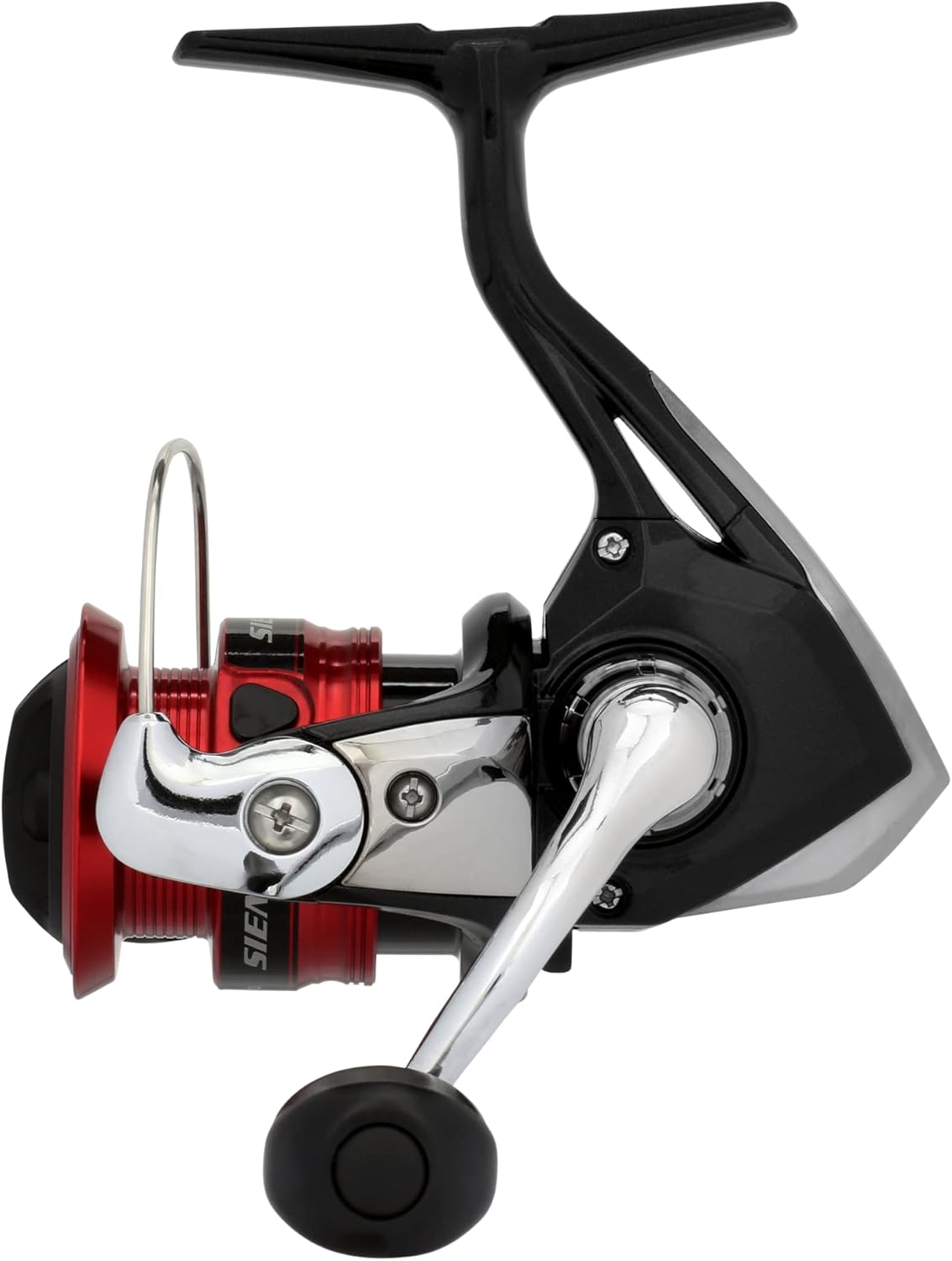
    Reel: 1000–2500 size spinning reel with smooth drag. For most trout fishing you don’t need premium gear — a reliable mid-range reel will last years of regular use.

    Shimano Sienna spinning reel

    ➜ Shimano Sienna 1000 — Buy on Amazon

    Line: 4–6 lb monofilament or 10 lb braid with a 4–6 lb fluorocarbon leader. Clear or low-visibility line in trout-friendly colors (green, clear) outperforms high-vis options in the clear water trout prefer. Braid with a fluoro leader gives you better sensitivity and longer casts at the cost of added complexity at the tippet.

    ➜ Berkley Trilene XL 4lb — Buy on Amazon

    Best Spinning Lures for Trout

    Inline Spinners — The #1 Trout Lure

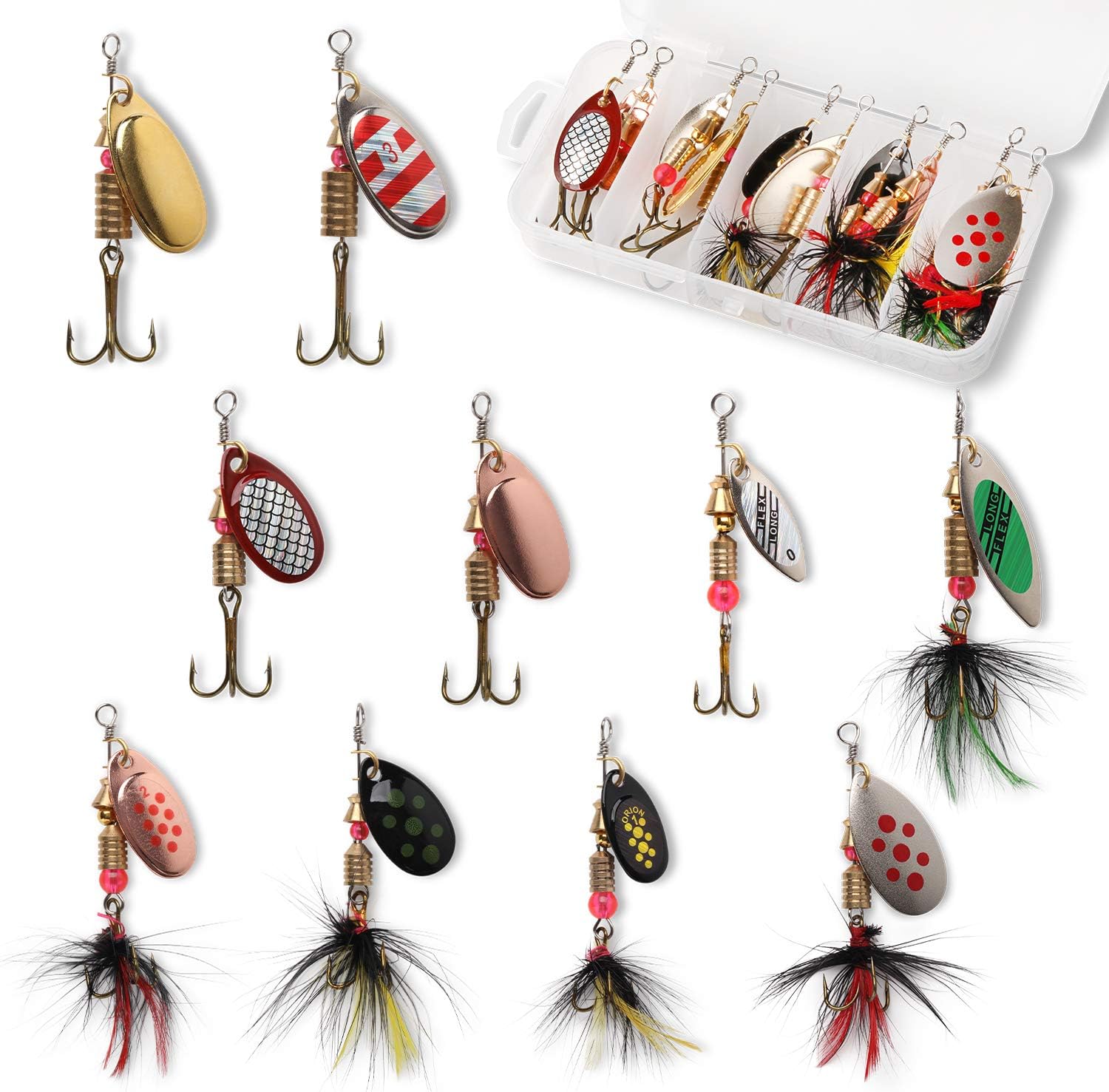
    Inline spinners are the most consistently effective trout lure ever invented. The spinning blade creates flash and vibration that triggers strikes even from fish that aren’t actively feeding. If I had to fish with one lure type for the rest of my life, it’d be a Panther Martin.

    The presentation that works: cast upstream at a 45-degree angle, retrieve just fast enough to keep the blade spinning. You’ll feel the vibration pulsing through the rod — that’s the blade working. Vary your speed until you find what’s working; a slow retrieve with occasional pauses often triggers following fish to commit.

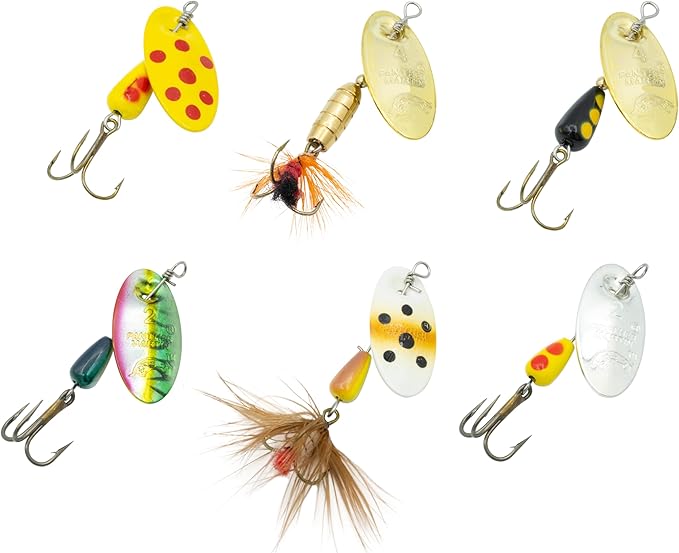
    Panther Martin in sizes 1/32–1/4 oz — yellow/black and silver/red are the go-to colors. My personal favorite for any new stream.

    Panther Martin inline spinner

    ➜ Panther Martin Spinner Assortment — Buy on Amazon

    Mepps Aglia in sizes 0–2 — gold blade in murky water; silver in clear. Been catching trout for over 80 years and still the #1 trout lure worldwide by many measures.

    Mepps Aglia spinner

    ➜ Mepps Aglia #1 — Buy on Amazon

    Floating Minnow Plugs

    Floating plugs imitate wounded baitfish — trout eat baitfish, so the imitation works. Cast upstream, let it drift, then twitch and retrieve. In slow water or lakes, a steady retrieve with subtle twitches is the standard presentation. In rivers, the current does a lot of the work for you.

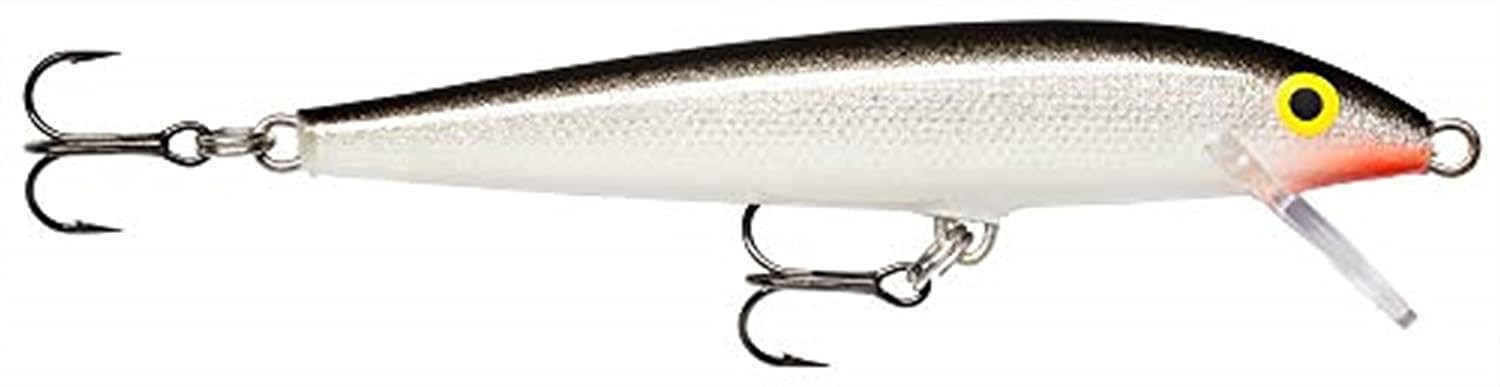
    The Rapala Original Floating Minnow has been catching trout since 1936 and nothing has displaced it. The F05 (2-inch) is the standard trout size.

    Rapala Original Floating Minnow

    ➜ Rapala Original F05 — Buy on Amazon

    Spoons

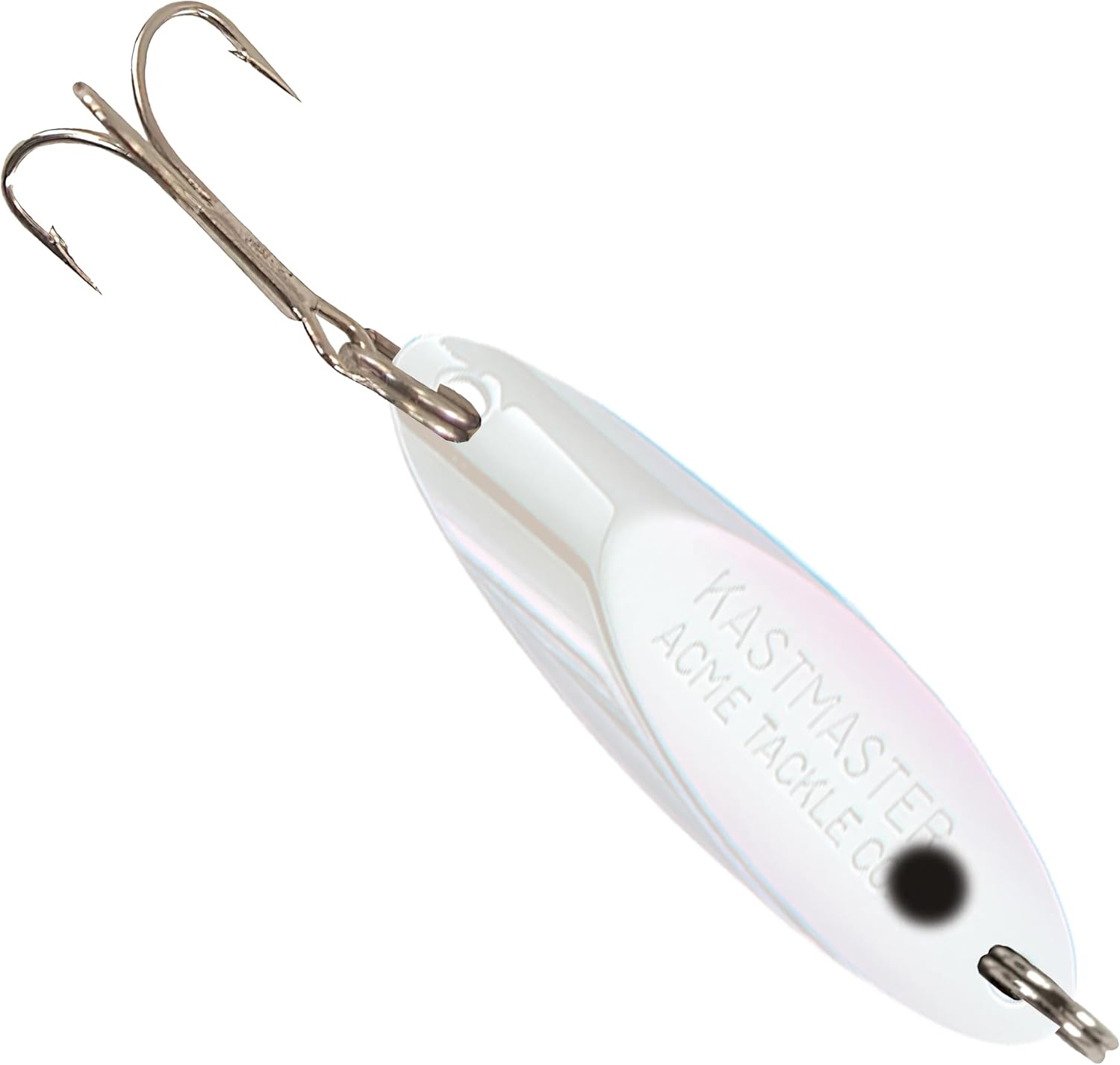
    Spoons excel at covering water and reaching fish you can’t reach with lighter lures. Kastmaster spoons in 1/8–1/4 oz cast a mile and produce well in both rivers and lakes. The heavier mass lets you cast into wind and reach distant holding water that spinners can’t.

    On lakes like Isabella, a Kastmaster cast to the far edge of a deep cove and retrieved slowly often produces fish that wouldn’t touch anything else. In rivers, spoons work well in the deeper slots where fish are holding below the fast water.

    Acme Kastmaster spoon

    ➜ Acme Kastmaster 1/8oz — Buy on Amazon

    Small Jigs

    Berkley Gulp Trout Worm on a 1/32–1/16 oz jig head is effective in cold water when fish are less responsive to fast-moving lures. Fish it slowly, with small hops along the bottom. This is a go-to presentation in early spring or late fall when trout metabolism is slow.

    ➜ Berkley Gulp Trout Worm — Buy on Amazon

    Spin Fishing in Rivers vs. Lakes

    The same gear works in both, but the techniques differ significantly.

    Rivers and streams: Cast upstream and retrieve downstream at a controlled pace. Work seams, pool tails, and behind obvious structure. Move systematically — cast, retrieve, take two steps, repeat. Cover water to find active fish.

    Lakes and reservoirs: Cast long, retrieve slow, and cover different depths. Without current to help the lure swim, you do all the work. Count down before retrieving to let the lure sink to different depths until you find fish. Reservoir fish often suspend at specific depths — once you find the depth, every cast needs to hit it.

    When to Use Spin Fishing vs. Fly Fishing

    Honestly, spin fishing catches more fish in more conditions than fly fishing does. Where fly fishing shines: visual dry fly situations when fish are rising, small streams with tight casting conditions, and technical presentations for heavily-pressured fish. Where spin fishing shines: everything else.

    Specific scenarios where spinning is the better tool:

    • Covering large reservoirs with suspended fish
    • Fishing in wind (fly casting becomes nearly impossible in hard wind)
    • Cold-weather fishing when fish are deep and inactive
    • Off-color water where visibility is low and flash matters
    • Introducing a kid or beginner to fishing (the learning curve is vastly shorter)

    I still fly fish when the conditions favor it. But the spinning rod comes out of the garage more often than the fly rod does, and I’ve come to terms with that.

    Frequently Asked Questions

    How fast should I retrieve a spinner for trout?

    Just fast enough to keep the blade spinning — you can feel the vibration through the rod. Vary your speed until you find what’s working. A slow retrieve with occasional pauses often triggers following fish to commit.

    What color spinner is best for trout?

    Silver or gold blade in clear water; brighter colors (chartreuse, orange) in stained water. For Panther Martins, yellow/black and silver/red are the two most consistent producers across most conditions.

    Can you catch trout on plastic worms?

    Yes — especially cold-water or finicky fish. A small plastic worm or tube on a jig head, fished slowly on the bottom, catches trout that won’t chase a moving lure.

    What’s the best lure for stocked trout?

    For lake-stocked trout, PowerBait on a small hook is more effective than any lure. If you want to use a lure, a small Kastmaster or Panther Martin worked slowly near the bottom is the most reliable option.

    Do I need ultralight gear for trout?

    Not required, but it’s more fun. A light spinning rod rated for 2–6 lb gives you better fight from average trout and casts small lures better than heavier gear. You can catch trout on a medium bass-fishing rod if that’s what you have, but it’ll feel like cranking fish in rather than fighting them.


    Related Guides


    About the Author

    By Kenny — SoCal angler who learned trout fishing during college years in Fort Collins, Colorado (Poudre, Horsetooth, Estes Park) and now fishes the Sierras and SoCal lakes with my daughter Scarlett. No steelhead or salmon yet, and no ice fishing — those are on the list.
  • Fly Fishing for Trout: Complete Beginner’s Guide

    Fly Fishing for Trout: Complete Beginner’s Guide

    Fly fishing has a reputation for complexity that’s partly deserved and mostly exaggerated. Catching trout on a fly rod — consistently — is absolutely achievable for a beginner with a few hours of practice and a basic grasp of the fundamentals. The gear costs more than spinning, the learning curve is real, and your first day on the water will be humbling. But most people who give fly fishing a fair shot end up preferring it to spinning for trout. I’m one of them, even though I do both.

    My honest take up front: I’m biased. I love fly fishing. Moving water, a well-cast line, the visual strike on a dry fly — it’s hard to compete with. But I also know fly fishing has a real cost barrier and a real learning curve, and not everyone wants to deal with either. If you’re on the fence, read this and see how you feel by the end.

    How Fly Fishing Works

    In conventional fishing, the weight of the lure carries the line. You cast a quarter-ounce spoon and the line follows it.

    In fly fishing, the weight of the line carries the fly. The fly line itself is thick and heavy — designed to be cast. The nearly-weightless fly goes along for the ride. This inverted design is why fly casting looks different, feels different, and requires different technique than spin casting.

    What this design lets you do: present an incredibly small or light fly (a size-18 dry fly is almost nothing in your hand) with accuracy and softness that no other method can match. A fly floating on a drag-free drift looks to the fish exactly like a real insect. That’s the whole point.

    Essential Gear

    Where quality really matters for fly fishing. Cheap fly gear casts poorly and frustrates beginners into quitting. If you’re serious, spend the money on a decent starter setup — you’ll enjoy it more and stick with it.

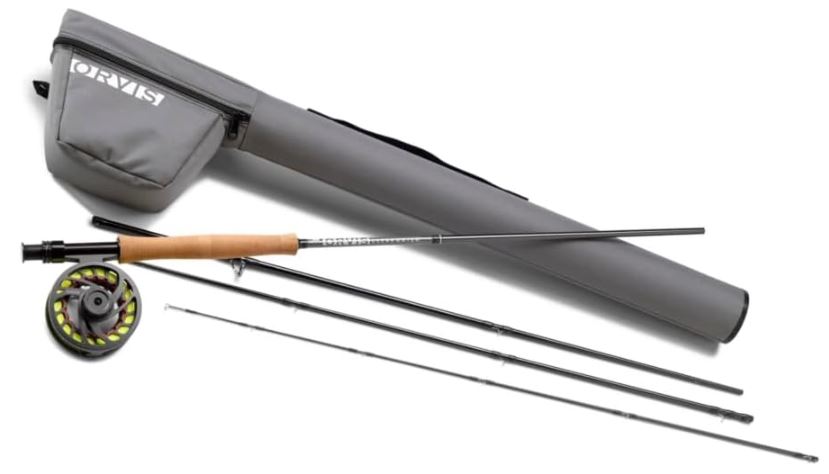
    Fly rod: 9-foot, 5-weight is the all-around trout rod. Handles dry flies, nymphs, and light streamers on most water.

    Orvis Clearwater fly rod

    ➜ Orvis Clearwater 9ft 5wt — Buy on Amazon

    Fly reel: Match it to the rod weight. For most trout fishing, the reel is primarily a line storage device — the drag matters less than you’d think.

    ➜ Redington Behemoth Fly Reel — Buy on Amazon

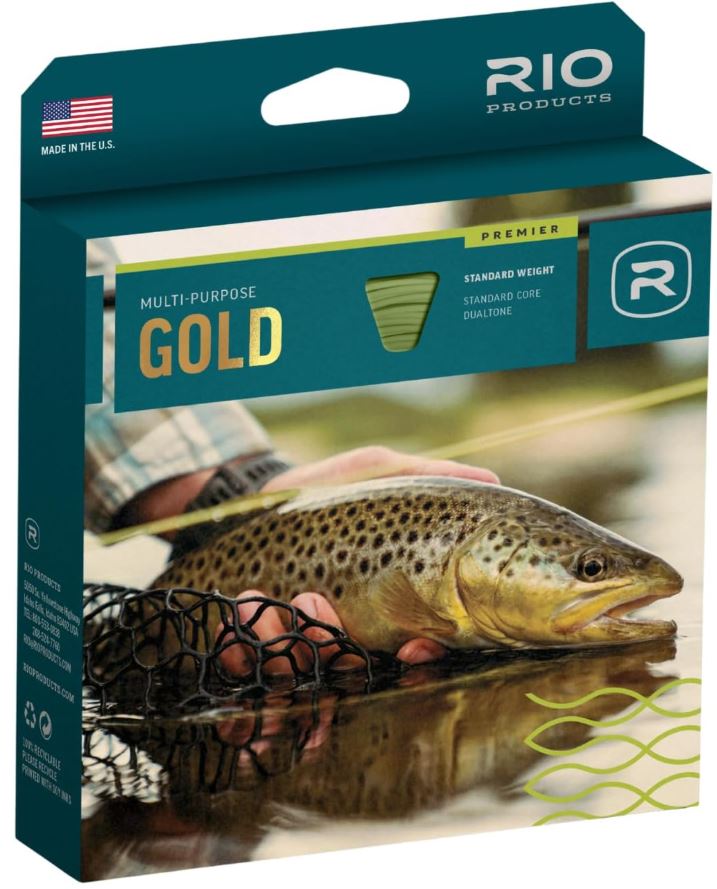
    Fly line: Weight-forward floating, matched to the rod weight (5-weight line on a 5-weight rod). This is the part most beginners skimp on and regret. Quality fly line matters more than a quality rod — a great line on a mid-range rod casts better than the reverse.

    Rio Gold fly line

    ➜ Rio InTouch Gold WF5F — Buy on Amazon

    Tippet: 5X (about 4.75 lb) for most dry fly and nymph fishing. Go heavier (4X) for larger flies and streamers; lighter (6X, 7X) for tiny dry flies on clear water.

    ➜ Rio Powerflex Tippet 5X — Buy on Amazon

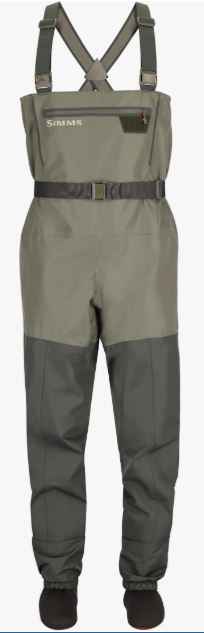
    Waders: Breathable waders for most conditions. My first time wading the Poudre in April without proper gear convinced me — cold trout-stream water is no joke, and good waders are the difference between a full day and quitting at lunch.

    ➜ Simms Tributary Waders — Buy on Amazon

    Net: Rubber mesh to protect fish during catch-and-release. Essential gear for fly fishing.

    Fishpond rubber mesh net

    ➜ Fishpond Nomad Net — Buy on Amazon

    The Three Methods

    Fly fishing for trout breaks into three basic methods. Every fly fishing trip uses at least one of these, often more.

    Dry Fly

    A fly floating on the surface — the most exciting and visual method. You see the take, the strike is immediate and satisfying. Most effective during active hatches when trout are rising to eat adult insects. Cast upstream of rising fish, let the fly drift naturally without dragging across the current.

    Dry fly fishing depends on matching the hatch — using a fly that imitates whatever insect is currently emerging. On most rivers, you’ll see caddisflies, mayflies, and midges at different times of year. Carry a small selection of patterns in sizes 14–18 and you’ll match most hatches.

    Nymphing

    Flies that imitate larval insects drifted near the bottom, usually under a strike indicator (a “bobber” in fly terms). Nymphing is the most consistently productive method when fish aren’t rising — which is most of the time, honestly. Most fly-caught trout are caught on nymphs, not dry flies, even though dry fly fishing gets all the magazine coverage.

    The basic nymph rig: strike indicator 6–10 feet above the fly, split shot on the leader to sink the fly, and a weighted nymph (or two) drifted through deep runs and pools. Adjust indicator depth until the nymph is bumping bottom — that’s where the fish are.

    Streamers

    Large wet flies imitating small fish, stripped through the water. Targets the largest trout in a river, especially browns. Most effective at dawn and dusk or in off-color water. The retrieve is aggressive — short, sharp strips that make the fly dart and pause like a wounded baitfish. A slow steady retrieve rarely produces.

    Streamer fishing is the most likely way to catch a trophy brown trout. It’s also a great way to fish water that looks empty — a streamer stripped through a seemingly fishless run often produces the biggest fish of the day.

    Essential Flies

    You don’t need 500 fly patterns. You need 10, in the right sizes. These cover the vast majority of trout fishing situations across the country:

    Dry Flies:

    • Elk Hair Caddis (sizes 14–18) — imitates caddisflies; works everywhere
    • Parachute Adams (sizes 14–18) — the universal dry fly; visible in mixed hatches
    • Stimulator (sizes 10–14) — large attractor for riffled water
    • Hopper (sizes 8–12) — summer terrestrial for meadow streams

    Nymphs:

    • Pheasant Tail Nymph (sizes 14–18) — the most versatile nymph ever tied
    • Hare’s Ear Nymph (sizes 12–16) — general attractor; works year-round
    • Copper John (sizes 14–18) — fast-sinking, visible; excellent under an indicator
    • San Juan Worm (sizes 12–16) — looks like nothing special but is deadly

    Streamers:

    • Woolly Bugger (sizes 6–10, black and olive) — the most versatile wet fly in existence
    • Muddler Minnow (sizes 6–10) — imitates sculpin; deadly on big browns

    ➜ Dry Fly Assortment — Buy on Amazon

    ➜ Nymph Assortment — Buy on Amazon

    ➜ Woolly Bugger Assortment — Buy on Amazon

    Casting Basics

    Fly casting looks complicated but the core technique is simple: you’re using the rod to load the line, then unloading it in the direction you want the fly to go. The rod flexes, stores energy, then releases it. The line follows.

    Three things to focus on as a beginner:

    1. Stop the rod on the backcast. Beginners tend to let the rod fall back behind them, which collapses the line. A sharp stop at about the 1 o’clock position loads the rod properly.
    2. Wait for the line to straighten behind you. If you start the forward cast too early, the line tangles on itself. You can actually feel the rod load when the backcast line reaches full extension.
    3. Don’t muscle it. Fly casting is about timing, not force. More power produces worse casts for beginners. Smooth, measured strokes produce better results than aggressive ones.

    A couple hours of practice in a park — just casting, no fish involved — is worth more than any amount of reading. Better yet, one good lesson is worth weeks of solo practice. A competent instructor can correct the three or four things most beginners do wrong in fifteen minutes.

    Reading Water for Fly Fishing

    Trout hold where food concentrates and where they can hold without spending energy fighting current. In a typical trout stream:

    • Riffles oxygenate the water and produce insects. Food factory.
    • Runs (the deeper water below riffles) are where most feeding trout hold.
    • Pools hold the biggest fish but they often feed less actively.
    • Pocket water (small holding spots behind rocks in fast water) holds catchable fish that are often overlooked.
    • Current seams (where fast and slow water meet) are where trout hold to intercept drifting food.

    Work upstream when possible — trout face into the current, so you approach from behind them. Cast short before you cast long; you often spook the fish right in front of you while trying to reach fish further out.

    Book a Fly Fishing Lesson

    I’ll say this plainly: one good lesson is worth weeks of solo practice. An instructor can correct your casting, show you how to read water, and have you catching fish in a day. Going it alone will get you there eventually but you’ll quit more times before you do.

    ➜ Browse Fly Fishing Lessons and Guide Trips — Viator

    Frequently Asked Questions

    Is fly fishing hard to learn?

    There’s a real learning curve — probably a full season before it feels natural. The casting is the hardest part at first, then reading water, then matching flies to conditions. Each piece gets easier with time. After a season of regular fly fishing you’ll feel competent; after two seasons you’ll feel like you know what you’re doing.

    How much does fly fishing gear cost?

    A basic starter setup (rod, reel, line, waders, a few flies): $300–500. A decent mid-range setup: $500–1000. Premium gear: $1500+. You don’t need premium gear to catch fish, but the mid-range category is where the experience gets genuinely good. I wouldn’t start at the cheapest end — you’ll outgrow it fast.

    Can you fly fish in lakes?

    Yes. Lake fly fishing is its own subculture — nymph fishing under an indicator, streamer stripping, and dry fly fishing during hatches all work. Reservoirs like Lake Isabella and Horsetooth hold plenty of fish catchable on flies if you’re willing to cover water.

    Do I need waders to fly fish?

    Not always, but you’ll want them for most serious trout fishing. Fishing from shore limits your access to the water. Wet wading (just shorts and wading boots) works in warm summer conditions; anything colder and you need breathable waders.

    What’s the best fly for trout?

    If you can only pick one: Pheasant Tail Nymph in a size 16. It’s caught more trout, in more situations, than any other pattern I know.


    Related Guides


    About the Author

    By Kenny — SoCal angler who learned trout fishing during college years in Fort Collins, Colorado (Poudre, Horsetooth, Estes Park) and now fishes the Sierras and SoCal lakes with my daughter Scarlett. No steelhead or salmon yet, and no ice fishing — those are on the list.

  • Steelhead Fishing Guide: Techniques, Rivers & Gear

    Steelhead Fishing Guide: Techniques, Rivers & Gear

    Steelhead are sea-run rainbow trout — the same species biologically, but ocean-run individuals that spend 1–4 years feeding and growing in saltwater before returning to their native rivers to spawn. Those years in the ocean produce fish dramatically larger and stronger than resident rainbows. A fresh chrome steelhead straight out of salt water is one of the hardest-fighting fish in freshwater. By reputation, catching one ranks among the great experiences in fishing.

    I haven’t caught a steelhead yet. It’s the fish I most want to catch that’s still missing from my list. Every Pacific Northwest and Great Lakes angler I’ve talked to rates it as their favorite fish, and the combination of chrome beauty, ocean-fed size, and a fight that tests both your tackle and your patience is something I’m planning to travel for. This guide is built from research, angling friends, and the techniques that work consistently across the major steelhead fisheries — not from first-hand steelhead experience. Bylines elsewhere on the site will tell you where I’m writing from personal time on the water.
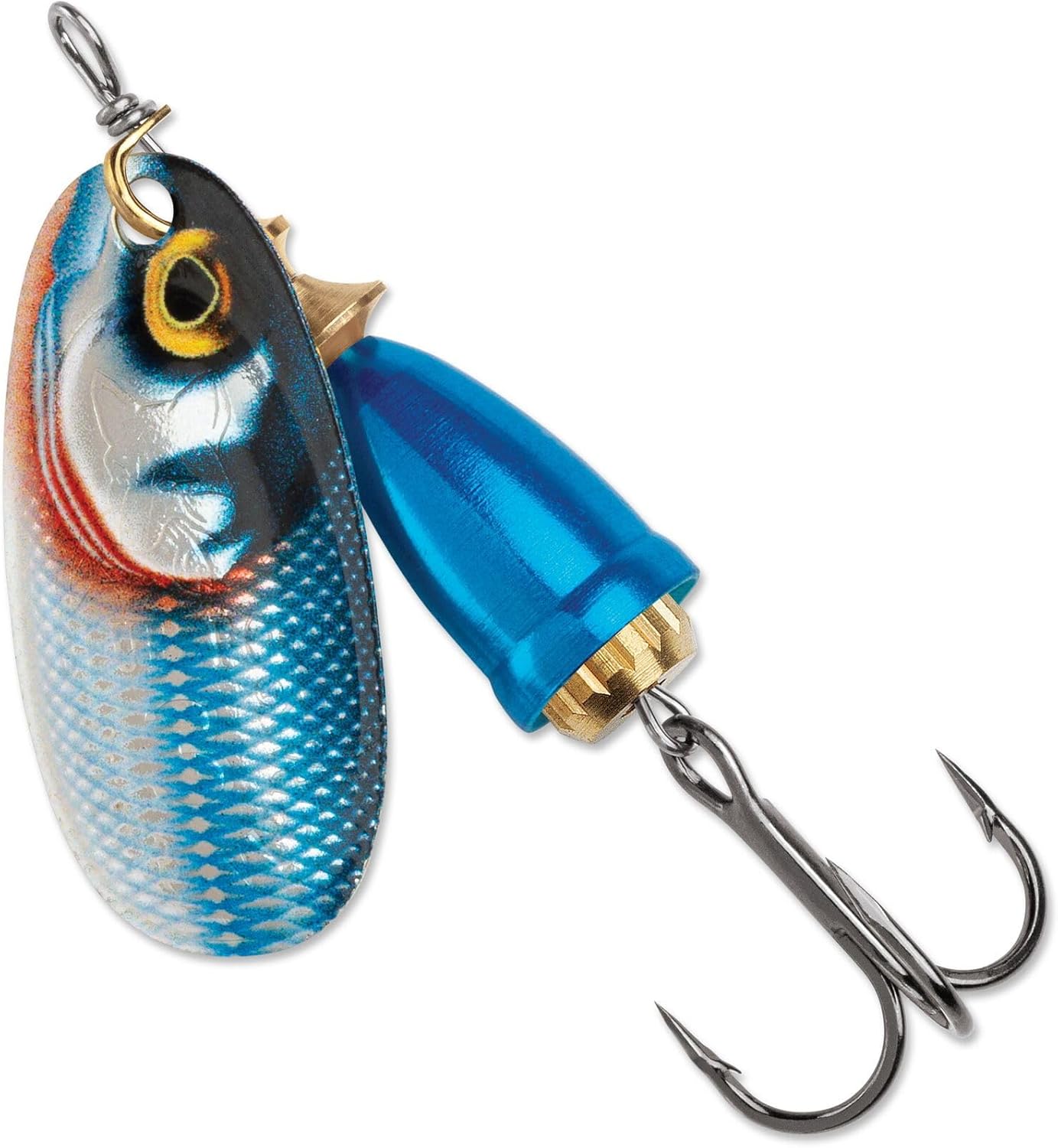
    Summer vs Winter Steelhead Runs

    Steelhead enter rivers in two distinct runs, and they fish very differently:

    Winter steelhead enter rivers from November through March. They’re typically smaller fish (8–12 pounds average) but arrive in larger numbers. Water is high, cold, and often off-color from winter rain and snowmelt, which means gear fishing dominates — beads, roe, spinners, and weighted drift rigs outproduce fly fishing in most winter conditions. Winter steelhead are the targets of most Washington, Oregon, and Idaho river anglers from December through February.

    Summer steelhead enter from May through October and often stay in rivers for months before spawning the following spring. They hold in classic holding water at classic holding depths, which is why they’re the primary targets for spey fly anglers on the Deschutes, North Umpqua, and similar famous summer rivers. Summer fish in clear low water are the visual dry-line swinging fly experience that’s made rivers like the Deschutes legendary.

    Swinging Flies — The Classic Method

    Swinging a wet fly across the current on a two-hand or spey rod is the traditional steelhead technique. The fly starts upstream, the current sweeps it in a controlled arc across and through holding water, ending directly below the angler. A steelhead taking a swinging fly is the signature moment of Pacific Northwest fishing — the grab is distinctive, the fight begins with the fish already running, and the angle of the line tells you everything about what’s happening below.

    This is the technique that defines summer steelhead culture. Two-hand rods, long dry or intermediate lines, flies that push water or suggest baitfish. The Deschutes and North Umpqua are where it’s practiced at the highest level.

    Intruder-style articulated patterns — large flies that push water and imitate small baitfish. The go-to swung fly for winter steelhead and big-water summer fish.

    ➜ Intruder Steelhead Fly Assortment — Buy on Amazon

    Drift Fishing — Beads and Roe

    Drift fishing with beads or roe under a float is the most productive technique on winter steelhead, particularly in high, colored water where swung flies are largely ineffective. Pegged beads imitating salmon eggs dominate on most rivers — steelhead key in on salmon eggs during and after the fall salmon spawn. A pegged bead drifted through holding water produces consistently when nothing else will.

    Gear anglers also use roe bags (salmon eggs in mesh) and plugs run off diver planers. This is productive meat-fishing technique and accounts for the majority of winter steelhead caught on most Pacific Northwest rivers.

    Steelhead beads assortment

    ➜ BnR Tackle Soft Beads Pack — Buy on Amazon

    Spinners

    Spinners catch steelhead consistently on both coasts. Large spinners (size 4–5) cover water efficiently and trigger aggressive strikes from fish that aren’t interested in subtler presentations. Bright colors (chartreuse, pink) in turbid water; natural (silver, gold) in clear water. Summer steelhead in clear low water will eat a well-presented spinner; winter steelhead in color water often prefer something flashier.

    Blue Fox Vibrax spinner

    ➜ Blue Fox Vibrax Size 4 — Buy on Amazon

    Steelhead Gear

    Two-hand (spey) rod: 12.5 foot, 7–8 weight for swinging flies. Spey rods let you make long casts with limited backcast room — essential on rivers where overhanging trees make single-hand casting impractical. Learning to cast a spey rod takes dedicated practice; most anglers take a lesson or two before they’re efficient.

    Redington Dually Rod

    ➜ Redington Dually Rod — Buy on Amazon

    Waders: Neoprene 3–5mm for winter steelhead — you’ll be standing in very cold water for long periods. Breathable waders with serious insulating layers underneath for summer. Either way, don’t cheap out on waders for steelhead — you’ll be wet for full days in cold water and quality matters.

    Simms Tributary waders

    ➜ Simms Tributary waders — Buy on Amazon

    Best Steelhead Rivers

    • Deschutes River, Oregon — arguably the best dry-line summer steelhead in the US
    • North Umpqua, Oregon — legendary summer steelhead; fly-fishing-only regulations on the upper river
    • Clearwater River, Idaho — exceptional summer and fall steelhead; big fish water
    • Skagit River, Washington — iconic winter steelhead fishery
    • Hoh River, Washington — Olympic Peninsula wild winter steelhead
    • Salmon River, New York — largest Great Lakes steelhead fishery; massive fall and spring runs
    • Pere Marquette River, Michigan — Michigan’s most productive steelhead river
    • Situk River, Alaska — small river, massive returns; among the most productive steelhead fisheries in the world

    Great Lakes Steelhead

    Steelhead were stocked into the Great Lakes decades ago and now run seasonally in tributaries around the lakes — Michigan, New York, Ohio, Pennsylvania, Wisconsin, and Ontario all have established steelhead fisheries. For anglers who can’t travel to the Pacific Northwest, Great Lakes steelhead is the realistic alternative. The fish aren’t technically sea-run (they run between the Great Lakes and the tributaries), but they behave like Pacific steelhead and fight the same way.

    Fall and spring runs are peak. The New York Salmon River has some of the most productive steelhead fishing on the continent in October and November, and the Michigan rivers run steelhead from late fall through spring. See our Great Lakes steelhead guide for details.

    Book a Guided Steelhead Trip

    This is a fish worth booking a guide for, especially on your first trip. Steelhead water is big, holding lies are not always obvious, and a good guide has spent years learning which runs fish best at which water levels. One day with a competent guide will teach you more than a week figuring it out on your own.

    ➜ Browse Guided Steelhead Fishing Trips — Viator

    Frequently Asked Questions

    How big do steelhead get?

    Average steelhead run 6–12 pounds depending on the river and run type. Trophy fish over 20 pounds are caught annually on top rivers like the Clearwater and Situk. The world record exceeds 42 pounds. Great Lakes steelhead typically run slightly smaller on average than Pacific steelhead but overlap in maximum size.

    How hard are steelhead to catch?

    They have a deserved reputation as one of the most challenging fish in freshwater. The “fish of a thousand casts” line isn’t a joke — many anglers genuinely fish multiple full days without hooking one. The challenge is part of why catching a steelhead is so rewarding. That said, timing matters enormously — fish a productive river during peak run timing and your odds improve dramatically.

    What’s the difference between a steelhead and a salmon?

    Steelhead are rainbow trout that went to the ocean; they return to spawn but most survive and can spawn multiple times. Pacific salmon return to spawn and die — one trip, one spawn, then death. Biologically they’re in different genera. Behaviorally, steelhead fight differently (more jumps, longer fights) and are caught with different techniques than salmon.

    When is the best time for steelhead?

    Depends on the river and run type. Pacific Northwest winter steelhead: December through February on most rivers. Summer steelhead: July through October, with August and September often the peak. Great Lakes: October through November in the fall, March through May in the spring.

    Do I need a two-hand rod for steelhead?

    No — it’s traditional for summer steelhead swinging, but many anglers catch more fish on single-hand rods with indicator nymph rigs, streamers, or gear setups. Two-hand casting is a skill worth learning if you want to fish it “the classic way,” but it’s not required to catch steelhead.


    Related Guides


    About the Author

    By Kenny — SoCal angler who learned trout fishing during college years in Fort Collins, Colorado (Poudre, Horsetooth, Estes Park) and now fishes the Sierras and SoCal lakes with my daughter Scarlett. No steelhead or salmon yet, and no ice fishing — those are on the list.